The post Parcel Audit: The Overlooked Intelligence Layer behind High-Volume Shipping appeared first on nVision Global | Worldwide Supply Chain Solutions, Specializing in Global Freight Audit & Payment, Loss & Damage Claims, Supply Chain Services & Technology.
]]>Parcel shipping is often assumed to be simple. A label is printed, a package moves, an invoice arrives, and payment follows. Compared to truckload or ocean freight, it appears routine, almost automatic.
In reality, parcel shipping is one of the most complex and fast-moving areas of freight transportation. For organizations shipping thousands or millions of parcels each year, small inconsistencies quietly compound into meaningful cost and visibility challenges.
Teams often assume parcel costs are predictable, until monthly invoices spike and no one can clearly explain why.
This is why parcel freight audit, long treated as an afterthought, is becoming an essential intelligence function within modern supply chains.
What Is Parcel Freight Audit and Why Does It Exist?

Parcel freight audit is the process of validating parcel transportation provider invoices to confirm that charges on the invoice align with provider negotiated rates, service levels, dimensional weight rules, fuel schedules, accessorials, and delivery commitments.
Parcel invoices are rule-heavy by nature. A single shipment can be affected by zone logic, package dimensions, weight thresholds, residential surcharges, peak fees, address corrections, and service guarantees. At scale, these variables change continuously.
Traditionally, parcel audits focused on identifying billing errors and recovering refunds after invoices were issued. That function remains important, but it is no longer sufficient.
Why has Parcel Audit Evolved Beyond Refund Recovery?
Parcel shipping has become a primary fulfillment channel for many enterprises. E-commerce growth, omnichannel delivery models, and rising customer expectations have dramatically increased parcel volume and complexity.
Invoices now arrive in massive quantities, often weekly or daily, containing millions of line-level data points. Manual review is impractical, and traditional rules-based systems struggle to keep pace with constant changes in carrier pricing logic.
Without effective parcel auditing, organizations lose clarity into true shipping costs, struggle to enforce contract terms, and operate with distorted spend visibility.
As parcel audit expands beyond refund recovery into a control layer for cost accuracy and data integrity, audit discipline at scale has become increasingly important. This shift is also reflected in how leading parcel carriers evaluate audit capabilities. nVision Global has been a FedEx-certified parcel auditor since 2023, maintaining that designation through 2024 and 2025, and achieving full certification in 2026. This reflects the ability to accurately interpret complex parcel pricing logic and maintain trusted data across high-volume shipping environments.
Parcel audit is no longer just an accounting activity, it has become a control layer for cost accuracy, service enforcement, and fulfillment insight.
The Hidden Challenge: Parcel Data at Scale
Some enterprises already have parcel contracts, transportation provider portals, and reporting tools. Yet many still struggle to answer basic questions with confidence.
- Are dimensional rules being applied correctly?
- Are accessorial charges consistent with contract terms?
- Are service failures being identified accurately?
- The challenge is not access to data, it is confidence in the data.
Parcel invoices arrive in structured, semi-structured, and unstructured formats. Legacy OCR tools can extract values, but they do not understand contractual intent, dimensional logic, or service-level nuance. Errors pass quietly into reporting systems, weakening analytics and decision-making downstream.
Solving this challenge requires more than extraction, it requires systems that understand parcel logic at scale.
How AI Is Redefining Parcel Audit?
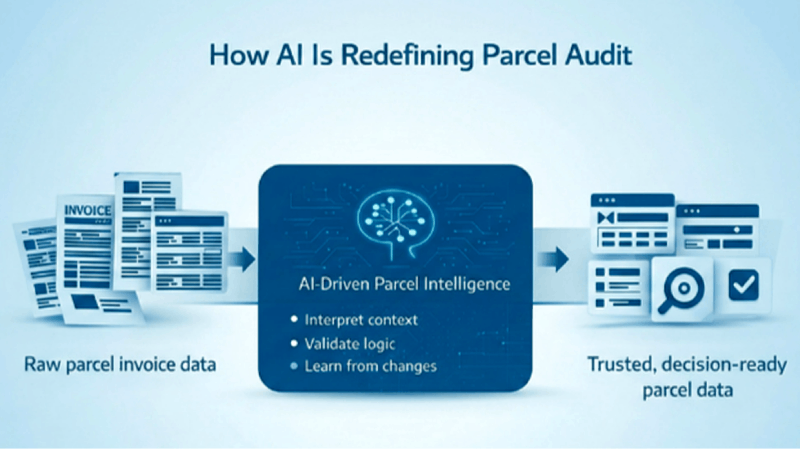
Modern parcel audit requires intelligence, not just extraction.
AI-driven data intelligence platforms, such as nSure AI Data Extraction within the nVision ecosystem, interpret parcel invoices in full operational and contractual context. They classify charges, validate dimensional and zone logic, normalize data, and continuously learn from evolving transportation provider behavior.
Instead of relying on static rules that require constant maintenance, AI adapts as pricing structures change. Parcel audit shifts from reactive refund identification to proactive data validation and insight generation.
The result is clean, trusted parcel data that can support analytics, transportation provider negotiations, and fulfillment strategy.
From Transaction Review to Parcel Intelligence
As parcel audit becomes integrated with analytics and procurement processes, its value expands. Validated audit data highlights patterns in dimensional weight impact, accessorial usage, service performance, and zone-based cost behavior.
Organizations gain earlier visibility into cost drivers, stronger enforcement of contract terms, and clearer insight into how parcel decisions affect overall fulfillment economics. Parcel audit becomes a feedback loop, informing strategy rather than simply validating transactions.
What once occurred quietly after billing now plays an active role in shaping future shipping decisions.
Final Thought
Parcel shipping may appear operationally simple, but at scale it is one of the most data-intensive components of the supply chain.
As volumes grow and pricing structures become more complex, parcel audit, powered by AI-driven data intelligence such as nVision Global’s nSure AI Data Extraction, is emerging as a foundational capability for organizations that want accuracy, visibility, and control.
For high-volume shippers, the smartest parcel strategies don’t start with renegotiation or new transportation providers, they start with intelligence at the invoice level.
The post Parcel Audit: The Overlooked Intelligence Layer behind High-Volume Shipping appeared first on nVision Global | Worldwide Supply Chain Solutions, Specializing in Global Freight Audit & Payment, Loss & Damage Claims, Supply Chain Services & Technology.
]]>The post Parcel Audit: The Overlooked Intelligence Layer behind High-Volume Shipping appeared first on nVision Global | Worldwide Supply Chain Solutions, Specializing in Global Freight Audit & Payment, Loss & Damage Claims, Supply Chain Services & Technology.
]]>Parcel shipping is often assumed to be simple. A label is printed, a package moves, an invoice arrives, and payment follows. Compared to truckload or ocean freight, it appears routine, almost automatic.
In reality, parcel shipping is one of the most complex and fast-moving areas of freight transportation. For organizations shipping thousands or millions of parcels each year, small inconsistencies quietly compound into meaningful cost and visibility challenges.
Teams often assume parcel costs are predictable, until monthly invoices spike and no one can clearly explain why.
This is why parcel freight audit, long treated as an afterthought, is becoming an essential intelligence function within modern supply chains.
What Is Parcel Freight Audit and Why Does It Exist?
Parcel freight audit is the process of validating parcel transportation provider invoices to confirm that charges on the invoice align with provider negotiated rates, service levels, dimensional weight rules, fuel schedules, accessorials, and delivery commitments.
Parcel invoices are rule-heavy by nature. A single shipment can be affected by zone logic, package dimensions, weight thresholds, residential surcharges, peak fees, address corrections, and service guarantees. At scale, these variables change continuously.
Traditionally, parcel audits focused on identifying billing errors and recovering refunds after invoices were issued. That function remains important, but it is no longer sufficient.
Why has Parcel Audit Evolved Beyond Refund Recovery?
Parcel shipping has become a primary fulfillment channel for many enterprises. E-commerce growth, omnichannel delivery models, and rising customer expectations have dramatically increased parcel volume and complexity.
Invoices now arrive in massive quantities, often weekly or daily, containing millions of line-level data points. Manual review is impractical, and traditional rules-based systems struggle to keep pace with constant changes in carrier pricing logic.
Without effective parcel auditing, organizations lose clarity into true shipping costs, struggle to enforce contract terms, and operate with distorted spend visibility.
As parcel audit expands beyond refund recovery into a control layer for cost accuracy and data integrity, audit discipline at scale has become increasingly important. This shift is also reflected in how leading parcel carriers evaluate audit capabilities. nVision Global has been a FedEx-certified parcel auditor since 2023, maintaining that designation through 2024 and 2025, and achieving full certification in 2026. This reflects the ability to accurately interpret complex parcel pricing logic and maintain trusted data across high-volume shipping environments.
Parcel audit is no longer just an accounting activity, it has become a control layer for cost accuracy, service enforcement, and fulfillment insight.
The Hidden Challenge: Parcel Data at Scale
Some enterprises already have parcel contracts, transportation provider portals, and reporting tools. Yet many still struggle to answer basic questions with confidence.
- Are dimensional rules being applied correctly?
- Are accessorial charges consistent with contract terms?
- Are service failures being identified accurately?
- The challenge is not access to data, it is confidence in the data.
Parcel invoices arrive in structured, semi-structured, and unstructured formats. Legacy OCR tools can extract values, but they do not understand contractual intent, dimensional logic, or service-level nuance. Errors pass quietly into reporting systems, weakening analytics and decision-making downstream.
Solving this challenge requires more than extraction, it requires systems that understand parcel logic at scale.
How AI Is Redefining Parcel Audit?
Modern parcel audit requires intelligence, not just extraction.
AI-driven data intelligence platforms, such as nSure AI Data Extraction within the nVision ecosystem, interpret parcel invoices in full operational and contractual context. They classify charges, validate dimensional and zone logic, normalize data, and continuously learn from evolving transportation provider behavior.
Instead of relying on static rules that require constant maintenance, AI adapts as pricing structures change. Parcel audit shifts from reactive refund identification to proactive data validation and insight generation.
The result is clean, trusted parcel data that can support analytics, transportation provider negotiations, and fulfillment strategy.
From Transaction Review to Parcel Intelligence
As parcel audit becomes integrated with analytics and procurement processes, its value expands. Validated audit data highlights patterns in dimensional weight impact, accessorial usage, service performance, and zone-based cost behavior.
Organizations gain earlier visibility into cost drivers, stronger enforcement of contract terms, and clearer insight into how parcel decisions affect overall fulfillment economics. Parcel audit becomes a feedback loop, informing strategy rather than simply validating transactions.
What once occurred quietly after billing now plays an active role in shaping future shipping decisions.
Final Thought
Parcel shipping may appear operationally simple, but at scale it is one of the most data-intensive components of the supply chain.
As volumes grow and pricing structures become more complex, parcel audit, powered by AI-driven data intelligence such as nVision Global’s nSure AI Data Extraction, is emerging as a foundational capability for organizations that want accuracy, visibility, and control.
For high-volume shippers, the smartest parcel strategies don’t start with renegotiation or new transportation providers, they start with intelligence at the invoice level.
The post Parcel Audit: The Overlooked Intelligence Layer behind High-Volume Shipping appeared first on nVision Global | Worldwide Supply Chain Solutions, Specializing in Global Freight Audit & Payment, Loss & Damage Claims, Supply Chain Services & Technology.
]]>The post Freight Audit: The Quiet Function That’s Reshaping Supply Chain Intelligence appeared first on nVision Global | Worldwide Supply Chain Solutions, Specializing in Global Freight Audit & Payment, Loss & Damage Claims, Supply Chain Services & Technology.
]]>Transportation spend rarely receives the same strategic attention as procurement, manufacturing, or demand planning. transportation costs represent one of the largest and most complex cost centers on the balance sheet.
Every day, millions of shipments move across an untold number of transportation providers, via various modes and global regions, under complex rate contracts. Each shipment generates invoices governed by agreed-upon rates, surcharges, accessorials, and exceptions.
What was once considered an optional back-office process is now quietly becoming one of the most important intelligence layers in modern supply chains.
What Is Freight Audit and Payment and Why Does It Exist?
At its simplest, the freight audit and payment process verifies that transportation provider invoices match contracted rates, agreed terms, and shipment details before payment is finalized. It exists because freight invoices are rarely flawless.
Rates change. Fuel fluctuates. Contracts include complex rules. Accessorials are applied inconsistently. When this complexity is multiplied across thousands of transportation providers and millions of invoices, even small discrepancies quietly add up.
Traditionally, freight audit focused on catching overcharges and recovering money after the fact. Important, but reactive, and largely disconnected from broader supply chain strategy.
That model no longer reflects today’s reality.
Why Freight Audit Has Become a Strategic Concern
Modern supply chains operate as interconnected, data-driven systems. Pricing decisions, procurement strategies, execution planning, and forecasting all depend on accurate information. Yet freight data still arrives fragmented, through EDI, PDFs, spreadsheets, emails, scans, and non-standard formats.
When unreliable data feeds downstream systems, the impact goes far beyond missed recoveries. Spend visibility becomes distorted. Pricing engines operate on assumptions. Procurement decisions rely on incomplete or lagging information.
Behind these data gaps are teams spending hours reconciling invoices, resolving disputes, and explaining variances that shouldn’t exist in the first place. Finance questions the numbers. Operations defends execution. Pricing works with assumptions. The cost isn’t just overcharges, it’s organizational drag.
As freight audit evolves into a data governance function, accuracy and scale have become critical. nVision Global has been a FedEx-certified freight auditor since 2023, achieving full certification in 2026, reflecting the ability to apply complex carrier pricing logic correctly and maintain data integrity across high-volume freight environments.
In this environment, freight audit is no longer just a financial checkpoint. It is becoming a critical data governance function that directly influences supply chain intelligence.
The Real Challenge Isn’t Auditing, It’s Data Integrity
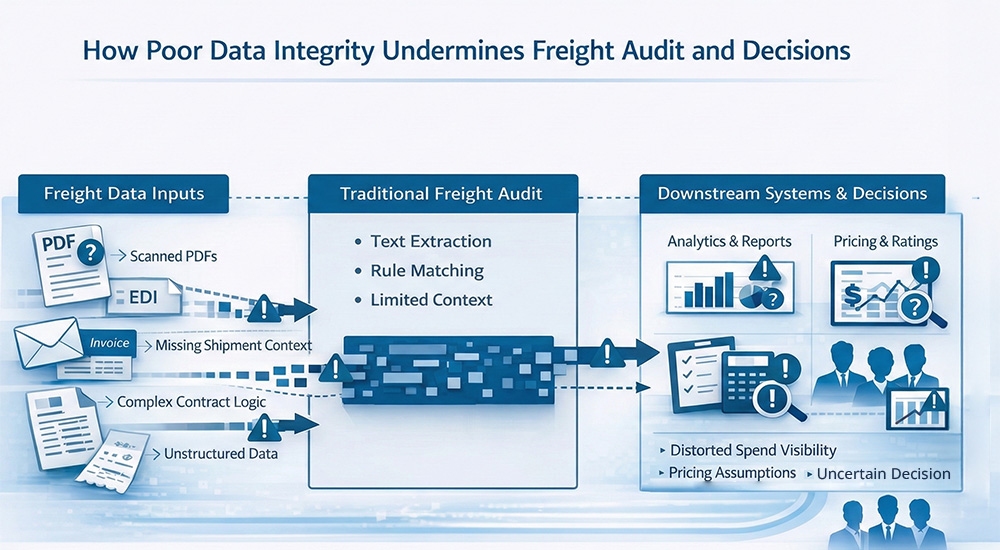
Many enterprises have transportation management systems, negotiated freight contracts, some sort of price comparison tool, and analytics platforms, yet many leaders still struggle to answer basic questions with confidence: Are rates being applied correctly? Do we truly understand transportation spend? Are decisions based on facts or approximations?
The problem is not the absence of systems, it is the absence of trusted data.
Traditional OCR-based data extraction approaches extract text, but lack understanding of logistics context, contractual logic, and pricing intent. Errors move quietly from invoice to analytics, compounding across the organization.
Without clean, validated data at the source, even the most advanced platforms fall short.
How AI Is Changing the Role of Freight Auditing
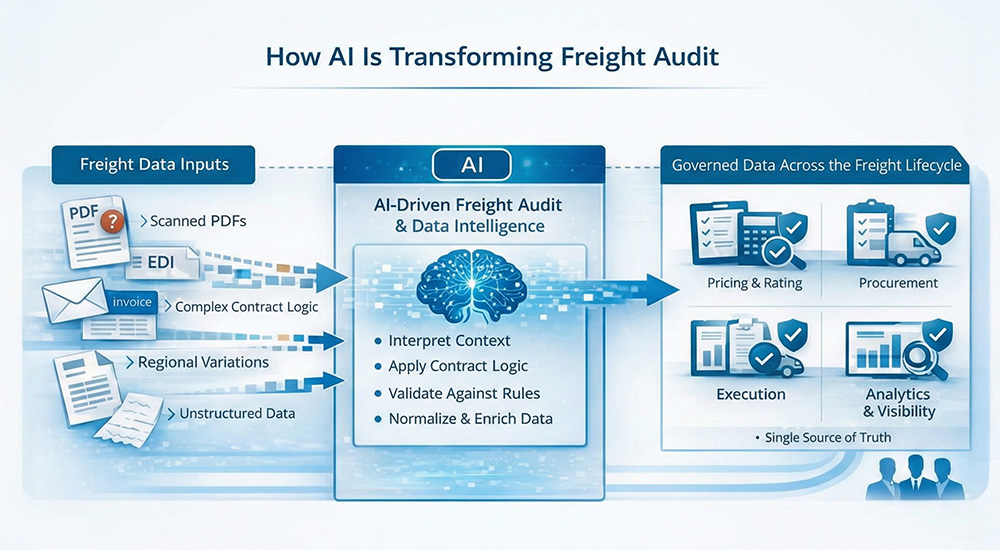
This is where freight audit has fundamentally evolved.
Modern freight audit platforms, particularly those designed with ecosystem-based architectures, are no longer built solely to validate invoices. They are designed to govern data across the entire freight lifecycle.
AI-driven data intelligence platforms, such as nSure AI Data Extraction within the nVision ecosystem, go beyond basic extraction. They read, interpret, classify, validate, normalize, and enrich freight data across all modes and regions. Rather than simply capturing numbers, they understand what those numbers represent within their operational and contractual context, and with continuous training, the system continually learns from exceptions, corrections, and outcomes to improve accuracy and performance over time.
The outcome is a single, governed source of truth, one that supports not only accurate auditing, but also pricing, rating, procurement, execution, and analytics. Freight audit becomes proactive. Variances become patterns. Data becomes insight.
From Audit Engine to Intelligence Ecosystem: The Seven-Layer Shift
As freight auditing evolves, leading organizations are moving away from isolated freight audit only solutions toward ecosystem based architectures that connect governance, execution, and analytics into one continuous intelligence loop.
nVision Global’s ecosystem is structured around seven unified technology layers that work together across the freight lifecycle. It begins with governance and master data intelligence, ensuring rules, hierarchies, tolerances, and financial logic are consistently applied. Core pricing, rating, and audit engines then enforce rate integrity and compliance at scale.
AI-driven data extraction and validation sit at the center, transforming raw freight documents into clean, trusted intelligence. That data feeds transportation spend optimization, enabling smarter pricing and procurement decisions, while execution and routing intelligence ensure those decisions are applied in daily operations. Collaboration, compliance, and dispute workflows keep stakeholders aligned, and advanced visibility and analytics turn activity into insight.
Together, these layers transform freight audit from a reactive function into a predictive, intelligence-driven capability embedded directly within the broader supply chain.
When Freight Audit Becomes Supply Chain Intelligence
When validated freight audit data feeds procurement strategies, pricing models, and analytics, freight audit stops operating in isolation. It becomes a connective layer across the entire freight lifecycle.
Negotiations become better informed. Pricing engines become more accurate. Analytics reveal behavioral trends across transportation providers and modes. What once lived quietly after execution now actively shapes strategy before the next shipment moves.
This convergence is why freight audit is increasingly viewed not just as a service, but as a strategic intelligence capability.
Why This Matters for C-Suite Leaders
For senior executives, the question is no longer whether freight auditing is necessary. It is whether the organization is using freight data intelligently enough to support financial discipline, operational resilience, and long-term optimization.
In an environment defined by volatility and margin pressure, visibility and accuracy are no longer operational luxuries. They are strategic requirements.
Freight audit, when powered by AI-driven data intelligence, is emerging as one of the most underappreciated levers for achieving both.
Final Thought
The most advanced supply chains are not defined solely by how efficiently they move goods, but by how rigorously they govern data across every invoice, every contract, and every decision.
As organizations rethink how freight data supports pricing, procurement, and execution, one reality is becoming clear: the next competitive advantage will not come from moving freight faster, but from understanding it better.
And increasingly, that discipline begins with freight audit.
The post Freight Audit: The Quiet Function That’s Reshaping Supply Chain Intelligence appeared first on nVision Global | Worldwide Supply Chain Solutions, Specializing in Global Freight Audit & Payment, Loss & Damage Claims, Supply Chain Services & Technology.
]]>The post Freight Audit: The Quiet Function That’s Reshaping Supply Chain Intelligence appeared first on nVision Global | Worldwide Supply Chain Solutions, Specializing in Global Freight Audit & Payment, Loss & Damage Claims, Supply Chain Services & Technology.
]]>Transportation spend rarely receives the same strategic attention as procurement, manufacturing, or demand planning. transportation costs represent one of the largest and most complex cost centers on the balance sheet.
Every day, millions of shipments move across an untold number of transportation providers, via various modes and global regions, under complex rate contracts. Each shipment generates invoices governed by agreed-upon rates, surcharges, accessorials, and exceptions.
What was once considered an optional back-office process is now quietly becoming one of the most important intelligence layers in modern supply chains.
What Is Freight Audit and Payment and Why Does It Exist?
At its simplest, the freight audit and payment process verifies that transportation provider invoices match contracted rates, agreed terms, and shipment details before payment is finalized. It exists because freight invoices are rarely flawless.
Rates change. Fuel fluctuates. Contracts include complex rules. Accessorials are applied inconsistently. When this complexity is multiplied across thousands of transportation providers and millions of invoices, even small discrepancies quietly add up.
Traditionally, freight audit focused on catching overcharges and recovering money after the fact. Important, but reactive, and largely disconnected from broader supply chain strategy.
That model no longer reflects today’s reality.
Why Freight Audit Has Become a Strategic Concern
Modern supply chains operate as interconnected, data-driven systems. Pricing decisions, procurement strategies, execution planning, and forecasting all depend on accurate information. Yet freight data still arrives fragmented, through EDI, PDFs, spreadsheets, emails, scans, and non-standard formats.
When unreliable data feeds downstream systems, the impact goes far beyond missed recoveries. Spend visibility becomes distorted. Pricing engines operate on assumptions. Procurement decisions rely on incomplete or lagging information.
Behind these data gaps are teams spending hours reconciling invoices, resolving disputes, and explaining variances that shouldn’t exist in the first place. Finance questions the numbers. Operations defends execution. Pricing works with assumptions. The cost isn’t just overcharges, it’s organizational drag.
As freight audit evolves into a data governance function, accuracy and scale have become critical. nVision Global has been a FedEx-certified freight auditor since 2023, achieving full certification in 2026, reflecting the ability to apply complex carrier pricing logic correctly and maintain data integrity across high-volume freight environments.
In this environment, freight audit is no longer just a financial checkpoint. It is becoming a critical data governance function that directly influences supply chain intelligence.
The Real Challenge Isn’t Auditing, It’s Data Integrity
Many enterprises have transportation management systems, negotiated freight contracts, some sort of price comparison tool, and analytics platforms, yet many leaders still struggle to answer basic questions with confidence: Are rates being applied correctly? Do we truly understand transportation spend? Are decisions based on facts or approximations?
The problem is not the absence of systems, it is the absence of trusted data.
Traditional OCR-based data extraction approaches extract text, but lack understanding of logistics context, contractual logic, and pricing intent. Errors move quietly from invoice to analytics, compounding across the organization.
Without clean, validated data at the source, even the most advanced platforms fall short.
How AI Is Changing the Role of Freight Auditing
This is where freight audit has fundamentally evolved.
Modern freight audit platforms, particularly those designed with ecosystem-based architectures, are no longer built solely to validate invoices. They are designed to govern data across the entire freight lifecycle.
AI-driven data intelligence platforms, such as nSure AI Data Extraction within the nVision ecosystem, go beyond basic extraction. They read, interpret, classify, validate, normalize, and enrich freight data across all modes and regions. Rather than simply capturing numbers, they understand what those numbers represent within their operational and contractual context, and with continuous training, the system continually learns from exceptions, corrections, and outcomes to improve accuracy and performance over time.
The outcome is a single, governed source of truth, one that supports not only accurate auditing, but also pricing, rating, procurement, execution, and analytics. Freight audit becomes proactive. Variances become patterns. Data becomes insight.
From Audit Engine to Intelligence Ecosystem: The Seven-Layer Shift
As freight auditing evolves, leading organizations are moving away from isolated freight audit only solutions toward ecosystem based architectures that connect governance, execution, and analytics into one continuous intelligence loop.
nVision Global’s ecosystem is structured around seven unified technology layers that work together across the freight lifecycle. It begins with governance and master data intelligence, ensuring rules, hierarchies, tolerances, and financial logic are consistently applied. Core pricing, rating, and audit engines then enforce rate integrity and compliance at scale.
AI-driven data extraction and validation sit at the center, transforming raw freight documents into clean, trusted intelligence. That data feeds transportation spend optimization, enabling smarter pricing and procurement decisions, while execution and routing intelligence ensure those decisions are applied in daily operations. Collaboration, compliance, and dispute workflows keep stakeholders aligned, and advanced visibility and analytics turn activity into insight.
Together, these layers transform freight audit from a reactive function into a predictive, intelligence-driven capability embedded directly within the broader supply chain.
When Freight Audit Becomes Supply Chain Intelligence
When validated freight audit data feeds procurement strategies, pricing models, and analytics, freight audit stops operating in isolation. It becomes a connective layer across the entire freight lifecycle.
Negotiations become better informed. Pricing engines become more accurate. Analytics reveal behavioral trends across transportation providers and modes. What once lived quietly after execution now actively shapes strategy before the next shipment moves.
This convergence is why freight audit is increasingly viewed not just as a service, but as a strategic intelligence capability.
Why This Matters for C-Suite Leaders
For senior executives, the question is no longer whether freight auditing is necessary. It is whether the organization is using freight data intelligently enough to support financial discipline, operational resilience, and long-term optimization.
In an environment defined by volatility and margin pressure, visibility and accuracy are no longer operational luxuries. They are strategic requirements.
Freight audit, when powered by AI-driven data intelligence, is emerging as one of the most underappreciated levers for achieving both.
Final Thought
The most advanced supply chains are not defined solely by how efficiently they move goods, but by how rigorously they govern data across every invoice, every contract, and every decision.
As organizations rethink how freight data supports pricing, procurement, and execution, one reality is becoming clear: the next competitive advantage will not come from moving freight faster, but from understanding it better.
And increasingly, that discipline begins with freight audit.
The post Freight Audit: The Quiet Function That’s Reshaping Supply Chain Intelligence appeared first on nVision Global | Worldwide Supply Chain Solutions, Specializing in Global Freight Audit & Payment, Loss & Damage Claims, Supply Chain Services & Technology.
]]>The post Parcel Audit: The Overlooked Intelligence Layer behind High-Volume Shipping appeared first on nVision Global | Worldwide Supply Chain Solutions, Specializing in Global Freight Audit & Payment, Loss & Damage Claims, Supply Chain Services & Technology.
]]>Parcel shipping is often assumed to be simple. A label is printed, a package moves, an invoice arrives, and payment follows. Compared to truckload or ocean freight, it appears routine, almost automatic.
In reality, parcel shipping is one of the most complex and fast-moving areas of freight transportation. For organizations shipping thousands or millions of parcels each year, small inconsistencies quietly compound into meaningful cost and visibility challenges.
Teams often assume parcel costs are predictable, until monthly invoices spike and no one can clearly explain why.
This is why parcel freight audit, long treated as an afterthought, is becoming an essential intelligence function within modern supply chains.
What Is Parcel Freight Audit and Why Does It Exist?
Parcel freight audit is the process of validating parcel transportation provider invoices to confirm that charges on the invoice align with provider negotiated rates, service levels, dimensional weight rules, fuel schedules, accessorials, and delivery commitments.
Parcel invoices are rule-heavy by nature. A single shipment can be affected by zone logic, package dimensions, weight thresholds, residential surcharges, peak fees, address corrections, and service guarantees. At scale, these variables change continuously.
Traditionally, parcel audits focused on identifying billing errors and recovering refunds after invoices were issued. That function remains important, but it is no longer sufficient.
Why has Parcel Audit Evolved Beyond Refund Recovery?
Parcel shipping has become a primary fulfillment channel for many enterprises. E-commerce growth, omnichannel delivery models, and rising customer expectations have dramatically increased parcel volume and complexity.
Invoices now arrive in massive quantities, often weekly or daily, containing millions of line-level data points. Manual review is impractical, and traditional rules-based systems struggle to keep pace with constant changes in carrier pricing logic.
Without effective parcel auditing, organizations lose clarity into true shipping costs, struggle to enforce contract terms, and operate with distorted spend visibility.
As parcel audit expands beyond refund recovery into a control layer for cost accuracy and data integrity, audit discipline at scale has become increasingly important. This shift is also reflected in how leading parcel carriers evaluate audit capabilities. nVision Global has been a FedEx-certified parcel auditor since 2023, maintaining that designation through 2024 and 2025, and achieving full certification in 2026. This reflects the ability to accurately interpret complex parcel pricing logic and maintain trusted data across high-volume shipping environments.
Parcel audit is no longer just an accounting activity, it has become a control layer for cost accuracy, service enforcement, and fulfillment insight.
The Hidden Challenge: Parcel Data at Scale
Some enterprises already have parcel contracts, transportation provider portals, and reporting tools. Yet many still struggle to answer basic questions with confidence.
- Are dimensional rules being applied correctly?
- Are accessorial charges consistent with contract terms?
- Are service failures being identified accurately?
- The challenge is not access to data, it is confidence in the data.
Parcel invoices arrive in structured, semi-structured, and unstructured formats. Legacy OCR tools can extract values, but they do not understand contractual intent, dimensional logic, or service-level nuance. Errors pass quietly into reporting systems, weakening analytics and decision-making downstream.
Solving this challenge requires more than extraction, it requires systems that understand parcel logic at scale.
How AI Is Redefining Parcel Audit?
Modern parcel audit requires intelligence, not just extraction.
AI-driven data intelligence platforms, such as nSure AI Data Extraction within the nVision ecosystem, interpret parcel invoices in full operational and contractual context. They classify charges, validate dimensional and zone logic, normalize data, and continuously learn from evolving transportation provider behavior.
Instead of relying on static rules that require constant maintenance, AI adapts as pricing structures change. Parcel audit shifts from reactive refund identification to proactive data validation and insight generation.
The result is clean, trusted parcel data that can support analytics, transportation provider negotiations, and fulfillment strategy.
From Transaction Review to Parcel Intelligence
As parcel audit becomes integrated with analytics and procurement processes, its value expands. Validated audit data highlights patterns in dimensional weight impact, accessorial usage, service performance, and zone-based cost behavior.
Organizations gain earlier visibility into cost drivers, stronger enforcement of contract terms, and clearer insight into how parcel decisions affect overall fulfillment economics. Parcel audit becomes a feedback loop, informing strategy rather than simply validating transactions.
What once occurred quietly after billing now plays an active role in shaping future shipping decisions.
Final Thought
Parcel shipping may appear operationally simple, but at scale it is one of the most data-intensive components of the supply chain.
As volumes grow and pricing structures become more complex, parcel audit, powered by AI-driven data intelligence such as nVision Global’s nSure AI Data Extraction, is emerging as a foundational capability for organizations that want accuracy, visibility, and control.
For high-volume shippers, the smartest parcel strategies don’t start with renegotiation or new transportation providers, they start with intelligence at the invoice level.
The post Parcel Audit: The Overlooked Intelligence Layer behind High-Volume Shipping appeared first on nVision Global | Worldwide Supply Chain Solutions, Specializing in Global Freight Audit & Payment, Loss & Damage Claims, Supply Chain Services & Technology.
]]>The post Freight Audit: The Quiet Function That’s Reshaping Supply Chain Intelligence appeared first on nVision Global | Worldwide Supply Chain Solutions, Specializing in Global Freight Audit & Payment, Loss & Damage Claims, Supply Chain Services & Technology.
]]>Transportation spend rarely receives the same strategic attention as procurement, manufacturing, or demand planning. transportation costs represent one of the largest and most complex cost centers on the balance sheet.
Every day, millions of shipments move across an untold number of transportation providers, via various modes and global regions, under complex rate contracts. Each shipment generates invoices governed by agreed-upon rates, surcharges, accessorials, and exceptions.
What was once considered an optional back-office process is now quietly becoming one of the most important intelligence layers in modern supply chains.
What Is Freight Audit and Payment and Why Does It Exist?
At its simplest, the freight audit and payment process verifies that transportation provider invoices match contracted rates, agreed terms, and shipment details before payment is finalized. It exists because freight invoices are rarely flawless.
Rates change. Fuel fluctuates. Contracts include complex rules. Accessorials are applied inconsistently. When this complexity is multiplied across thousands of transportation providers and millions of invoices, even small discrepancies quietly add up.
Traditionally, freight audit focused on catching overcharges and recovering money after the fact. Important, but reactive, and largely disconnected from broader supply chain strategy.
That model no longer reflects today’s reality.
Why Freight Audit Has Become a Strategic Concern
Modern supply chains operate as interconnected, data-driven systems. Pricing decisions, procurement strategies, execution planning, and forecasting all depend on accurate information. Yet freight data still arrives fragmented, through EDI, PDFs, spreadsheets, emails, scans, and non-standard formats.
When unreliable data feeds downstream systems, the impact goes far beyond missed recoveries. Spend visibility becomes distorted. Pricing engines operate on assumptions. Procurement decisions rely on incomplete or lagging information.
Behind these data gaps are teams spending hours reconciling invoices, resolving disputes, and explaining variances that shouldn’t exist in the first place. Finance questions the numbers. Operations defends execution. Pricing works with assumptions. The cost isn’t just overcharges, it’s organizational drag.
As freight audit evolves into a data governance function, accuracy and scale have become critical. nVision Global has been a FedEx-certified freight auditor since 2023, achieving full certification in 2026, reflecting the ability to apply complex carrier pricing logic correctly and maintain data integrity across high-volume freight environments.
In this environment, freight audit is no longer just a financial checkpoint. It is becoming a critical data governance function that directly influences supply chain intelligence.
The Real Challenge Isn’t Auditing, It’s Data Integrity
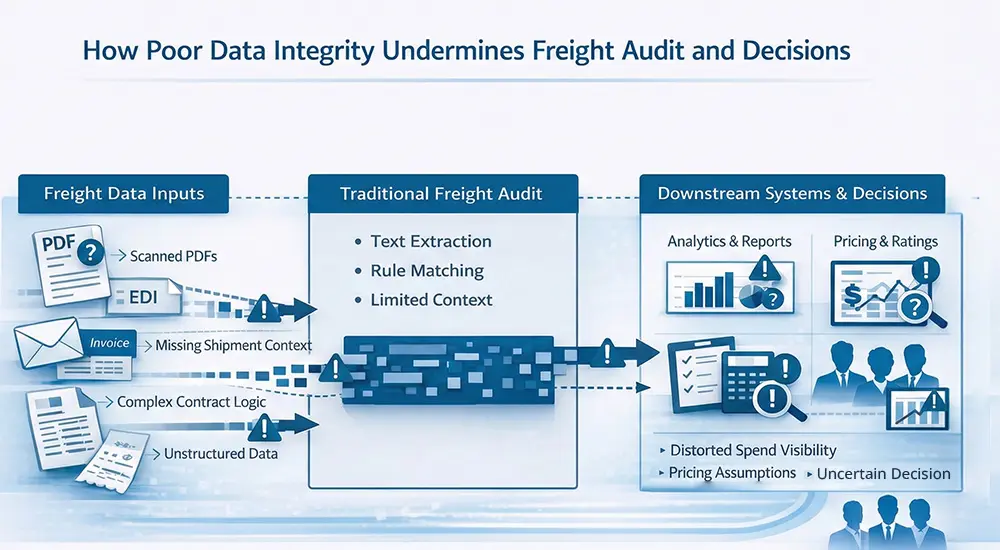
Many enterprises have transportation management systems, negotiated freight contracts, some sort of price comparison tool, and analytics platforms, yet many leaders still struggle to answer basic questions with confidence: Are rates being applied correctly? Do we truly understand transportation spend? Are decisions based on facts or approximations?
The problem is not the absence of systems, it is the absence of trusted data.
Traditional OCR-based data extraction approaches extract text, but lack understanding of logistics context, contractual logic, and pricing intent. Errors move quietly from invoice to analytics, compounding across the organization.
Without clean, validated data at the source, even the most advanced platforms fall short.
How AI Is Changing the Role of Freight Auditing
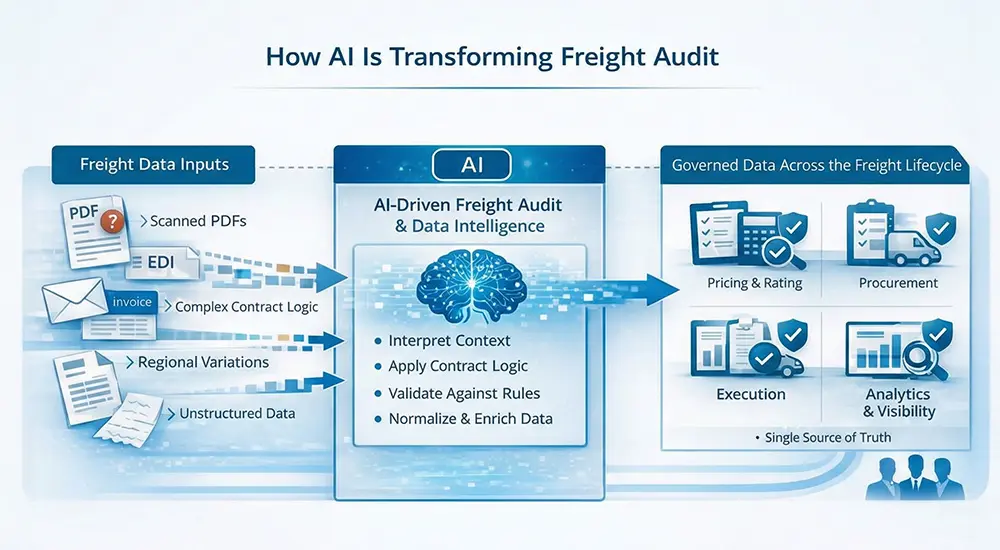
This is where freight audit has fundamentally evolved.
Modern freight audit platforms, particularly those designed with ecosystem-based architectures, are no longer built solely to validate invoices. They are designed to govern data across the entire freight lifecycle.
AI-driven data intelligence platforms, such as nSure AI Data Extraction within the nVision ecosystem, go beyond basic extraction. They read, interpret, classify, validate, normalize, and enrich freight data across all modes and regions. Rather than simply capturing numbers, they understand what those numbers represent within their operational and contractual context, and with continuous training, the system continually learns from exceptions, corrections, and outcomes to improve accuracy and performance over time.
The outcome is a single, governed source of truth, one that supports not only accurate auditing, but also pricing, rating, procurement, execution, and analytics. Freight audit becomes proactive. Variances become patterns. Data becomes insight.
From Audit Engine to Intelligence Ecosystem: The Seven-Layer Shift
As freight auditing evolves, leading organizations are moving away from isolated freight audit only solutions toward ecosystem based architectures that connect governance, execution, and analytics into one continuous intelligence loop.
nVision Global’s ecosystem is structured around seven unified technology layers that work together across the freight lifecycle. It begins with governance and master data intelligence, ensuring rules, hierarchies, tolerances, and financial logic are consistently applied. Core pricing, rating, and audit engines then enforce rate integrity and compliance at scale.
AI-driven data extraction and validation sit at the center, transforming raw freight documents into clean, trusted intelligence. That data feeds transportation spend optimization, enabling smarter pricing and procurement decisions, while execution and routing intelligence ensure those decisions are applied in daily operations. Collaboration, compliance, and dispute workflows keep stakeholders aligned, and advanced visibility and analytics turn activity into insight.
Together, these layers transform freight audit from a reactive function into a predictive, intelligence-driven capability embedded directly within the broader supply chain.
When Freight Audit Becomes Supply Chain Intelligence
When validated freight audit data feeds procurement strategies, pricing models, and analytics, freight audit stops operating in isolation. It becomes a connective layer across the entire freight lifecycle.
Negotiations become better informed. Pricing engines become more accurate. Analytics reveal behavioral trends across transportation providers and modes. What once lived quietly after execution now actively shapes strategy before the next shipment moves.
This convergence is why freight audit is increasingly viewed not just as a service, but as a strategic intelligence capability.
Why This Matters for C-Suite Leaders
For senior executives, the question is no longer whether freight auditing is necessary. It is whether the organization is using freight data intelligently enough to support financial discipline, operational resilience, and long-term optimization.
In an environment defined by volatility and margin pressure, visibility and accuracy are no longer operational luxuries. They are strategic requirements.
Freight audit, when powered by AI-driven data intelligence, is emerging as one of the most underappreciated levers for achieving both.
Final Thought
The most advanced supply chains are not defined solely by how efficiently they move goods, but by how rigorously they govern data across every invoice, every contract, and every decision.
As organizations rethink how freight data supports pricing, procurement, and execution, one reality is becoming clear: the next competitive advantage will not come from moving freight faster, but from understanding it better.
And increasingly, that discipline begins with freight audit.
The post Freight Audit: The Quiet Function That’s Reshaping Supply Chain Intelligence appeared first on nVision Global | Worldwide Supply Chain Solutions, Specializing in Global Freight Audit & Payment, Loss & Damage Claims, Supply Chain Services & Technology.
]]>The post How a Global Consumer Electronics Manufacturer Recovered $2.8million appeared first on nVision Global | Worldwide Supply Chain Solutions, Specializing in Global Freight Audit & Payment, Loss & Damage Claims, Supply Chain Services & Technology.
]]>How a Global Consumer Electronics Manufacturer Recovered $2.8M Through Freight Audit Transformation
A global electronics leader partnered with nVision Global to modernize its freight audit and payment ecosystem, unlocking millions in savings and rebuilding financial confidence across its supply chain.



Challenges Vs Outcomes
Challenges Vs Outcomes
The Strain of Rapid Global Growth
As consumer demand skyrocketed across continents, the company’s freight volumes grew exponentially. But their freight audit infrastructure did not evolve with it. Behind a state-of-the-art distribution network was a freight finance ecosystem still dependent on emails, spreadsheets, and manual checks.
Invoices from more than 60 global carriers routed into regional finance teams that operated independently. Each region followed its own audit interpretation, workflows, and approval logic resulting in inconsistencies, missed errors, and delayed payments.
During peak buying seasons, the pressure intensified.
- Slow dispute cycles meant carriers were increasingly frustrated.
- Payment delays jeopardized access to priority capacity.
- Audit exceptions piled up faster than teams could clear them.
Every team was doing its best, but the truth was, we had no unified financial control. We were managing freight spend blind.
What appeared to be minor inefficiencies were actually hiding a far bigger problem:
systemic financial leakage, spread across three continents.
Lost Overcharges and Siloed Compliance During Spike Seasons

When annual shipping volumes peaked, particularly during new product launches-carrier invoices became increasingly complex.
Multi-leg charges, fuel indices, port congestion fees, inland haulage, and cross-border taxes created invoices with dozens of line items per shipment.
Teams struggled to verify:
- Whether fuel surcharges matched contract terms
- Whether accessorial were legitimate or repeated
- Whether rate tiers reflected negotiated volumes
- Whether duplicate invoices were being routed through approvals
During a 6-month internal audit sampling, the company discovered multiple unchallenged charges that should have been flagged.
But the sheer volume of invoices, several thousand per month, meant manual reviews were simply not scalable.
Executives feared that if a spike season hit again, the leakage would continue unnoticed.
This is where the partnership with nVision began.
Transformation Powered by Full Contract Digitization
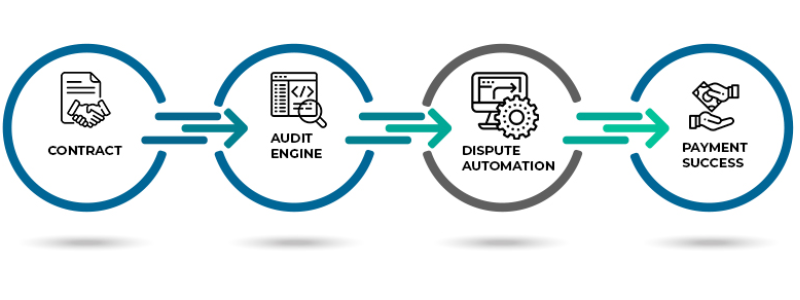
nVision’s first step was not automation, it was architecture reconstruction.
Every contract, tariff table, and surcharge matrix from all 60 carriers was digitized into a unified audit engine.
This included lane-specific pricing, multi-currency conversions, peak-season surcharges, and carrier-specific logic. Once codified, invoices that previously took hours to validate were now being reviewed line-by-line in seconds.
This shift to automated validation eliminated thousands of manual review hours that regional teams had been spending each month, ultimately reducing audit-related labor time by more than 85%.
The impact was immediate:
- Discrepancies hidden for years surfaced
- Fuel miscalculations became visible
- Duplicate charges were flagged instantly
- Contract misalignments became clearly identifiable
nVision’s audit logic exposed variances we never had the bandwidth to detect manually. It wasn’t small money, we were bleeding millions.
Real-Time Global Visibility Replaces Siloed Reporting
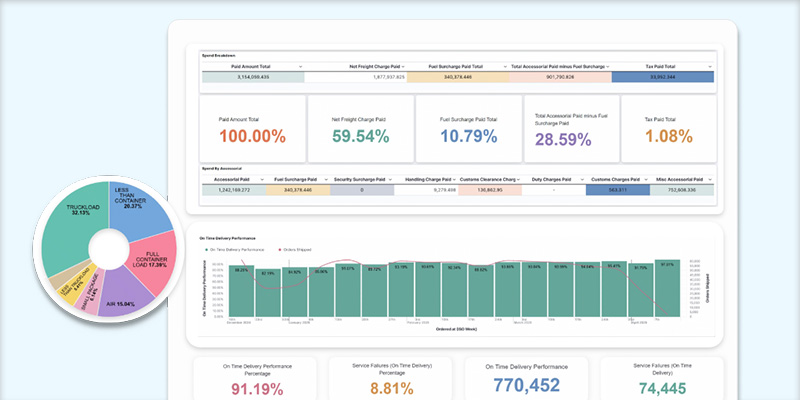
Before nVision, each region maintained its own freight tracking spreadsheet. There was no consolidated view, no global intelligence, no unified reporting.
nVision replaced that uncertainty with a global freight control tower.
Leaders could now see:
- Total freight spend across modes
- Region-level cost deviations
- Lane-level overcharge patterns
- Dispute aging and success rates
- Carrier compliance and performance
During the first wave of visibility, nVision uncovered surcharge inconsistencies and rate misapplications across eight of the company’s highest-volume global lanes, discrepancies, no regional team had been able to detect on their own.
These visibility insights also revealed future optimization opportunities, including lane rationalization and a more strategic carrier mix, that were projected to unlock an additional $220K in forward-looking savings.
Faster Disputes, Faster Payments, Stronger Carrier Relationships
Previously, disputes could take up to 18 days to resolve.
With carriers operating in different time zones and regions validating their own way, the back-and-forth was slow and inconsistent.
nVision re-engineered the entire dispute process.
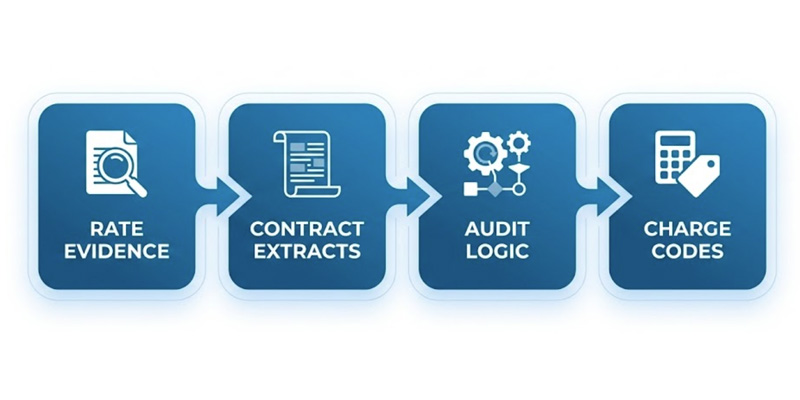
Disputes now auto-generate with:
- Rate evidence
- Contract extracts
- Audit logic
- Charge codes
Settlement cycles shortened to 6 days, and payment delays were reduced by 12 days, restoring trust with carriers.
This resulted in two strategic wins:
- Priority allocation returned from two major ocean carriers
- Carriers began proactively notifying billing discrepancies
A rare but powerful indicator of operational trust.
Unlocking $2.8 Million in Annualized Savings
- 1.96M Recovered From Systemic Billing Errors: After nVision’s audit engine went live, the first full quarter revealed a backlog of hidden errors that had accumulated unnoticed for years.
- $420K From Contract Compliance: Surcharges and rate misalignments were immediately identified across eight global lanes.
- $240K in Efficiency Gains: Automation eliminated 85% of manual review hours.
- $220K in Forward-Looking Optimization Opportunities: nVision uncovered future savings that could be realized through lane rationalization and carrier performance rebalance.
nVision didn’t just clean up our invoices. They rebuilt our entire freight financial foundation.
Conclusion: A New Standard for Freight Cost Governance
With nVision, the manufacturer moved from:
- Fragmented audits to unified compliance
- Reactive disputes to real-time validation
- Spreadsheet-driven checks to automated intelligence
- Limited visibility to global control tower insights
Today, freight finance is no longer a liability.
It is a strategic lever, capable of generating recurring savings and strengthening carrier trust.
Your Freight Audit and Payment Partner: Optimize Your Freight Spend with Expert Insights
Let’s check your invoices! Get in touch with us today.

Get In Touch
[contact-form-7]The post How a Global Consumer Electronics Manufacturer Recovered $2.8million appeared first on nVision Global | Worldwide Supply Chain Solutions, Specializing in Global Freight Audit & Payment, Loss & Damage Claims, Supply Chain Services & Technology.
]]>Read More
The post Turning Freight Data Into Supply Chain Transformation appeared first on nVision Global | Worldwide Supply Chain Solutions, Specializing in Global Freight Audit & Payment, Loss & Damage Claims, Supply Chain Services & Technology.
]]>The Challenge
The Challenge
A large industrial distributor was unknowingly leaking millions of dollars in logistics spend. While each location managed its own shipping activity, the organization had little enterprise-wide visibility. Shipments were leaving daily without oversight, sometimes multiple trucks going to the same place on the same day, billed at full cost.
One striking example: on a single day, five separate shipments left the same location for the same destination, each billed at minimum LTL rates. Had they been consolidated, the freight could have moved on one truck for nearly half the cost.
But here’s the surprising part: the company’s own practices accounted for only 25% of the problem. The other 75% came from its broader network of providers, vendors, and distributors. Hidden inefficiencies in their partners’ operations were silently driving up costs and creating supply chain waste.

The Breakthrough
The Breakthrough
Through nVision Global’s freight audit services, the distributor gained immediate access to clear, enterprise-wide shipping data. For the first time, they could see not just their own shipments, but the combined picture across all partners and providers.
That visibility was eye-opening. A single snapshot exposed massive inefficiencies and duplicate shipments happening across their entire network, issues they never could have detected without freight audit insight.

Monitor Daily Efficiency

Strengthen Partner Accountability

Eliminate Waste Automatically
The Bigger Picture
The Bigger Picture
The customer quickly realized that this first glimpse into their logistics activity was just the tip of the iceberg. With nVision Global’s support, they began to:
- Monitor Daily Efficiency
Spot redundant shipments before they happened, not months after. - Eliminate Waste Automatically
Explore nVision’s Transportation Management System (TMS) to consolidate shipments and ensure smarter routing decisions. - Strengthen Partner Accountability
Use shipping data to identify inefficiencies across providers, vendors, and distributors, turning hidden costs into opportunities for negotiation and process improvement.
The Results
The Results
The estimated potential savings is millions of dollars annually simply by eliminating redundancies across their extended network. But here’s the remarkable part:
What started as a single moment of visibility has now paved the way for broader transformation: more control, better accountability, and a stronger, more efficient supply chain.
These savings came before even addressing the traditional freight audit function of catching and correcting erroneous invoices and charges.
When freight audit savings are added on top of increased efficiency, the savings compound further.
And when combined with nVision Global’s Impact TMS, optimization becomes automatic, transforming both process and profitability.
Customer Perspective
Customer Perspective
 When we finally saw the full picture, not just our own shipments, but our partners and providers as well… it was eye-opening. The data showed us where the waste really was, and it gave us the leverage to change it. We’re now saving millions and setting up our supply chain for long-term success.
Why It Matters
Why It Matters
Freight audit is more than invoice accuracy, it’s about shining a light on the hidden inefficiencies that drain supply chains. In this case, visibility revealed that the majority of the problem wasn’t even internal. And the most exciting part? These savings came before invoice errors were even corrected!
By exposing hidden inefficiencies, recovering dollars lost to billing mistakes, and unlocking automation through TMS, nVision Global turns a simple data view into a roadmap for immediate savings and long-term transformation.
The post Turning Freight Data Into Supply Chain Transformation appeared first on nVision Global | Worldwide Supply Chain Solutions, Specializing in Global Freight Audit & Payment, Loss & Damage Claims, Supply Chain Services & Technology.
]]>