The post The New Logistics Reality: Designing Supply Chains for Disruption, Not Efficiency appeared first on nVision Global | Worldwide Supply Chain Solutions, Specializing in Global Freight Audit & Payment, Loss & Damage Claims, Supply Chain Services & Technology.
]]>
Efficiency Built the Modern Supply Chain. Disruption Is Reshaping It.
For decades, supply chains were engineered around a clear objective:
Move goods at the lowest possible cost through the fastest and most efficient available routes.
That model worked, until it didn’t.
In today’s environment, global supply chains are facing a different kind of pressure.
Route disruptions, capacity constraints, shifting trade patterns, and unexpected events are no longer rare exceptions. They are part of the operating environment.
And that shift is forcing a fundamental rethink of how supply chains are designed.
Efficiency is no longer the only goal.
Resilience and optionality have become just as important.
The Problem with Designing for Efficiency Alone
Traditional logistics strategies prioritize:
- Lowest-cost transportation providers
- Fixed routing guides
- Lean inventory models
- Highly optimized, single-path execution
These approaches drive cost savings under stable conditions.
But they also introduce risk.
When supply chains are optimized too tightly, they lose flexibility.
And when disruption occurs, even small interruptions can create an outsized impact:
- Delayed shipments
- Expedited freight costs
- Contract misalignment
- Inventory imbalances
- Margin erosion
In highly optimized networks, there is often no “Plan B.”
Disruption Is No Longer an Exception
Recent global events have made one thing clear:
Supply chain disruption is not cyclical. It is continuous.
From port congestion and labor shortages to shifting trade routes and capacity, logistics teams are navigating an environment where conditions can change quickly and without warning.
In this reality, supply chains designed solely for efficiency struggle to adapt.
What’s needed instead is a model that anticipates change rather than reacts to it.
Designing for Resilience and Optionality
Modern supply chains are being redesigned with a different set of priorities:
1. Multiple Routing Options
Instead of relying on a single optimized path, organizations are building flexibility into their networks with alternative lanes, providers, and modes.
2. Dynamic Transportation Decisions
Static routing guides are giving way to real-time decision-making based on current market conditions, capacity, and cost.
3. Pre-Shipment Cost Visibility
Understanding transportation cost before execution, not after invoicing, enables smarter planning and reduces downstream surprises.
4. Integrated Financial Governance
Transportation decisions are no longer just operational. They are financial decisions that impact forecasting, accruals, and margin.
5. Data You Can Act On- Not Just See
Visibility alone is not enough. Organizations need trusted, validated data that supports confident, timely decisions.
This shift reflects a broader change in mindset:
From optimizing for the best-case scenario to preparing for multiple possible outcomes.
From Execution Tool to Strategic Control Layer
This evolution is also changing the role of logistics technology.
Historically, transportation management systems were designed to support execution:
Plan the shipment, tender the load, track delivery.
But in today’s environment, execution alone is not enough.
Organizations are looking for systems that connect:
- Transportation planning
- Contract rate validation
- Freight audit and payment
- Claims management
- Analytics and reporting
…into a single, governed framework.
Because the real value is not just moving freight.
It’s controlling how transportation decisions impact the business.
Why This Shift Matters to Finance and Leadership
For finance leaders, this transformation is especially important.
When supply chains are designed only for efficiency, cost variability increases under disruption.
Forecasting becomes less reliable.
Accruals become less accurate.
And financial reporting becomes more reactive.
By contrast, supply chains designed for resilience and control enable:
- More predictable transportation spend
- Better alignment between operations and finance
- Reduced cost leakage from unplanned decisions
- Stronger contract enforcement
In other words, logistics becomes a source of financial confidence, not uncertainty.
A New Definition of Optimization
Optimization used to mean:
Lowest cost + fastest route
Today, it means something different:
Controlled cost + flexible execution + informed decision-making
Organizations that embrace this shift are better positioned to navigate disruption without sacrificing performance.
Those that don’t risk being forced into reactive decisions that drive cost and complexity.
Read more about this: Supply vs. Demand: How To Navigate the Biggest Supply Chain Challenge?
The Bottom Line
The modern supply chain is no longer defined by stability.
It is defined by change.
Designing for efficiency alone is no longer enough.
The organizations that succeed in this environment will be those that build supply chains designed not just to perform under ideal conditions, but to adapt when conditions change.
Because in today’s logistics landscape, disruption isn’t the exception.
It’s the reality.
At nVision Global, we help organizations move beyond execution-focused logistics toward a fully integrated model of transportation planning, financial control, and data-driven decision-making.
If you’re evaluating how your current approach supports resilience and control, we’d welcome the conversation.
The post The New Logistics Reality: Designing Supply Chains for Disruption, Not Efficiency appeared first on nVision Global | Worldwide Supply Chain Solutions, Specializing in Global Freight Audit & Payment, Loss & Damage Claims, Supply Chain Services & Technology.
]]>The post How Transportation Data Helps Shippers Make Smarter Supply Chain Decisions appeared first on nVision Global | Worldwide Supply Chain Solutions, Specializing in Global Freight Audit & Payment, Loss & Damage Claims, Supply Chain Services & Technology.
]]>
Most companies have more transportation data than they realize.
Every shipment, invoice, accessorial charge, fuel surcharge, delivery exception, freight claim, provider interaction, purchase order, bill of lading, routing decision, and payment record creates information that can help explain how the supply chain is performing.
The challenge is that this data is often scattered across systems, departments, locations, providers, spreadsheets, reports, and email threads. As a result, many companies can see activity, but they cannot always turn that activity into useful intelligence.
That distinction matters.
Transportation data is only valuable when it helps companies make better decisions. For shippers, that means using freight data to understand costs, improve provider accountability, identify network issues, support procurement, strengthen financial reporting, and make more confident supply chain decisions.
In today’s environment, visibility alone is not enough. Shippers need transportation data they can trust, interpret, and act on.
Why Transportation Data Is Often Underused
Transportation data is often treated as a record of what has already happened.
A shipment moved. An invoice was received. A charge was paid. A delivery was late. A claim was filed. A provider was used. A cost was reported.
But when transportation data is only used after the fact, companies miss its larger strategic value.
The problem is rarely a lack of data. The problem is that the data may be incomplete, inconsistent, disconnected, or difficult to interpret. Shipment data may live in one system. Invoice data may live in another. Provider contracts may be stored elsewhere. Claims may be managed separately. Reporting may rely on manual spreadsheet work.
When that happens, companies may struggle to answer important questions, such as:
- Why did transportation costs increase?
- Which lanes are driving the most spend?
- Which transportation providers are performing best?
- Are contracted rates being applied correctly?
- Where are accessorial charges increasing?
- Which facilities are creating recurring exceptions?
- Are freight claims concentrated by provider, lane, or product type?
- Which shipments are moving outside routing guidelines?
- How accurate are freight accruals and forecasts?
- Where can the company reduce cost without hurting service?
These are not just logistics questions. They are supply chain, procurement, finance, and operational questions.
When transportation data is difficult to connect, teams may make decisions based on partial information. They may see total spend, but not the reason behind the spend. They may see service issues, but not the pattern behind them. They may see invoice exceptions, but not the root cause.
That is why transportation data needs to become more than information. It needs to become intelligence.
Freight Invoice Data Reveals More Than Cost
Freight invoice data is one of the most valuable sources of transportation intelligence because it shows what the company was actually charged.
That makes it different from planned shipment data, quoted costs, or estimated rates. Invoice data reflects real financial activity. When it is validated and analyzed correctly, it can reveal whether transportation costs are accurate, expected, and aligned with contract terms.
Freight invoice data can help answer questions such as:
- Were contracted rates applied correctly?
- Were fuel surcharges calculated properly?
- Were accessorial charges valid?
- Were duplicate charges submitted?
- Were taxes, duties, or currency conversions handled correctly?
- Did the shipment match the invoice?
- Was the correct transportation provider, mode, lane, and service level used?
- Was the invoice coded correctly for financial reporting?
This matters because freight invoice errors can affect more than accounts payable. They can influence margin, cash flow, accruals, budgeting, customer profitability, provider negotiations, and month-end reporting.
When freight audit data is accurate and accessible, it gives companies a clearer understanding of transportation spend. It also helps finance and logistics teams speak from the same set of numbers.
That is where invoice data becomes strategic. It does not just help companies pay bills. It helps them understand whether freight costs are correct, controlled, and explainable.
Shipment Data Helps Identify Network Patterns
Shipment data helps companies understand how freight is actually moving through the network.
At the shipment level, this may include origin, destination, mode, provider, service level, pickup date, delivery date, weight, dimensions, shipment type, purchase order, bill of lading, customer, facility, and delivery performance.
On its own, this information is useful. But when shipment data is analyzed over time, it can reveal broader network patterns.
For example, companies may discover:
- Certain lanes are consistently more expensive than expected
- Specific facilities create recurring delays or exceptions
- Some modes are being used when better options may be available
- Shipment consolidation opportunities are being missed
- Certain customers or regions are driving disproportionate cost
- Expedited freight is increasing because of planning issues
- Routing guide compliance is inconsistent
- Delivery performance varies significantly by provider or lane
These insights help shippers move from reactive problem-solving to proactive improvement.
Instead of looking at one late delivery or one expensive shipment, teams can identify recurring patterns and determine whether the issue is related to planning, provider performance, routing, facility behavior, order timing, mode selection, or documentation.
That is the difference between seeing a problem and understanding why the problem exists.
Provider Performance Data Supports Better Accountability
Transportation provider performance has a direct impact on cost, service, customer satisfaction, and operational stability.
But provider performance is difficult to manage without reliable data.
A transportation provider may appear to be performing well based on anecdotal feedback, but the data may tell a different story. Another provider may seem expensive at the rate level, but may deliver better service, fewer exceptions, fewer claims, and lower total cost over time.
That is why provider performance should be evaluated using a more complete view.
Useful provider performance metrics may include:
- On-time pickup
- On-time delivery
- Invoice accuracy
- Accessorial charge frequency
- Claims activity
- Dispute volume
- Tender acceptance
- Service consistency
- Lane-level performance
- Cost versus contract
- Exception frequency
- Responsiveness and resolution time
When this data is available, shippers can have more productive conversations with transportation providers. Instead of relying on general impressions, they can point to specific performance trends, billing issues, service gaps, and improvement opportunities.
Provider performance data also supports procurement. During sourcing events, companies can evaluate not just price, but total value. A lower rate may not be the best option if it comes with poor service, excessive exceptions, frequent billing errors, or higher claims exposure.
Better data helps companies hold transportation providers accountable while also identifying which relationships are creating the most value.
Transportation Data Helps Finance Understand Freight Spend
Transportation costs are a major operating expense for many companies, yet finance teams often do not have the level of detail needed to fully understand what is driving those costs.
They may see freight spend increasing, but not know whether the increase is caused by volume, rate changes, fuel, accessorial charges, mode shifts, provider mix, network changes, invoice errors, expedited shipments, or routing noncompliance.
That lack of clarity creates problems for budgeting, forecasting, accruals, margin analysis, and financial reporting.
Transportation data helps close that gap.
When freight data is accurate and connected, finance teams can better understand:
- Freight spend by lane, mode, region, business unit, and customer
- Actual cost versus expected cost
- Invoice exceptions and unresolved disputes
- Accrued freight cost versus paid freight cost
- Cost trends over time
- Fuel surcharge impact
- Provider-level cost changes
- Accessorial charge growth
- Transportation cost per unit, order, or shipment
- Budget variances and root causes
This gives finance teams more confidence in the numbers behind transportation spend.
It also helps logistics and finance work together more effectively. Logistics can explain what is happening in the network. Finance can understand how those changes affect cost, margin, and reporting.
That collaboration becomes especially important when companies are under pressure to protect profitability and improve cash control.
Claims Data Can Reveal Hidden Supply Chain Risk
Freight claims are often viewed as isolated events.
A shipment was damaged. Product was lost. Documentation was submitted. Recovery was pursued.
But claims data can reveal much more than individual loss or damage events. When analyzed properly, freight claims can expose hidden supply chain risk.
For example, claims data may show that damage is concentrated by:
- Transportation provider
- Lane
- Facility
- Product type
- Packaging method
- Mode
- Region
- Customer
- Handling process
- Time period
These patterns can help companies identify operational issues that may otherwise remain hidden.
If one provider is tied to repeated damage claims, that may require a performance review. If one facility is associated with recurring shortages or documentation gaps, that may point to process issues. If one product category generates frequent claims, packaging or handling requirements may need to be evaluated.
Claims data is not just about recovery. It is also about prevention.
When companies connect claims data with shipment, invoice, provider, and facility data, they can better understand where risk exists in the transportation network and what actions may help reduce future losses.
Better Data Supports Smarter Procurement Decisions
Procurement teams need more than rates to make strong transportation decisions.
They need to understand the full cost and performance picture.
A provider with an attractive rate may not be the best option if invoice accuracy is poor, service failures are frequent, claims activity is high, or accessorial charges regularly increase total cost. Likewise, a provider with a slightly higher rate may deliver stronger overall value through better reliability, fewer disputes, and more consistent performance.
Transportation data helps procurement evaluate:
- Historical spend
- Lane-level cost trends
- Provider performance
- Contract compliance
- Fuel surcharge impact
- Accessorial charge patterns
- Claims history
- Service reliability
- Mode optimization opportunities
- Routing guide effectiveness
This helps procurement move from rate negotiation to total transportation cost management.
The goal is not simply to select the lowest-cost provider. The goal is to choose transportation providers, modes, and contract terms that support the company’s cost, service, risk, and operational requirements.
When procurement decisions are supported by validated freight data, companies can negotiate more effectively and make decisions with greater confidence.
Transportation Data Turns Visibility Into Control
Many companies invest in supply chain visibility. They want to know where shipments are, when they will arrive, and whether exceptions are occurring.
That visibility is important.
But visibility alone does not create control.
A company can see that a shipment is late and still not understand why delays keep happening. It can see that freight spend is rising and still not know which charges are driving the increase. It can see invoice exceptions and still lack a process for resolving them consistently.
Control requires more than seeing activity. It requires connected data, business rules, workflows, accountability, and decision-making.
Transportation data supports control when it helps companies:
- Validate freight invoices before payment
- Identify billing discrepancies
- Track and resolve exceptions
- Monitor provider performance
- Enforce routing guide compliance
- Analyze cost trends
- Support better procurement decisions
- Improve claims recovery and prevention
- Provide better reporting to finance
- Make smarter mode and lane decisions
This is where transportation data becomes a strategic asset. It helps companies not only observe the supply chain but manage it more effectively.
How Shippers Can Get More Value From Transportation Data
To get more value from transportation data, companies need to focus on quality, connection, and usability.
Data should be accurate enough to trust, organized enough to analyze, and accessible enough to support decisions across teams.
A stronger transportation data strategy should include:
- Validated freight invoice data
- Clean shipment records
- Accurate provider and contract information
- Clear exception workflows
- Consistent reporting structures
- Lane, mode, region, and provider-level analysis
- Integration between logistics and finance data
- Historical trend visibility
- Actionable dashboards and reporting
- Human expertise to interpret results
Technology is essential, but technology alone is not enough. Companies also need people who understand transportation operations, freight audit, provider behavior, contract terms, financial reporting, and exception management.
The strongest approach combines automation, analytics, workflow discipline, and experienced support.
That combination helps companies turn transportation data into business intelligence.
Why This Matters for Shippers
Transportation decisions affect cost, service, margin, working capital, customer experience, and supply chain resilience.
When decisions are made with incomplete or unreliable data, companies may overpay, miss savings opportunities, tolerate poor provider performance, misread cost trends, or struggle to explain transportation spend to leadership.
When decisions are supported by trusted transportation data, shippers can operate with greater confidence.
They can see where costs are rising, where service is breaking down, where providers are performing well, where contracts are not being followed, where claims are occurring, and where better decisions can improve the business.
In today’s supply chain environment, transportation data should not be treated as a byproduct of freight activity.
It should be treated as a decision-making asset.
How nVision Global Helps
nVision Global helps shippers turn transportation data into smarter supply chain decisions by connecting freight audit and payment, transportation management, claims management, analytics, reporting, and experienced operational support.
By validating freight invoices, managing exceptions, analyzing transportation spend, monitoring provider performance, supporting claims recovery, and delivering actionable freight intelligence, nVision Global helps companies gain a clearer view of their transportation network and the financial impact behind it.
For logistics, supply chain, procurement, and finance teams, trusted freight data can help improve cost control, strengthen accountability, support better planning, and create more confidence in the decisions that shape the supply chain.
Transportation data is only powerful when it can be trusted.
nVision Global helps shippers turn that data into control.
The post How Transportation Data Helps Shippers Make Smarter Supply Chain Decisions appeared first on nVision Global | Worldwide Supply Chain Solutions, Specializing in Global Freight Audit & Payment, Loss & Damage Claims, Supply Chain Services & Technology.
]]>The post Agentic AI Is Coming to Supply Chain. But Who’s Auditing the Decisions appeared first on nVision Global | Worldwide Supply Chain Solutions, Specializing in Global Freight Audit & Payment, Loss & Damage Claims, Supply Chain Services & Technology.
]]>For years, most artificial intelligence in logistics and transportation was focused on analysis, prediction, and recommendation. Systems could forecast demand, flag invoice anomalies, identify potential delays, suggest transportation provider options, or help teams analyze freight spend.
But agentic AI moves the conversation further. Instead of simply identifying a problem or recommending an action, agentic AI can take steps toward a defined goal with limited human supervision. IBM describes agentic AI as an AI system that can accomplish a specific goal with limited supervision, often using multiple agents coordinated through AI orchestration.
This shift matters. In supply chain and logistics, the next wave of AI will not only tell teams that capacity is tightening, a lane is underperforming, or a shipment may miss its delivery window. It may eventually select a transportation provider, adjust a tender, recommend an alternate port, reroute inventory, escalate an exception, or trigger a workflow automatically.
That creates a major opportunity for supply chain automation. It also creates a major question: Who is auditing the decision?
From AI Recommendations to AI Actions
Traditional logistics AI solutions have often worked like decision-support tools. They analyze data, surface insights, and help human teams make better decisions. That model still has enormous value, especially when freight networks are complex and transportation teams are managing large volumes of shipments, invoices, exceptions, and transportation provider data.
Agentic AI changes the role of the system. MIT Sloan describes agentic AI as semi or fully autonomous systems that can perceive, reason, and act on their own, often integrating with other software systems to complete tasks independently or with minimal human supervision.
That means AI is moving closer to operational execution. In a supply chain environment, that could include:
Transportation provider selection
Appointment scheduling
Freight tendering
Shipment rerouting
Inventory rebalancing
Invoice exception resolution
Claims documentation
Capacity sourcing
Supplier risk monitoring
Service-level adjustments
Transportation cost optimization
Some of these workflows may still require human approval. Others may become increasingly automated within predefined guardrails. The challenge is that supply chain decisions are not isolated. A decision that looks efficient in one system may create risk somewhere else. A lower-cost transportation provider may create a higher claims rate. A faster route may increase accessorial charges. A port diversion may reduce delay risk but increase drayage costs. A routing change may help one customer order while hurting inventory availability somewhere else.
When AI starts taking action, companies need to understand more than what happened. They need to understand why it happened.
Autonomous Logistics Requires Accountability
Autonomous logistics sounds powerful. But autonomy without accountability can create serious risk.
If an AI agent chooses a transportation provider, who is responsible if the shipment fails?
If an AI agent approves an accessorial charge, who validates whether it was legitimate?
If an AI agent reroutes freight to avoid delay, who measures the full cost impact?
If an AI agent prioritizes one customer order over another, who reviews the business logic?
If an AI agent denies, escalates, or resolves an exception, who verifies the decision was appropriate?
These are not theoretical questions. They are governance questions. MIT Sloan notes that agentic AI introduces accountability concerns, especially when systems perform workflows autonomously with minimal or no human supervision. It also emphasizes that monitoring should be treated as an ongoing operational expense rather than a one-time project.
That point is especially relevant in transportation. Supply chains are full of exceptions, tradeoffs, and gray areas. The “best” decision is not always the cheapest decision, the fastest decision, or the most automated decision. It depends on customer commitments, service levels, transportation provider performance, contractual rules, product value, compliance requirements, and business priorities.
AI governance is what helps ensure those decisions remain aligned with the company’s goals, policies, and risk tolerance.
The Hidden Risk: Faster Bad Decisions
One of the biggest risks of agentic AI is not that it will fail dramatically. It is that it may make flawed decisions faster, more consistently, and on a greater scale.
A human planner may make one poor routing decision. An AI agent with insufficient guardrails could repeat that logic across hundreds or thousands of shipments. A human analyst may miss an invoice pattern. An autonomous system could incorrectly resolve exceptions if the underlying data, rules, or thresholds are wrong.
That is why AI in supply chain cannot be evaluated only by speed or productivity. Companies also need to evaluate accuracy, explainability, financial impact, compliance, service performance, and exception handling. Deloitte’s March 2026 analysis of the agentic supply chain notes that AI agents can continuously coordinate decisions across suppliers, plants, logistics partners, and planning functions. But it also emphasizes that companies should redesign workflows around the complementary strengths of humans and agents rather than simply inserting agents into existing operating models.
That distinction is critical. Agentic AI should not simply automate a broken workflow. It should be deployed inside a governed operating model where decisions are visible, traceable, and reviewable.
Why Decision Auditing Matters
In freight audit and payment, the word “audit” is usually associated with invoice accuracy. Did the transportation provider bill the correct rate? Was the accessorial valid? Was the fuel surcharge calculated properly? Was the invoice a duplicate? Was the payment aligned with the contract?
In an AI-enabled transportation environment, the audit concept needs to expand. Companies will need to audit not only the invoice, but also the decision path that led to the invoice. For example:
Why was this transportation provider selected?
Was the routing guide followed?
Was a lower-cost option available?
Was service risk considered?
Was the shipment upgraded unnecessarily?
Were accessorial risks known in advance?
Was the decision based on accurate data?
Did the AI follow approved business rules?
Was human approval required but bypassed?
Did the action create downstream cost or compliance exposure?
This is where transportation analytics becomes essential. If companies cannot connect AI-driven decisions to shipment outcomes, invoice results, transportation provider performance, and freight spend, they will struggle to know whether automation is actually improving the business.
The value of agentic AI should not be measured only by how many tasks it completes. It should be measured by whether those tasks produce better outcomes.
AI Governance Cannot Be an Afterthought
AI governance is often discussed in broad enterprise terms. But in supply chain, it needs to become operational. The National Institute of Standards and Technology developed its AI Risk Management Framework to help organizations better manage risks associated with artificial intelligence and improve the ability to incorporate trustworthiness considerations into the design, development, use, and evaluation of AI systems.
For logistics and transportation, that means governance must be tied to day-to-day workflows. It should define what AI is allowed to do, what it is not allowed to do, when human approval is required, which data sources are trusted, how decisions are logged, how exceptions are escalated, and how performance is monitored. Strong AI governance should answer practical questions:
What decisions can be automated?
Which decisions require human review?
What cost thresholds trigger escalation?
What service failures require intervention?
What data must be validated before an AI agent acts?
How are decisions documented?
How are outcomes measured?
Who owns the process when something goes wrong?
Without those controls, agentic AI can become a black box inside the transportation network. That is a dangerous place for business-critical decisions to live.
Supply Chain Automation Still Needs Human Expertise
The promise of supply chain automation is not that humans disappear from the process. The promise is that humans can spend less time chasing routine tasks and more time applying judgment where it matters most.
Reuters recently reported that Oracle is redesigning its cloud software suite around “agentic apps” that work with AI agents, with Oracle executives emphasizing that AI can take on tasks such as gathering data and making recommendations while humans focus more on judgment, supplier negotiation, and risk tolerance decisions.
That is the right way to think about autonomous logistics. AI agents may be able to process more data than human teams. They may detect patterns faster. They may coordinate repetitive workflows more consistently. They may monitor transportation activity around the clock. But human expertise remains critical for context.
A system may see that one transportation provider is cheaper. A logistics expert may know that the transportation provider struggles with a specific facility. A system may recommend expedited freight. A human may know the customer can accept a later delivery. A system may detect a rate exception. A freight audit specialist may understand the contractual nuance behind the charge.
The strongest logistics AI solutions will not remove human expertise. They will scale it.
Data Quality Becomes Even More Important
Agentic AI depends on data. If shipment data is incomplete, if transportation provider records are outdated, if rates are incorrect, if accessorial rules are inconsistent, if service history is not connected, or if invoice data is poorly structured, AI agents may make decisions based on a flawed view of reality.
That makes data governance a foundation for AI governance. Before companies allow AI agents to take action in transportation workflows, they need confidence in the underlying data. That includes:
- Contract rates
- Transportation provider performance
- Shipment history
- Accessorial rules
- Fuel tables
- Routing guides
- Invoice records
- Claims data
- Customer requirements
- Facility constraints
- Mode and service-level rules
- Financial approval thresholds
In logistics, bad data does not stay in a dashboard. It becomes a tender, an invoice, a missed delivery, an unnecessary premium shipment, or a failed customer commitment.
Agentic AI raises the stakes because it can act on bad data faster than a human team can catch it.
The Future Is Not Just Autonomous. It Is Auditable.
The future of AI in the supply chain will not be defined only by how autonomous systems become. It will be defined by how well those systems are governed.
Agentic AI has the potential to transform transportation management, freight audit, logistics planning, exception resolution, and supply chain decision-making. It can help companies respond faster, analyze more variables, reduce manual work, and create more adaptive transportation networks.
But autonomy without auditability is not intelligence. It is risk. Companies should be asking vendors and internal technology teams hard questions before handing more authority to AI-driven systems:
Can the system explain why a decision was made?
Can it show which data influenced the recommendation?
Can it document whether business rules were followed?
Can it identify when human approval was required?
Can it connect decisions to financial outcomes?
Can it be monitored over time?
Can it be corrected when performance drifts?
Can it support compliance, audit, and governance requirements?
Those questions will become more important as AI agents move from insight generation to operational execution.
The Bottom Line
Agentic AI is coming to the supply chain, and in many ways, it is already beginning to arrive. The opportunity is real. AI agents can help transportation and logistics teams manage complexity, improve responsiveness, reduce manual work, and support faster decision-making across the freight lifecycle.
But the companies that benefit most will not be the ones that simply automate the most tasks. They will be the ones that build the strongest governance around the decisions being automated.
Because when AI starts making decisions in supply chain, the most important question may not be whether the system can act. It may be whether the business can audit the action.
The post Agentic AI Is Coming to Supply Chain. But Who’s Auditing the Decisions appeared first on nVision Global | Worldwide Supply Chain Solutions, Specializing in Global Freight Audit & Payment, Loss & Damage Claims, Supply Chain Services & Technology.
]]>The post Supply Chain Visibility Is Not the Same as Control | nVision Global appeared first on nVision Global | Worldwide Supply Chain Solutions, Specializing in Global Freight Audit & Payment, Loss & Damage Claims, Supply Chain Services & Technology.
]]>
Supply chain visibility has become one of the most important priorities in modern logistics.
And for good reason.
Companies need to know where shipments are, when goods will arrive, which carriers are performing, where delays are forming, and how disruptions may affect customers, production schedules, inventory levels, and transportation costs.
But there is a difference between seeing what is happening and controlling what happens next.
That difference matters.
A company can have real-time shipment visibility and still experience missed deliveries, excess accessorial charges, invoice errors, poor routing decisions, detention, demurrage, expedited freight, and unresolved exceptions. A dashboard may show that a shipment is delayed, but unless the organization has the workflow, data, governance, and expertise to respond, visibility simply becomes another alert.
In that case, the business does not have control.
It has awareness.
Visibility Is a Starting Point, Not the End Goal
Supply chain visibility gives companies access to information. It helps teams track shipments, monitor status changes, receive alerts, and identify potential disruptions across the transportation network.
That information is valuable. But visibility by itself does not solve the problem.
- If a truck is late, visibility can show the delay.
- If a container is sitting at port, visibility can show the dwell time.
- If a carrier misses a milestone, visibility can flag the exception.
- If a shipment is rerouted, visibility can show the movement.
But visibility does not automatically answer the next set of questions:
Who owns the response?
What action should be taken?
Is there a lower-cost alternative?
Will the customer be affected?
Should the shipment be expedited?
Will the delay create detention or demurrage?
Does the carrier have a recurring performance issue?
Will the invoice reflect charges that should be disputed?
Is this an isolated issue or part of a larger pattern?
That is where control begins.
Real control requires turning logistics visibility into action.
The Visibility Gap Is Really an Execution Gap
Many organizations have invested heavily in freight visibility tools, transportation visibility solutions, tracking platforms, carrier portals, and supply chain control tower concepts.
Yet many still struggle to convert information into better decisions.
Gartner has emphasized the importance of advanced data visibility and scenario planning for supply chain leaders navigating global uncertainty. In a 2025 survey of 506 supply chain leaders, Gartner reported that only 19% of organizations fully integrate scenario planning into their supply chain strategies.
That statistic points to a larger issue.
Visibility is only useful when it supports planning, decision-making, and execution. If shipment data is visible but not connected to financial impact, customer commitments, routing options, carrier performance, and business rules, teams may still react too late.
The result is a visibility gap that becomes an execution gap.
The business can see more, but it cannot necessarily do more.
A Supply Chain Control Tower Should Do More Than Watch
The term supply chain control tower is often used to describe a centralized platform or process that gives organizations a broader view across logistics operations. In theory, it brings together shipment data, carrier activity, exceptions, inventory information, facility updates, and performance metrics into one place.
That can be extremely useful.
But a control tower that only displays information is not really controlling anything.
A true supply chain control tower should help teams prioritize exceptions, understand business impact, assign ownership, trigger workflows, support scenario planning, and measure outcomes. It should not simply show that something went wrong. It should help the organization respond faster and more intelligently.
Siemens Digital Logistics recently argued that many control towers remain stuck in reactive mode, with companies collecting data but struggling to move into predictive analytics, prescriptive recommendations, and automated decision support. The same article described the gap between data collection and decision-making as the place where competitive advantage lives.
That is the heart of the issue.
A dashboard can centralize information.
A control process creates accountability.
Real-Time Shipment Visibility Does Not Eliminate Exceptions
Real-time shipment visibility can reduce uncertainty. It can help teams identify delays sooner, improve communication, and make better transportation decisions.
But it does not eliminate the underlying causes of disruption.
- Shipments can still miss appointments.
- Carriers can still bill incorrect accessorials.
- Ports can still experience congestion.
- Facilities can still create detention.
- Weather can still disrupt transit.
- Suppliers can still miss handoff windows.
- Customers can still change requirements.
- Invoices can still contain errors.
Visibility may help identify these issues earlier. But the value comes from what happens after the issue is identified.
For example, if a shipment is delayed, the organization needs to know whether to notify the customer, reroute the freight, adjust production, approve expedited service, file a claim, challenge accessorial charges, or update delivery expectations.
Without that workflow, the alert is just another notification in a long queue.
Too Much Visibility Can Create More Noise
One of the overlooked challenges of logistics visibility is alert fatigue.
When companies monitor thousands of shipments, events, status updates, milestones, exceptions, and carrier communications, not every alert deserves the same level of attention. Some issues are minor. Some are urgent. Some require immediate action. Others are informational.
If every exception looks equally important, teams spend their time sorting through noise instead of managing risk.
That is why transportation visibility solutions need more than location data. They need context.
A late shipment carrying low-value, non-urgent inventory may not require the same response as a late shipment tied to a production line, a major retail launch, or a high-priority customer order. A missed milestone on one lane may be routine. The same missed milestone on another lane may indicate a serious carrier or facility issue.
Visibility tells teams what happened.
Control helps them decide what matters.
Freight Visibility Tools Need Financial Context
A major limitation of many freight visibility tools is that they focus heavily on movement but not always on cost.
That creates a blind spot.
A shipment may arrive on time but at a higher-than-expected cost.
A carrier may meet delivery requirements but generate repeated accessorial charges.
A routing decision may solve a service issue but increase total transportation spend.
A delay may be visible but not connected to detention, demurrage, storage, claims, or invoice exceptions.
For supply chain visibility to support real control, it must connect operational events with financial outcomes.
This is especially important for freight audit and payment. Shipment visibility may show what happened in transit, but freight audit data helps validate what was billed afterward. When those data streams are connected, companies can better understand whether transportation decisions are creating unnecessary costs.
For example:
Did the delayed shipment result in a valid accessorial charge?
Was the detention charge tied to a facility issue or a carrier issue?
Was expedited freight approved or automatically triggered?
Did the shipment follow the routing guide?
Was the carrier paid according to the correct contract?
Did the invoice match the actual shipment activity?
That is where visibility becomes part of logistics cost management rather than just shipment tracking.
Control Requires Governance
Supply chain control depends on governance.
Governance defines who can make decisions, which rules apply, what exceptions require approval, how costs are validated, which carriers are preferred, how data is captured, and how performance is measured.
Without governance, visibility can create faster awareness without better discipline.
A team may see that a shipment is delayed and choose expedited freight without approval. A carrier may request an accessorial charge, and the charge may be accepted without validation. A routing guide exception may occur repeatedly without being addressed. A facility may create detention charges month after month without accountability.
Visibility helps expose these problems.
Governance helps correct them.
That is why supply chain visibility should be connected to business rules, audit processes, exception workflows, and performance analytics. Otherwise, companies risk building a more transparent version of the same inefficient process.
The Best Visibility Is Connected to Action
Talking Logistics recently described real-time visibility as a foundation for intelligent automation rather than the final destination, noting that shippers increasingly want visibility connected to the systems where transportation decisions are made.
That is exactly the direction supply chain technology needs to move.
The value is not simply in knowing where freight is. The value is in connecting that knowledge to action.
That means visibility should support:
- Carrier performance management
- Freight audit and payment validation
- Exception resolution
- Customer communication
- Routing guide compliance
- Claims management
- Accessorial review
- Scenario planning
- Cost allocation
- Procurement strategy
- Transportation analytics
- Continuous improvement
When visibility is connected to these functions, it becomes more than a tracking tool. It becomes part of a broader control framework.
Transportation Analytics Turns Visibility Into Intelligence
Transportation analytics helps companies move from shipment-level visibility to network-level understanding.
Instead of only seeing individual exceptions, companies can identify patterns:
Which lanes are consistently late?
Which carriers are generating the most exceptions?
Which facilities are driving detention?
Which regions are seeing increased accessorial charges?
Which customers require the most premium freight?
Which modes are creating the greatest cost variability?
Which routing guide failures are recurring?
Which delays are creating downstream invoice disputes?
This is where supply chain visibility becomes more strategic.
Individual shipment alerts help teams react.
Transportation analytics helps leaders improve the network.
The difference is important. A delayed shipment may need immediate attention. A recurring delay pattern may indicate a carrier issue, facility bottleneck, planning problem, contract gap, or operational process failure.
Without analytics, companies may keep solving the same problem one shipment at a time.
Control Means Knowing What to Do Next
The most important question in supply chain visibility is not simply, “Where is my shipment?”
It is, “What should we do now?”
That question requires context.
It requires understanding the shipment’s priority, the customer impact, the carrier’s performance history, the financial exposure, the contractual terms, the available alternatives, and the downstream consequences of each decision.
For example, if a shipment is delayed, the right response may be to wait, reroute, expedite, split the order, notify the customer, adjust inventory, dispute a charge, change the carrier, or investigate a facility issue.
The answer depends on the business context.
Visibility provides the signal.
Control provides the decision path.
The Bottom Line
Supply chain visibility is essential. Companies cannot manage what they cannot see.
But visibility is not the same as control.
Seeing a problem does not automatically resolve it. Tracking a shipment does not guarantee better performance. Receiving an alert does not mean the right action will be taken. Building a dashboard does not create accountability.
True control requires connected data, clear workflows, transportation analytics, freight audit discipline, exception management, governance, and human expertise.
The companies that get the most value from logistics visibility will not be the ones with the most alerts or the most dashboards.
They will be the ones who can turn visibility into action.
Because in modern transportation, knowing where freight is matters.
Knowing what to do next matters even more.
The post Supply Chain Visibility Is Not the Same as Control | nVision Global appeared first on nVision Global | Worldwide Supply Chain Solutions, Specializing in Global Freight Audit & Payment, Loss & Damage Claims, Supply Chain Services & Technology.
]]>The post Electronics Supply Chains Face a New Risk: Raw Material Bottlenecks Nobody Talks About appeared first on nVision Global | Worldwide Supply Chain Solutions, Specializing in Global Freight Audit & Payment, Loss & Damage Claims, Supply Chain Services & Technology.
]]>
For years, the conversation around the electronics supply chain has centered on semiconductors.
Chip shortages dominated headlines. Lead times stretched into months. Manufacturers scrambled to secure supply. And while those challenges haven’t fully disappeared, a new and less visible risk is emerging beneath the surface:
Raw material bottlenecks.
From rare earth elements and specialty metals to chemical compounds used in chip fabrication and battery production, upstream constraints are quietly creating a new wave of electronics supply chain risks, and they’re beginning to impact transportation in ways many organizations aren’t prepared for.
The Shift: From Chip Shortages to Material Constraints
The industry learned hard lessons during the semiconductor crisis. Many companies diversified suppliers, increased inventory buffers, and improved forecasting.
But what happens when the constraint isn’t manufacturing capacity, but the materials that make manufacturing possible?
A growing number of inputs are becoming harder to source:
- Rare earth elements critical for electronics and EV components
- High-purity silicon and specialty gases used in chip production
- Copper, lithium, and cobalt tied to electrification and energy storage
These constraints are fueling a new type of supply chain disruption in the electronics industry, one that is less predictable and more difficult to mitigate.
Why Raw Material Bottlenecks Are So Disruptive
Unlike finished components, raw materials often originate from highly concentrated geographic regions and complex extraction processes.
That creates several challenges:
1. Limited Sourcing Flexibility
When a supplier of finished goods fails, companies can sometimes pivot. But when raw materials are constrained:
- Alternative sources may not exist
- Quality and specification requirements limit substitution
- Lead times increase significantly
2. Increased Volatility in Production
Material shortages don’t always stop production completely—but they do disrupt consistency:
- Partial production runs
- Frequent schedule changes
- Unpredictable order fulfillment
3. Amplified Transportation Complexity
This is where the impact becomes a freight problem.
When production becomes inconsistent, transportation patterns follow suit:
- Shipment volumes fluctuate unpredictably
- Urgent shipments increase to meet demand spikes
- Routing becomes less efficient due to fragmented orders
In short, raw material constraints are directly contributing to broader electronics supply chain risks and driving up transportation costs and complexity.
The Hidden Freight Impact
Many organizations still treat raw material challenges as a procurement or manufacturing issue. But the downstream effects are significant:
Expedited Freight Becomes the Norm
When materials finally become available, companies rush to move finished goods:
- Air freight usage increases
- Premium shipping costs rise
- Margins shrink
Inefficient Shipment Profiles
Instead of steady, predictable flows:
- Shipments become smaller and more frequent
- Consolidation opportunities are lost
- Cost per unit shipped increases
Contract Misalignment
Transportation contracts built on historical patterns no longer align with reality:
- Lane volumes shift
- Carrier commitments become harder to maintain
- Spot market exposure increases
These challenges represent a growing form of supply chain disruption in the electronics industry, one that is often overlooked until costs begin to escalate.
Why Traditional Approaches Fall Short
Most organizations still rely on reactive processes to manage transportation:
- Reviewing costs after invoices are received
- Addressing disruptions as they occur
- Relying on expediting to protect service levels
But in an environment shaped by semiconductor material shortages and upstream volatility, this approach is no longer sustainable.
By the time a shipment is executed or worse, invoiced, the cost impact has already occurred.
The Case for Pre-Shipment Control
To effectively manage the evolving electronics supply chain, companies need to shift from reactive to proactive transportation strategies.
That means:
Evaluating Cost Before Execution
- Rating shipments against contracted pricing in advance
- Identifying the most cost-effective routing options
- Avoiding unnecessary premium freight
Adapting to Real-Time Conditions
- Dynamically adjusting carrier selection and routing
- Accounting for capacity constraints and delays
- Balancing service requirements with cost control
Connecting Upstream and Downstream Decisions
Transportation must be aligned with:
- Procurement strategies
- Production planning
- Inventory positioning
Without this alignment, companies risk solving one problem while creating another.
From Visibility to Intelligence
Visibility has been a major focus in the electronics supply chain, and for good reason. But knowing where shipments are isn’t enough.
What organizations need now is intelligence:
- Why are costs increasing?
- Which lanes are most volatile?
- Where are inefficiencies being introduced?
By turning transportation data into actionable insight, companies can move beyond reactive management and toward strategic control.
A More Resilient Approach to Electronics Logistics
To mitigate electronics supply chain risks, organizations should focus on:
- Building flexibility into transportation strategies
- Reducing reliance on last-minute expediting
- Aligning freight decisions with upstream constraints
- Leveraging technology and analytics to anticipate disruption
This is where modern logistics approaches, combining automation with human oversight, become critical in navigating complexity.
Final Thought: The Next Disruption Is Already Here
The last major disruption in the electronics supply chain was highly visible. This one is not.
Raw material bottlenecks don’t always make headlines, but their impact is just as significant, if not more so. They introduce variability, increase costs, and strain transportation networks in ways that are difficult to predict.
Organizations that recognize this shift early and adapt their strategies accordingly will be better positioned to maintain control, protect margins, and stay competitive.
Because in today’s environment, the biggest risks aren’t always the ones everyone is talking about.
The post Electronics Supply Chains Face a New Risk: Raw Material Bottlenecks Nobody Talks About appeared first on nVision Global | Worldwide Supply Chain Solutions, Specializing in Global Freight Audit & Payment, Loss & Damage Claims, Supply Chain Services & Technology.
]]>The post Automotive Supply Chains Are Under Pressure Again. Is Your Transportation Strategy Ready? appeared first on nVision Global | Worldwide Supply Chain Solutions, Specializing in Global Freight Audit & Payment, Loss & Damage Claims, Supply Chain Services & Technology.
]]>
The automotive supply chain has always operated on precision. Just-in-time manufacturing, tightly coordinated supplier networks, and strict production schedules leave little room for disruption.
But once again, pressure is building, and this time, it’s coming from multiple directions at once.
From ongoing geopolitical tensions and shifting trade policies to supplier instability and demand fluctuations tied to EV adoption, the industry is facing a new wave of supply chain disruptions in the automotive sector. The question is no longer whether disruption will occur, but whether your transportation strategy in the automotive industry is built to handle it.
A Familiar Problem, With New Complexity
The automotive industry has been here before. Semiconductor shortages brought production lines to a halt. Port congestion delayed critical components. Capacity constraints forced costly last-minute decisions.
But today’s environment is different.
Instead of a single-point disruption, companies are dealing with overlapping challenges:
- Continued supplier fragility across global tiers
- Regionalization of manufacturing and sourcing
- Increased complexity from EV components and battery supply chains
- Ongoing volatility in fuel and transportation costs
The result? A supply chain that is no longer just fragile, but constantly shifting.
Why Transportation Strategy Is Now the Weak Link
Many organizations have invested heavily in sourcing strategies and supplier diversification. But transportation often remains reactive, focused on execution rather than strategy.
That’s a problem.
In today’s environment, automotive logistics management plays a critical role in determining whether production targets are met or missed.
When disruption hits:
- Parts don’t arrive on time
- Production schedules slip
- Expedited freight costs surge
- Margins erode quickly
Without a resilient automotive supply chain, even minor transportation breakdowns can cascade into major operational and financial consequences.
Where Traditional Approaches Fall Short
1. Static Routing in a Dynamic Environment
Routing guides built on historical data struggle to keep up with real-time disruptions. When conditions change:
- Preferred carriers may lack capacity
- Transit times become unreliable
- Costs increase due to last-minute adjustments
2. Overreliance on Expediting
When delays occur, many organizations default to expedited shipping to protect production timelines. While effective in the short term, this approach:
- Drives up transportation spend significantly
- Masks underlying inefficiencies
- Creates long-term cost instability
3. Limited Visibility into Cost Drivers
Many companies still lack clear insight into what is driving transportation costs within their automotive logistics management framework:
- Accessorial charges
- Lane volatility
- Supplier-related inefficiencies
Without this visibility, cost control becomes reactive rather than strategic.
What a Modern Transportation Strategy Looks Like
To navigate today’s supply chain disruptions in the automotive sector, companies need to rethink their approach to transportation.
A modern transportation strategy in the automotive industry should include:
Dynamic Decision-Making
The ability to evaluate multiple routing and carrier options in real time, balancing cost, service, and risk.
Pre-Shipment Cost Control
Instead of analyzing costs after invoices are received, leading organizations are:
- Rating shipments against contracted rates before execution
- Identifying cost-saving opportunities upfront
- Avoiding unnecessary premium freight
Integrated Data Across the Supply Chain
Transportation cannot operate in isolation. It must be connected to:
- Procurement decisions
- Production schedules
- Inventory strategies
This alignment allows organizations to anticipate disruptions rather than react to them.
Scenario Modeling and Planning
What happens if a supplier misses a shipment?
What if a key lane becomes constrained?
Companies that can model these scenarios in advance are far better equipped to respond without incurring excessive cost.
From Execution to Control
The biggest shift happening in the automotive supply chain is the move from execution-focused transportation to control-driven strategy.
Execution asks: How do we move this shipment?
Control asks: Should we move it this way at all?
This distinction matters.
Organizations that prioritize control are able to:
- Enforce transportation contracts before shipment execution
- Minimize reliance on the spot market
- Reduce variability in freight spend
- Align logistics decisions with financial objectives
Why This Matters Now
The pace of change in the automotive industry is accelerating.
EV adoption is reshaping supply chains.
Supplier networks are evolving.
Global trade dynamics remain unpredictable.
In this environment, transportation is no longer just a support function; it is a critical lever in maintaining operational continuity and protecting margins.
Companies that fail to modernize their automotive logistics management approach risk:
- Increased production downtime
- Higher transportation costs
- Reduced competitiveness
Final Thought: Resilience Is Built, Not Assumed
The next disruption isn’t a matter of if, it’s a matter of when.
The organizations that will navigate it successfully are those that have invested in a smarter, more adaptive transportation strategy in the automotive industry, one that prioritizes visibility, control, and proactive decision-making.
Because in today’s automotive supply chain, resilience isn’t just about having backup suppliers.
It’s about having a transportation strategy that’s ready for anything.
The post Automotive Supply Chains Are Under Pressure Again. Is Your Transportation Strategy Ready? appeared first on nVision Global | Worldwide Supply Chain Solutions, Specializing in Global Freight Audit & Payment, Loss & Damage Claims, Supply Chain Services & Technology.
]]>The post Supply Chain Disruption Is Back: Do You Have the Infrastructure to Handle It? appeared first on nVision Global | Worldwide Supply Chain Solutions, Specializing in Global Freight Audit & Payment, Loss & Damage Claims, Supply Chain Services & Technology.
]]>
In 2026, disruption isn’t the exception; it’s the operating environment.
The Return of Disruption. Or Did It Ever Leave?
Over the past few years, supply chains have faced:
- Geopolitical instability
- Trade policy shifts
- Port congestion and rerouting
- Labor shortages
- Capacity imbalances
While some of these pressures eased temporarily, recent developments suggest a clear reality:
Supply chain disruption isn’t going away; it’s becoming more frequent, more complex, and more interconnected.
From tightening freight markets to global trade tensions, the environment is shifting again.
And many organizations are asking the same question:
Are we actually built to handle this?
The Problem Isn’t Disruption. It’s Fragility.
Disruption, by itself, is not new.
What’s new is how exposed many supply chains remain.
Over the last decade, optimization strategies prioritized:
- Lowest cost
- Lean inventory
- Fixed routing structures
- Regionalized operations
These approaches worked well in stable conditions.
But they created a hidden risk:
Efficiency was optimized at the expense of resilience.
So when disruption occurs, the issue isn’t just the event itself; it’s the lack of infrastructure to respond effectively.
Visibility Increased. Resilience Didn’t.
Many companies have invested heavily in:
- Real-time tracking
- Shipment visibility platforms
- Analytics dashboards
And those tools have value.
But they primarily answer one question:
“What’s happening?”
They don’t answer:
- What should we do next?
- How do we adapt quickly?
- How do we protect cost and service simultaneously?
Visibility without action is awareness, not capability.
Where Infrastructure Gaps Start to Show
When disruption hits, weaknesses become clear—fast.
1. Fragmented Systems
- TMS, audit, and analytics operate separately
- Data is delayed or inconsistent
- Decision-making is disconnected
2. Reactive Cost Management
- Costs are reviewed after the fact
- Limited ability to validate rates before execution
- No real-time alignment between planning and financial outcome
3. Static Operating Models
- Fixed routing guides
- Limited provider flexibility
- Difficulty adjusting to changing capacity conditions
4. Regional Limitations
- Lack of global operational consistency
- Time zone delays in issue resolution
- Inconsistent processes across geographies
Disruption doesn’t break strong systems; it exposes weak ones.
What Resilient Infrastructure Actually Looks Like
Organizations that perform well during disruption don’t rely on visibility alone.
They build infrastructure designed for adaptation, not stability.
That includes:
Integrated Operational and Financial Systems
- Planning, execution, and audit connected
- Continuous validation of cost and performance
- No lag between action and financial insight
Real-Time Decision Capability
- Ability to compare rates dynamically
- Flexibility to shift providers based on conditions
- Immediate response to market changes
Global Operational Coverage
- Support across regions and time zones
- Consistent processes and governance
- Faster issue resolution
Human Expertise Paired with Technology
- AI for speed and scale
- Experienced teams for exception handling
- Continuous oversight and adjustment
Resilience isn’t about reacting faster, it’s about being structurally prepared to adapt.
The Shift From Efficiency to Resilience
For years, supply chains were designed around optimization:
- Lowest cost
- Fastest route
- Highest utilization
Today, leading organizations are rethinking that model.
They’re prioritizing:
- Flexibility
- Optionality
- Financial control
- Risk mitigation
Because in a disrupted environment:
The lowest-cost plan is rarely the most effective one.
Why This Matters Now
The signals are clear:
- Freight markets are tightening
- Trade routes are shifting
- Cost volatility is increasing
And disruption is no longer isolated, it’s systemic.
Organizations that lack the infrastructure to:
- Adapt quickly
- Validate decisions
- Maintain financial control
Will find themselves:
- Absorbing higher costs
- Struggling with service consistency
- Making reactive, short-term decisions
The Bottom Line
Disruption is not a temporary phase.
It’s a permanent condition of modern supply chains.
And the real question isn’t:
“Can you see disruption coming?”
It’s:
“Are you built to operate effectively when it happens?”
The post Supply Chain Disruption Is Back: Do You Have the Infrastructure to Handle It? appeared first on nVision Global | Worldwide Supply Chain Solutions, Specializing in Global Freight Audit & Payment, Loss & Damage Claims, Supply Chain Services & Technology.
]]>The post The Hidden Risk in Global Freight: Why Visibility Alone Isn’t Enough appeared first on nVision Global | Worldwide Supply Chain Solutions, Specializing in Global Freight Audit & Payment, Loss & Damage Claims, Supply Chain Services & Technology.
]]>
Freight Visibility Is Not Freight Control
For the past decade, supply chain technology has focused heavily on visibility. Dashboards, maps, tracking updates, and real-time shipment status have all been positioned as the solution to supply chain complexity.
And to be clear, visibility has improved dramatically. Organizations today can see more shipments, across more regions, in greater detail than ever before. But in today’s environment, visibility alone is no longer enough.
Because seeing what is happening is not the same as controlling what it costs.
This is where many organizations misunderstand freight technology. They implement a TMS for planning, a freight audit provider for invoice validation, and a visibility platform for tracking, and assume they now have control. In reality, they often still don’t.
The Common Misconception: “We Have a TMS and Freight Audit, So We’re Covered”
Many finance teams believe that implementing the following will automatically lead to cost control and predictable freight spend:
- Transportation Management System (TMS)
- Freight Audit & Payment provider
- Visibility platform
But these systems often operate in sequence, not together.
Planning happens in the TMS -> Execution happens with transportation providers -> Invoices arrive later -> Audit checks what already happened.
By the time the freight audit process identifies an issue, the shipment has already moved and the cost has already been incurred.
From a finance perspective, that is not cost control. That is cost validation after the fact. And those are very different things.
The Real Problem: Costs Are Often Decided Before the Audit Ever Sees the Invoice
Freight costs are not primarily determined at the invoice stage. They are determined much earlier, when decisions are made about:
- Transportation provider selection
- Routing decisions
- Mode selection
- Accessorial triggers
- Fuel surcharge application
- Contract rate application
- Service level selection
- Consolidation vs. LTL decisions
- Regional vs. global transportation provider allocation
If these decisions are not financially validated before the shipment moves, then freight audit becomes a back-end validation process, not a control mechanism. At that point, the organization is essentially auditing history instead of controlling cost.
Visibility Without Financial Control Creates a False Sense of Security
Visibility platforms are very good at answering operational questions like:
- Where is my shipment?
- Has it been delivered?
- Is it delayed?
- What events have occurred?
But finance leaders need answers to very different questions:
- What will this shipment cost before it moves?
- Is this shipment moving according to contracted rates?
- Are accessorial charges being triggered unnecessarily?
- Is this routing decision financially optimal?
- How will this impact regional and global freight spend?
- Are we operating within budget and forecast assumptions?
Visibility platforms rarely answer these questions. Visibility shows activity. It does not enforce financial discipline.
This is why many organizations have visibility, a TMS, and freight audit, and still experience unpredictable freight spend.
Freight Spend Is Now a Financial Control Issue, Not Just an Operational One
Freight used to be treated primarily as an operational function. Today, it is increasingly a financial variable that directly impacts:
- Margin performance
- Cost forecasting
- Accrual accuracy
- Budget variance
- Pricing strategy
- Customer profitability
- Working capital planning
In volatile global environments, where fuel prices change quickly, routes are disrupted, and capacity shifts unexpectedly, freight costs can move significantly within a single quarter. For CFOs, this means freight is no longer just about moving goods. It is about cost predictability and financial governance.
The Missing Piece: Integration Across Planning, Execution, Audit, and Claims
The organizations that truly control freight spend do something different. They do not treat TMS, freight audit, claims, and analytics as separate tools or vendors. They connect them. Because true freight cost control requires:
- Rating and validating shipments before execution
- Selecting transportation provider and routes based on financial rules, not just price
- Validating invoices against contracted rates and shipment execution
- Recovering costs through claims management when service failures occur
- Using analytics to improve future decisions and forecasting
- Connecting operational activity to financial outcomes
This is not visibility. This is financial governance over transportation spend.
Why This Is Where Many Organizations Begin Talking to nVision Global
Many companies come to this realization after implementing multiple systems and still struggling with freight cost control. They have:
- A TMS
- A freight audit provider
- Visibility tools
- Multiple carriers and contracts
- Data everywhere
- But still no financial control over freight spend
This is typically when organizations begin speaking with nVision Global.
Because nVision’s approach is not built around a single tool. It is built around controlling freight as a financial process from planning through payment and claims recovery.
This includes:
- IMPACT TMS – Rate, select transportation providers, and tender shipments based on contracted rates, accessorial rules, and business logic before the shipment moves
- Freight Audit & Payment – Validate invoices against contracts, shipment execution, and financial rules
- Claims Management – Recover costs related to service failures, overcharges, and loss & damage
- Business Intelligence & Analytics – Turn transportation data into financial insight and forecasting intelligence
When these functions operate together instead of independently, freight moves from being an unpredictable operational expense to a controlled financial process.
The Bottom Line
Visibility platforms show you what happened. A TMS helps plan shipments. Freight audit validates invoices. Claims recover costs after problems occur.
But none of these alone provide true financial control over freight spend.
True control comes from connecting planning, execution, audit, claims, and analytics into a single financial control framework that validates cost before, during, and after shipment execution.
Freight is no longer just an operational expense. It is a financial signal that impacts forecasting, margins, and business performance.
Organizations that rely on visibility alone react to costs. Organizations that integrate transportation into their financial control structure manage costs.
And that is the difference between seeing your supply chain and controlling it.
The post The Hidden Risk in Global Freight: Why Visibility Alone Isn’t Enough appeared first on nVision Global | Worldwide Supply Chain Solutions, Specializing in Global Freight Audit & Payment, Loss & Damage Claims, Supply Chain Services & Technology.
]]>The post The Future of Supply Chain Transparency: Seeing Beyond Tier One appeared first on nVision Global | Worldwide Supply Chain Solutions, Specializing in Global Freight Audit & Payment, Loss & Damage Claims, Supply Chain Services & Technology.
]]>At nVision Global, we see this shift not as a burden, but as a pivotal opportunity. Multi-tier transparency is becoming the next frontier of logistics excellence, where compliance, sustainability, and operational performance intersect.
Why Multi-Tier Visibility Matters More Than Ever
 From the Uyghur Forced Labor Prevention Act (UFLPA) to the EU Deforestation Regulation (EUDR) and emerging initiatives like the Digital Product Passport (DPP), global regulations are tightening the lens on supply chain traceability.
The message is clear: companies must know who is in their supply chain, where their materials come from, and how those goods were produced. The cost of noncompliance is more than financial; it’s reputational. Yet, compliance is only one side of the story. True transparency strengthens business resilience, sharpens decision-making, and positions organizations to adapt faster in a volatile world.
For many global enterprises, the real challenge isn’t willingness, it’s complexity. Each supplier tier brings new systems, formats, and data quality issues. Manual processes and disconnected systems make it nearly impossible to gather verifiable, consistent data from hundreds or thousands of vendors.
This is where most transparency initiatives stall: they rely on fragmented tools, reactive reporting, and supplier surveys that only scratch the surface. The result? Hidden risks remain hidden.
At nVision Global, we’ve seen how data discipline transforms transparency into action. Our integrated logistics ecosystem combines freight audit data, supplier performance metrics, and AI-driven software and solutions to illuminate data and metrics that were once invisible.
By bringing all transportation provider and supplier data into a single ecosystem, companies gain:
- Tier-by-tier visibility into spend, movement, and performance
- Data integrity that stands up to regulatory scrutiny
- Predictive insights powered by AI to identify risk patterns early
- Collaborative transparency that strengthens relationships with carriers and suppliers alike
Transparency isn’t just about collecting data… It’s about connecting it.
From Compliance to Competitive Advantage
The companies that will lead the next decade of global logistics are those who see transparency as a strategic enabler, not a checkbox. When visibility extends across every supplier tier, organizations can:
- Audit and verify sourcing data in near real-time
- React to disruptions before they escalate
- Identify cost-saving and sustainability opportunities
- Enhance customer trust through verifiable product traceability
With the right systems and partners in place, transparency becomes a profit driver, not a penalty avoidance exercise.
Building the Path Forward
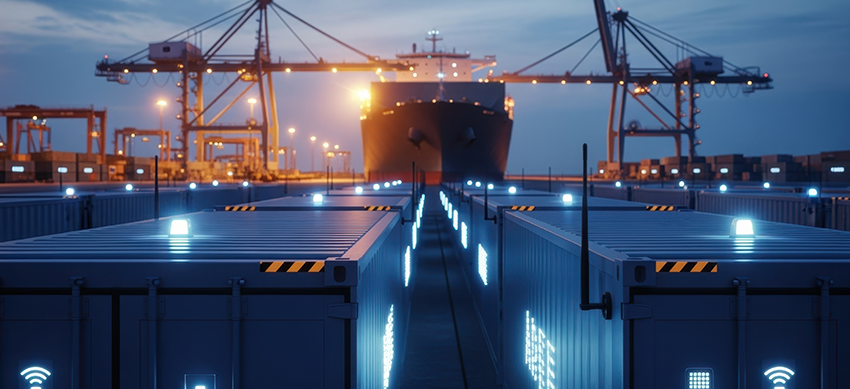
Multi-tier transparency requires both technology and partnership. Organizations that immediately begin investing in connected platforms, standardizing supplier data, and leveraging AI-driven insights will be positioned to meet evolving global regulations and trends with confidence.
At nVision Global, we believe supply chain transparency is not a distant goal; it’s an operational necessity. The companies that act today will define what transparency means tomorrow.
Let’s talk about how nVision Global’s data intelligence and visibility tools can help you uncover risk, ensure compliance, and unlock lasting value.
The post The Future of Supply Chain Transparency: Seeing Beyond Tier One appeared first on nVision Global | Worldwide Supply Chain Solutions, Specializing in Global Freight Audit & Payment, Loss & Damage Claims, Supply Chain Services & Technology.
]]>The post Why Visibility Isn’t Enough: How to Turn Supply Chain Data Into Action appeared first on nVision Global | Worldwide Supply Chain Solutions, Specializing in Global Freight Audit & Payment, Loss & Damage Claims, Supply Chain Services & Technology.
]]>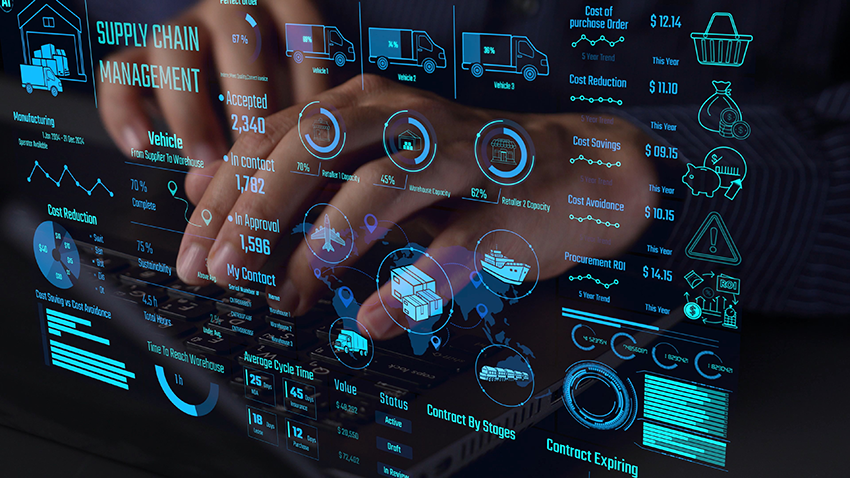
Supply chain visibility has become the industry’s favorite buzz-phrase. Dashboards, KPIs, and real-time tracking are touted as the cure for every logistics challenge. But let’s be honest here: visibility on its own doesn’t solve problems, it only shows you where they exist.
At nVision Global, we believe the real differentiator is actionable intelligence. By combining visibility with policy, process, experience, and cost savings, we help businesses turn data into measurable results. That’s no small feat.
The Limits of Visibility
Visibility platforms often stop at showing what already happened: late shipments, invoice discrepancies, or rising carrier rates. While important, this retrospective view can leave logistics teams in “reaction mode.” Without actionable insights, visibility becomes another layer of reporting and not a tool for strategy.
Common limitations include:
- Data silos across carriers, modes, and regions
- Overwhelming dashboards that don’t prioritize risk or cost
- Lack of integration with procurement, finance, or claims processes
- No link to savings, leaving leaders unable to prove ROI
From Visibility to Action: nVision’s Approach
nVision Global doesn’t stop at visibility. We build the bridge from data to decision-making by integrating Freight Audit, TMS, Claims, and Managed Services into a single ecosystem.
1. Freight Audit & Payment: Enforcing Policy
Our AI-powered audit engine doesn’t just flag errors, it enforces billing accuracy across every shipment, turning policy into practice. Customers recover lost dollars and stop future overpayments before they occur.
2. IMPACT TMS & C2Q: Real-Time Control
Visibility into rates is only valuable if you can act on it. With nVision’s TMS and C2Q dynamic pricing tool, companies can instantly:
- Compare contracts vs. spot market rates
- Launch controlled bids or auctions
- Update routing guides in response to disruptions
3. Claims Management: Closing the Loop
When shipments are lost or damaged, visibility identifies the issue, but action comes from filing and disputing claims effectively. nVision’s experienced claims team not only recovers dollars but also uses data to identify chronic carrier or lane problems.
4. Business Intelligence: Turning Data Into Strategy
Our BI tools don’t just display reports, they highlight trends, root causes, and opportunities. With predictive analytics and benchmarking, customers shift from “what happened” to “what should we do next.”
The Payoff: Visibility With Impact
When visibility is paired with action, companies unlock measurable results:
- Reduced costs through audit-driven compliance and smarter rate procurement
- Improved service levels via proactive carrier and lane management
- Faster decision-making supported by a single source of truth
- Stronger ROI on logistics technology investments
With nVision Global, supply chain visibility becomes more than just a dashboard. It becomes a competitive advantage.
About nVision Global
nVision Global is the worldwide leader in logistics solutions, combining more than 30 years of expertise with AI-powered technology. We deliver smarter Freight Audit, TMS, and Claims services backed by global teams and advanced analytics that empower businesses to optimize supply chains and reduce costs worldwide.
The post Why Visibility Isn’t Enough: How to Turn Supply Chain Data Into Action appeared first on nVision Global | Worldwide Supply Chain Solutions, Specializing in Global Freight Audit & Payment, Loss & Damage Claims, Supply Chain Services & Technology.
]]>