The post nVision Global Launches AI Transportation Management System for Logistics Automation appeared first on nVision Global | Worldwide Supply Chain Solutions, Specializing in Global Freight Audit & Payment, Loss & Damage Claims, Supply Chain Services & Technology.
]]>
ATLANTA, GA – nVision Global, a leader in global freight audit, transportation management, and supply chain analytics, today announced the expansion of its IMPACT Transportation Management System (TMS) platform with advanced Artificial Intelligence (AI) capabilities designed to automate and optimize three critical logistics processes: spot auction execution, shipment approval workflows, and tendering of shipments to transportation providers.
As global supply chains grow increasingly complex and volatile, organizations are under pressure to make faster, more informed decisions while maintaining financial control. nVision Global’s latest AI-driven enhancements address these challenges by embedding intelligence directly into the operational workflow, transforming manual processes into automated, data-driven decision engines.
AI-Driven Spot Auction Optimization
nVision Global has integrated AI into its Spot Auction functionality within the IMPACT Transportation Management System, fundamentally changing how transportation providers are selected for each shipment opportunity.
Along with utilizing routing guides and manual selection, the system can now dynamically determine which transportation providers should be invited to participate in each spot auction. This decision is based on a combination of real-time shipment attributes, such as the shipment lane, shipment commodity, provider’s equipment type, and transit requirements, along with continuously evolving performance data.
The AI engine evaluates historical pricing trends, service reliability, acceptance rates, and provider performance to build a tailored auction participant list for every shipment. This ensures that each auction is both competitive and relevant, increasing the likelihood of achieving optimal pricing and service outcomes.
The result is a smarter, more adaptive procurement process that improves efficiency while driving cost savings and service quality.
Intelligent Shipment Approval Workflows
nVision Global has also enhanced shipment governance through AI-powered approval automation within IMPACT TMS.
Traditionally, shipment approvals are rigid and manually configured, often leading to delays or insufficient oversight. nVision’s AI-driven approach introduces dynamic workflow orchestration based on shipment-specific criteria.
The system automatically determines:
- Who should approve a shipment
- Whether multiple approval layers are required
- How long can approvals remain pending before escalation
- When reminders should be issued
These decisions are informed by factors such as shipment origin and destination, total cost, internal roles, and historical behavior patterns.
Importantly, the approval process goes beyond simple authorization. Approvers are provided with contextual intelligence, including whether the selected transportation provider represents the lowest-cost or most optimal option. This enables informed decision-making before the shipment moves, eliminating costly surprises at the invoice stage.
By shifting financial visibility upstream, organizations gain tighter control over transportation spend and operational accountability.
Autonomous Auto Tendering Execution
Building on automated rating, intelligent spot auctions, and AI-driven approvals, nVision Global has introduced AI-Integrated Auto Tendering, a fully automated process for awarding and executing shipment assignments.
Once a shipment has been optimized and approved, the system automatically tenders the load to the selected transportation provider, delivering all necessary documentation and instructions. The AI continuously monitors acceptance and response behavior.
If a provider declines or fails to respond within defined parameters, the system seamlessly advances to the next preferred provider, ensuring continuity without manual intervention.
This intelligent orchestration continues until:
- A transportation provider accepts the shipment
- All required documentation is confirmed
- The shipment is fully secured for execution
Upon completion, the system notifies the shipment organizer with full details, including provider information and finalized shipment data.
This capability significantly reduces administrative workload while increasing speed, reliability, and execution consistency across logistics operations.
Driving the Next Generation of Logistics Automation
With these new AI capabilities, nVision Global continues to advance its vision of delivering end-to-end financial and operational control across the transportation lifecycle.
By embedding intelligence into every stage, from procurement and approval to execution, IMPACT Transportation Management System enables organizations to:
- Eliminate manual processes and administrative overhead
- Improve decision accuracy and consistency
- Enhance cost control before financial exposure occurs
- Increase operational speed and scalability
These innovations reflect nVision Global’s commitment to combining advanced technology with deep logistics expertise to deliver measurable value for its clients.
Schedule a demo to learn how to utilize AI to automate these processes to eliminate overhead and administration today!
About nVision Global
nVision Global is a global supply chain technology and services company delivering freight audit & payment, transportation management, freight claims, and advanced analytics solutions. Powered by its proprietary ecosystem, nVision helps organizations achieve financial accuracy, operational efficiency, and strategic insight across complex logistics networks.
The post nVision Global Launches AI Transportation Management System for Logistics Automation appeared first on nVision Global | Worldwide Supply Chain Solutions, Specializing in Global Freight Audit & Payment, Loss & Damage Claims, Supply Chain Services & Technology.
]]>The post Can Your TMS Actually Keep Up With a Tightening Freight Market? appeared first on nVision Global | Worldwide Supply Chain Solutions, Specializing in Global Freight Audit & Payment, Loss & Damage Claims, Supply Chain Services & Technology.
]]>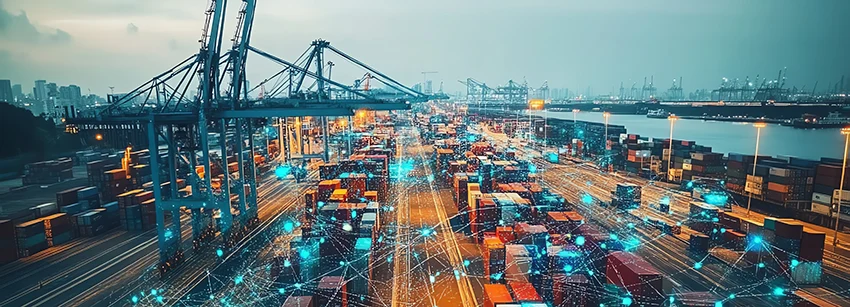
Most transportation management systems were built for stability. The freight market in 2026 is anything but.
The Market Has Changed. Has Your TMS?
For years, transportation teams operated in a relatively predictable environment:
- Stable capacity
- Negotiated contract rates
- Consistent carrier performance
That foundation allowed traditional transportation management solution (TMS) platforms to thrive.
But 2026 looks very different.
The U.S. truckload market is tightening:
- Carrier capacity is shrinking
- Spot rates are rising
- Tender rejections are increasing
- Pricing volatility is back
And suddenly, many organizations are realizing:
Their transportation management solution (TMS) was built for a market that no longer exists.
The Original Role of TMS (And Its Limitations Today)
Historically, a TMS was designed to:
- Plan shipments
- Execute loads
- Select carriers based on routing guides
- Track and report activity
In a stable market, that worked.
Because:
- Rates were predictable
- Routing guides held up
- Execution was the primary challenge
But in today’s environment:
Execution is no longer the hard part. Decision-making is.
Where Traditional TMS Platforms Start to Break Down
As the freight market tightens, the cracks begin to show.
1. Static Routing Logic in a Dynamic Market
Most transportation management solutions (TMS) platforms still rely on:
- Predefined carrier hierarchies
- Fixed routing guides
- Limited flexibility
But today:
- Capacity shifts daily
- Carrier performance fluctuates
- Market rates change in real time
Static logic can’t keep up.
2. Limited Visibility Into True Cost Before Execution
Many systems:
- Apply contract rates
- Estimate costs
- Execute shipments
But they don’t:
- Validate real-time market pricing
- Compare spot vs. contract dynamically
- Factor in accessorials and fuel accurately upfront
So decisions are made with incomplete cost intelligence.
3. No Connection Between Execution and Financial Outcome
In most environments:
- TMS handles execution
- Freight audit handles invoices
- Finance reviews reports later
These systems operate in silos.
Which means:
- Cost discrepancies are caught after the fact
- Margin impact is delayed
- Decision feedback loops are broken
You can’t optimize what you can’t validate in real time.
4. Inability to Adapt to Market Volatility
Traditional TMS platforms weren’t designed for:
- Continuous rate fluctuation
- Dynamic provider selection
- Real-time bidding or auction environments
They assume stability.
The market now demands flexibility.
The New Requirement: Decision-Driven Transportation Management
To operate effectively in a tightening freight market, TMS must evolve.
From:
- Execution platforms
To:
- Decision engines with financial awareness
That shift includes:
Real-Time Rate Intelligence
- Compare contracted rates vs. spot vs. market bids
- Make lane-specific, shipment-specific decisions
Dynamic Routing and Provider Selection
- Move beyond static routing guides
- Adapt to real-time conditions
Pre-Shipment Cost Validation
- Understand true cost before execution
- Include fuel, accessorials, and variability
Continuous Feedback Loop
- Connect execution → audit → analytics
- Improve decisions over time
The goal is no longer to move freight efficiently. It’s to move it intelligently—with financial precision.
Why This Matters Now
In a soft market, inefficiencies are often hidden:
- Lower rates absorb mistakes
- Capacity masks poor decisions
In a tight market:
- Every decision carries a financial impact
- Every missed opportunity increases cost
- Every inefficiency compounds
Organizations that rely on outdated systems will find themselves:
- Paying more for the same lanes
- Reacting instead of planning
- Losing leverage with providers
The Shift From System to Strategy
A modern transportation management solution (TMS) is no longer just a tool.
It’s part of a broader strategy that connects:
- Planning
- Execution
- Financial validation
- Analytics
Into a single, continuous workflow.
Because in today’s environment:
Transportation is no longer just about moving goods—it’s about controlling cost in motion.
The Bottom Line
The freight market has shifted.
And it’s asking a different question:
Not “Can your TMS execute shipments?”
But “Can your TMS help you make the right decision before the shipment ever moves?”
If the answer is no…
It may not be a technology problem.
It may be a design problem.
Final Thought
If your transportation management solution (TMS) was built for:
- Stability
- Predictability
- Static planning
Then it’s already behind.
Because the companies that will outperform in 2026 are not the ones with the most visibility…
They’re the ones with the most control over how decisions are made in a constantly changing market.
The post Can Your TMS Actually Keep Up With a Tightening Freight Market? appeared first on nVision Global | Worldwide Supply Chain Solutions, Specializing in Global Freight Audit & Payment, Loss & Damage Claims, Supply Chain Services & Technology.
]]>The post The Evolution of TMS: From Execution Tool to Financial Control Platform appeared first on nVision Global | Worldwide Supply Chain Solutions, Specializing in Global Freight Audit & Payment, Loss & Damage Claims, Supply Chain Services & Technology.
]]>
Moving Freight Is No Longer Enough
For years, transportation management systems were defined by their ability to execute. They planned shipments, selected transportation providers, generated labels and documents, and ensured freight moved from origin to destination efficiently. For a long time, that was enough. If shipments moved on time and providers were selected according to routing guides, most organizations considered their transportation management strategy successful.
But today’s environment is very different. Transportation costs are volatile, global supply chains are more complex, and finance teams are placing greater scrutiny on cost predictability, accrual accuracy, and margin impact. In this environment, execution alone is no longer sufficient.
The role of the transportation management system is changing.
The Traditional TMS Model: Execution First, Finance Later
Historically, most TMS platforms were built to solve operational problems. They helped organizations answer questions like how to move a shipment, which transportation provider to use, and how long transit would take. They were designed to optimize routing, consolidate shipments, and improve service performance.
What many traditional systems did not do particularly well was answer a more important question: what will this shipment actually cost, and does that cost align with our contracts and financial expectations?
In many organizations, cost validation is handled later through a separate freight audit process after the shipment has already been delivered and the invoice has arrived. That delay creates a gap between execution and financial control. Shipments are planned and executed first, and financial validation happens later.
By the time finance reviews the cost, the decision has already been made and the opportunity to influence the outcome has passed.
The Cost of Disconnect Between Planning and Financial Validation
When transportation planning and financial validation operate independently, organizations lose control where it matters most, before decisions are made. This disconnect often leads to situations where shipment costs are not fully validated at the time of execution, contracted rates and accessorial rules are applied inconsistently, and discrepancies are discovered only after invoices are received.
This reactive process makes it difficult for finance teams to forecast transportation spend accurately, manage budgets effectively, or understand cost drivers in real time. Instead of controlling transportation costs, organizations often find themselves explaining them after the fact.
This is why leading organizations are redefining the role of TMS. Instead of treating it purely as an execution tool, they are using it as a platform for pre-shipment financial control.
The Shift Toward Financially-Aware Transportation Management
A modern transportation management platform should not only plan and execute shipments. It should also validate costs before execution, enforce contracted pricing and accessorial rules consistently, and align transportation decisions with financial expectations and budgets.
When shipments are rated against contracted pricing before they are tendered to transportation providers, organizations gain a clear and defensible cost expectation upfront. When the same data used to plan shipments feeds directly into freight audit and financial systems, companies create a closed-loop process where the planned cost becomes the benchmark for invoice validation. This alignment reduces discrepancies, improves financial accuracy, and provides better data for forecasting and budgeting.
This is the point where transportation management stops being just an operational tool and becomes part of the organization’s financial control structure.
From Visibility to Control
One of the most common misconceptions in logistics technology is the idea that visibility alone is enough. Dashboards, tracking tools, and reporting platforms provide information, but information does not equal control.
Control happens when organizations can validate costs before execution, enforce contracts consistently, and align operational decisions with financial expectations. Without these capabilities, organizations may have visibility into their transportation network, but they still lack control over transportation spend.
A modern transportation management platform should provide both operational execution and financial governance.
Why Many Organizations Begin Looking at Platforms Like nVision Global’s IMPACT TMS
This is where many organizations begin to look beyond traditional TMS platforms and investigate more advanced transportation management solutions like nVision Global’s IMPACT TMS.
IMPACT TMS was designed not just to execute shipments, but to support the financial decisions behind those shipments. It incorporates capabilities that many traditional TMS platforms do not provide in a single system, including contract-based rating before shipment execution, automated transportation provider selection based on business rules and financial logic, integration with freight audit and payment processes, claims management integration, and business intelligence and analytics that support forecasting and financial reporting.
Because these functions are integrated, organizations can create a closed-loop process where shipments are rated, validated, executed, audited, and analyzed within a single ecosystem. The cost expected at the time of shipment becomes the benchmark for invoice validation, and discrepancies can be identified and addressed more quickly. Over time, the data generated through this process helps organizations improve forecasting accuracy, procurement strategies, and overall transportation cost management.
This integrated approach is very different from operating separate systems for TMS, freight audit, claims, and analytics. When these systems operate independently, gaps appear between planning, execution, payment, and analysis. When they operate together, transportation becomes more predictable and financially controlled.
A Transportation Platform That Supports Financial Discipline
As transportation costs continue to represent a significant and variable portion of operating expenses, organizations are placing greater emphasis on control, predictability, and accountability. Transportation management is no longer just about moving freight efficiently. It is about understanding, predicting, and controlling transportation spend.
This is why the role of TMS is evolving from an execution tool to a platform that supports financial discipline across transportation operations. The organizations that recognize this shift are the ones that are gaining better visibility into future transportation costs, improving forecasting accuracy, and reducing cost variability over time.
Final Thought
The question is no longer whether your TMS can execute shipments. Most systems can plan routes, select transportation providers, and generate shipping documents.
The more important question is whether your transportation management platform supports the financial decisions behind those shipments. Can it validate costs before execution? Can it enforce contracts consistently? Can it integrate with freight audit, claims management, and analytics to create a closed-loop financial process?
Because in modern supply chains, execution without financial control is incomplete.
Organizations that are beginning to ask these questions often find themselves taking a closer look at integrated transportation management platforms like nVision Global’s IMPACT TMS, along with their freight audit, claims, and analytics solutions, to better understand how transportation can be managed not just as a logistics function, but as a controlled financial process.
The post The Evolution of TMS: From Execution Tool to Financial Control Platform appeared first on nVision Global | Worldwide Supply Chain Solutions, Specializing in Global Freight Audit & Payment, Loss & Damage Claims, Supply Chain Services & Technology.
]]>The post Closed-Loop vs. Open Network: Two Very Different Visions for Modern TMS appeared first on nVision Global | Worldwide Supply Chain Solutions, Specializing in Global Freight Audit & Payment, Loss & Damage Claims, Supply Chain Services & Technology.
]]>
Transportation Management Systems (TMS) are often compared on feature lists, transportation provider counts, or automation capabilities. But beneath those surface-level differences lies a more fundamental distinction: philosophy.
At a high level, today’s TMS platforms tend to follow one of two paths:
- Closed-loop, managed service ecosystems that combine technology with human expertise
- Open network digital platforms designed to maximize connectivity, speed, and scale
Both models have value. But they are built to solve very different problems, and understanding that difference is essential for shippers managing complex, global transportation networks.
What Is a Closed-Loop TMS?
A closed-loop TMS is designed to manage the entire lifecycle of a shipment, from planning and execution through invoicing, audit, payment, and post-shipment analysis, within a single governed ecosystem.
Rather than relying solely on automation, this approach intentionally blends:
- Configurable technology
- Defined business rules
- Human expertise is embedded directly into daily operations
Platforms like nVision Global’s IMPACT TMS are built around this philosophy. The system doesn’t just move freight, it enforces contracts, validates financial outcomes, manages compliance, and closes the loop between operational decisions and financial results.
The emphasis isn’t speed alone. It’s control, accountability, and consistency at scale.
What Is an Open Network TMS?
An open network TMS prioritizes connectivity and optionality. These platforms typically offer:
- Massive pre-connected transportation provider networks
- Rapid onboarding
- Automated rate discovery
- AI-driven recommendations
Many of the solutions in the market today exemplify this model. Shippers “plug in” to a large digital ecosystem where transportation providers are already connected, enabling fast access to capacity and real-time market signals.
The strength of this approach lies in speed and flexibility, particularly for dynamic spot markets or regions with dense transportation provider participation.
The Real Difference: Governance vs. Convenience
The key distinction between closed-loop and open network systems isn’t technology, it’s governance.
Closed-Loop Systems Prioritize:
- Enforcement of contracted rates and routing guides
- Alignment between transportation decisions and financial controls
- Prevention of invoice errors before they happen
- Accountability across operations, finance, and procurement
Open Network Systems Prioritize:
- Rapid access to capacity
- Market-driven pricing signals
- Automation-first decision-making
- Broad transportation provider optionality
Neither approach is inherently “better.” But they serve different organizational priorities.
Why More Transportation Providers Isn’t Always Better
Large open networks are often marketed as a universal advantage. In practice, however, many shippers already maintain strong contracted transportation provider relationships that reflect negotiated pricing, service commitments, and performance expectations.
For these organizations, value doesn’t come from more transportation providers, it comes from:
- Enforcing existing contracts
- Managing exceptions intelligently
- Controlling when and how spot sourcing is used
- Maintaining financial accuracy across regions and currencies
Closed-loop TMS platforms are designed around this reality. Spot auctions and dynamic sourcing still exist, but they are governed by shipper-defined rules, not default behavior.
Global Complexity Changes the Equation
The difference between these models becomes even more pronounced in global operations.
International freight introduces:
- Multiple currencies
- Local tax requirements (VAT, GST)
- Language differences
- Regional regulations
- In-country payment requirements
Automation alone rarely handles these variables cleanly. Closed-loop systems are intentionally built to combine localized human expertise with centralized visibility, ensuring compliance and accuracy without sacrificing scale.
Choosing the Right Model Starts with the Right Question
The real question isn’t “Which TMS has more features?” It’s “Do you need a platform that optimizes transactions, or a system that governs outcomes?”
For organizations focused on financial control, audit integrity, and global consistency, a closed-loop TMS offers structural advantages that go far beyond shipment execution.
For organizations prioritizing rapid capacity access and market-driven flexibility, open networks may be the right fit.
Understanding the difference is the first step toward choosing a TMS that aligns with how your business actually operates.
The post Closed-Loop vs. Open Network: Two Very Different Visions for Modern TMS appeared first on nVision Global | Worldwide Supply Chain Solutions, Specializing in Global Freight Audit & Payment, Loss & Damage Claims, Supply Chain Services & Technology.
]]>The post Why Modularity Matters: Augmenting Existing TMS Systems with nVision Global? appeared first on nVision Global | Worldwide Supply Chain Solutions, Specializing in Global Freight Audit & Payment, Loss & Damage Claims, Supply Chain Services & Technology.
]]>
Transportation Management Systems (TMS) have become essential for businesses looking to streamline freight planning, execution, and cost control. However, many companies face a common challenge – outdated or inflexible TMS platforms lacking key functionalities to keep up with changing supply chain demands.
The solution? A modular TMS approach. Instead of completely replacing a company’s existing system, modular TMS solutions allow businesses to augment their current setup with the exact features they need – enhancing performance without the disruption of a full system overhaul.
Today, we’ll explore why modularity is a game-changer for modern TMS solutions, common challenges businesses face with rigid systems, and how nVision Global’s modular TMS options provide a scalable, cost-effective alternative.
What is a Modular TMS Solution?
Key Benefits of Modular TMS Solutions
- Cost-Effective Enhancements
Instead of spending millions on a new TMS, companies can invest only in the features they need, reducing costs while increasing efficiency. - Seamless Integration with Existing Systems
Businesses can enhance their current TMS without disrupting ongoing operations—avoiding downtime, retraining, and system migration headaches. - Scalability for Future Growth
Modular TMS solutions allow businesses to adapt as their needs evolve, whether adding new transportation modes, compliance tools, or analytics dashboards. - Faster Implementation & Adoption
Unlike full TMS replacements that take months or years to roll out, modular solutions can be implemented quickly—providing immediate value to logistics teams.
The Limitations of Traditional TMS Implementations
Common Challenges with Rigid TMS Solutions
- Lack of Customization: Many legacy TMS platforms come with predefined features, making it difficult to adapt to new business models, regulations, or customer demands.
- High Replacement Costs: Fully replacing a TMS is a massive financial and operational investment—often taking months (or years) to implement.
- Scalability Issues: As businesses grow, their TMS may not scale effectively, requiring expensive upgrades or workarounds.
- Integration Challenges: Older systems often struggle to integrate with emerging technologies, such as real-time freight visibility, e-invoicing, and advanced analytics tools.
How nVision Global’s Modular TMS Solutions Stand Out?
Key Modular Offerings from nVision Global
- Freight Audit & Payment Module
Gain end-to-end visibility into freight spend, invoice discrepancies, and carrier overcharges.
Automate multi-currency, multi-modal freight audits to ensure accurate and efficient cost reconciliation. - Rate Optimization & Carrier Selection
Compare real-time rates from multiple carriers (DHL, FedEx, UPS, Chinapost, etc.) to secure the best price and transit time.
Automate rate benchmarking to identify cost-saving opportunities across transportation modes. - New Trailer Management Module
Track trailer locations, movements, and contents in real time—ideal for industries with high trailer utilization, such as paper companies and donation-based businesses.
Improve fleet utilization, reduce empty miles, and optimize trailer storage and positioning. - eInvoicing & Compliance Module
Ensure global compliance with Peppol standards, VAT reporting, and SAF-T regulations.
Seamlessly integrate with government eInvoicing platforms for automated compliance reporting. - Real-Time Visibility & Analytics
Gain insights into shipment delays, capacity constraints, and cost trends through AI-driven dashboards.
Use predictive analytics to forecast supply chain disruptions before they happen.
Why Businesses Are Choosing Modular Over Full TMS Replacements?
Industries Benefiting from Modular TMS Solutions:
- Retail & E-Commerce: Optimizing last-mile deliveries and parcel shipping rate comparisons.
- Manufacturing & Industrial Goods: Managing complex multi-modal supply chains with real-time freight visibility.
- Food & Beverage: Ensuring temperature-controlled shipment tracking and compliance reporting.
- Donation-Based Organizations: Improving trailer fleet tracking and reducing logistics costs.
Final Thoughts: Why Modularity is the Future of TMS Solutions
In today’s logistics environment, businesses can’t afford rigid systems that limit flexibility and force unnecessary replacements. A modular TMS strategy ensures that companies can adapt, scale, and optimize their transportation management without disruption.
- Upgrade their TMS with only the features they need
- Reduce implementation costs and avoid full system replacements
- Enhance freight audit, rate optimization, and trailer management capabilities
- Future-proof their logistics operations for long-term success
The post Why Modularity Matters: Augmenting Existing TMS Systems with nVision Global? appeared first on nVision Global | Worldwide Supply Chain Solutions, Specializing in Global Freight Audit & Payment, Loss & Damage Claims, Supply Chain Services & Technology.
]]>The post The Top 5 Signs It’s Time to Upgrade Your TMS in 2025 appeared first on nVision Global | Worldwide Supply Chain Solutions, Specializing in Global Freight Audit & Payment, Loss & Damage Claims, Supply Chain Services & Technology.
]]>
Transportation Management Systems (TMS) have become indispensable for businesses aiming to streamline logistics, reduce costs, and improve supply chain efficiency. However, as technology evolves and market demands shift, even the most reliable systems can become outdated. In 2025, having a cutting-edge TMS is more critical than ever to staying competitive in a fast-paced global market.
If you’re wondering whether your current TMS is keeping up, here are the top five signs it’s time to upgrade.
1. Limited Support for Global Operations
The logistics landscape is increasingly global, with businesses managing shipments across multiple countries, currencies, and regulations. If your TMS lacks the ability to:
- Handle multi-currency transactions efficiently,
- Integrate with international carriers, including those with regional limitations like Chinapost in China,
- Ensure compliance with varying regulations across countries,
…it’s time for an upgrade. A modern TMS should offer robust global capabilities, ensuring seamless operations no matter where your shipments originate or terminate.
2. Lack of Real-Time Visibility
Real-time visibility is no longer optional—it’s a necessity for managing modern supply chains. Without it, you’re left:
- Reacting to issues instead of preventing them.
- Unable to provide customers with accurate delivery timelines.
- Struggling to track shipment conditions, such as temperature for perishable goods.
If your current TMS doesn’t offer end-to-end visibility with real-time updates and proactive alerts, you risk falling behind competitors who can promise transparency to their customers.
3. Inflexibility and Lack of Modular Options
Every business’s logistics needs are unique, and your TMS should adapt to fit your operations—not the other way around. If your system doesn’t allow you to:
- Add or remove modules as your business grows or changes,
- Use it alongside other logistics tools you already rely on,
- Tailor features to specific industries, such as trailer management for high-volume industries like paper or donation-based organizations,
…then it’s time to consider a more flexible, modular TMS that grows with your business.
4. Inadequate Freight Audit and Cost Management
Transportation costs are a significant expense for any business, and controlling them requires a TMS with advanced auditing and cost-analysis capabilities. If your system:
- Doesn’t automatically validate freight invoices for accuracy,
- Can’t track accessorial fees or compare carrier rates in real-time,
- Lacks tools for identifying and addressing inefficiencies in freight spend,
…you’re likely leaving money on the table. A modern TMS should simplify freight audit processes, highlight cost-saving opportunities, and support smarter decision-making.
5. Poor User Experience and Limited Scalability
Your team’s ability to efficiently use your TMS is just as important as the system’s technical capabilities. If you’re hearing complaints about:
- A clunky or outdated user interface,
- Poor customer support or long resolution times for system issues,
- Limitations in handling increased shipment volumes or new markets,
…it’s time to upgrade to a system that offers intuitive design, top-notch support, and scalability for future growth.
Why Upgrading Your TMS in 2025 Matters
The logistics industry is evolving rapidly, driven by advancements in technology, shifts in consumer expectations, and global economic challenges. Sticking with an outdated TMS could mean:
- Falling behind competitors who can offer better service and cost efficiency.
- Losing customers who demand greater transparency and faster delivery.
- Missing opportunities to expand into new markets due to system limitations.
By upgrading to a modern TMS like nVision Global’s, you’ll ensure your business remains agile, efficient, and competitive.
How nVision Global’s TMS Can Help
nVision Global offers a cutting-edge TMS that addresses the key challenges businesses face in 2025 and beyond. Our system provides:
- Comprehensive Global Support: Seamless integration with all modal types, carriers, and currencies worldwide.
- Real-Time Visibility: End-to-end tracking and proactive alerts for better decision-making.
- Modular Design: Use only the modules you need, from trailer management to freight claims.
- Cost Optimization: Advanced freight audit and payment tools to reduce errors and maximize savings.
- User-Friendly Interface: Intuitive design and responsive customer support to enhance the user experience.
Conclusion: Don’t Wait to Upgrade
If any of these signs resonate with your current logistics challenges, it’s time to consider upgrading your TMS. By investing in a modern, flexible, and feature-rich solution, you can save time, cut costs, and eliminate headaches while positioning your business for long-term success.
Ready to upgrade your TMS? Contact nVision Global today to learn how we can transform your logistics operations and help you achieve your goals in 2025 and beyond.
The post The Top 5 Signs It’s Time to Upgrade Your TMS in 2025 appeared first on nVision Global | Worldwide Supply Chain Solutions, Specializing in Global Freight Audit & Payment, Loss & Damage Claims, Supply Chain Services & Technology.
]]>The post TMS for 3PLs: How It Can Transform Carrier Management? appeared first on nVision Global | Worldwide Supply Chain Solutions, Specializing in Global Freight Audit & Payment, Loss & Damage Claims, Supply Chain Services & Technology.
]]>
Transportation Management Systems (TMS) are transforming carrier management for Third-Party Logistics (3PL) providers by offering streamlined solutions for tracking, optimizing, and coordinating shipments. By leveraging TMS, 3PLs can improve visibility, reduce costs, and enhance collaboration with carriers, ultimately boosting overall operational efficiency and service delivery.
TMS for 3PLs: How It Helps?
A TMS is a digital platform that automates and optimizes logistics processes, including carrier management. Here’s how it helps:
1. Centralized Carrier Management
A TMS provides a single platform to manage all carriers, offering a centralized view of:
- Contracts and Agreements: Easily access and compare carrier agreements.
- Performance Metrics: Track key performance indicators (KPIs) such as on-time delivery rates, claims ratios, and transit times.
- Billing Accuracy: Reconcile invoices with contracted rates to identify discrepancies.
By centralizing carrier data, 3PLs can simplify operations, reduce manual errors, and ensure consistency.
2. Improved Carrier Performance Monitoring
With a TMS, 3PLs gain real-time insights into carrier performance, enabling them to:
- Identify Underperforming Carriers: Use data to pinpoint carriers with high damage rates or frequent delays.
- Set Benchmarks: Compare carrier performance against industry standards to encourage continuous improvement.
- Foster Accountability: Share performance data with carriers to promote transparency and collaboration.
Better carrier performance translates directly into improved service for clients.
3. Dynamic Route Optimization
One of the key features of a TMS is its ability to optimize routes in real time. This includes:
- Reducing Transit Times: Identify the fastest and most cost-effective routes for shipments.
- Minimizing Fuel Costs: Optimize delivery routes to reduce fuel consumption and expenses.
- Adapting to Disruptions: Quickly reroute shipments in response to weather, traffic, or port congestion.
Dynamic routing not only improves delivery times but also helps 3PLs save on transportation costs.
4. Freight Spend Visibility
A TMS offers comprehensive analytics on freight spend, helping 3PLs identify cost-saving opportunities, such as:
- Reducing Overcharges: Ensure that carrier invoices match contracted rates and identify incorrect fees.
- Highlighting Inefficiencies: Analyze freight spending by carrier, lane, or region to uncover hidden inefficiencies.
- Negotiating Better Rates: Use data insights to negotiate more favorable contracts with carriers.
These capabilities allow 3PLs to take control of their transportation budgets and maximize profitability.
5. Enhanced Client Reporting
In today’s competitive logistics environment, 3PLs must provide exceptional value to retain clients. A TMS enhances client relationships by offering:
- Detailed Reports: Share insights on carrier performance, freight spend, and delivery metrics.
- Real-Time Updates: Provide live tracking and updates for shipments.
- Data Transparency: Build trust with clients by offering full visibility into their supply chains.
When clients see the added value a 3PL brings, it strengthens loyalty and fosters long-term partnerships.
6. Automation of Manual Processes
Managing carriers manually is time-consuming and error-prone. A TMS automates critical tasks such as:
- Invoice Auditing: Automatically validate carrier invoices against contracts to prevent overcharges.
- Load Planning: Automate load assignments to ensure carriers are utilized efficiently.
- Freight Claims Management: Streamline the claims process to resolve issues faster and recover losses.
Automation frees up your team to focus on strategic initiatives, reducing administrative overhead and increasing productivity.
The Cost Savings Potential of TMS for 3PLs
A TMS not only improves operational efficiency but also delivers measurable cost savings:
- Lower Freight Spend: Optimize routes, reduce fuel costs, and prevent overcharges.
- Fewer Errors: Eliminate manual mistakes that lead to costly disputes or delays.
- Increased Efficiency: Save time and resources through automation, allowing teams to handle more shipments with fewer resources.
The ROI of a TMS is significant, making it an essential investment for 3PLs looking to reduce costs and stay competitive.
Partnering with nVision Global for TMS Solutions
At nVision Global, we specialize in providing cutting-edge TMS solutions tailored to the needs of 3PLs. Our platform offers:
- Real-time tracking and visibility into carrier performance.
- Automated freight audit and payment solutions to ensure cost accuracy.
- Advanced analytics to help you make data-driven decisions.
- Integration capabilities for seamless collaboration with clients and partners.
With nVision Global, 3PLs can transform their carrier management processes, reduce costs, and deliver exceptional service to their clients.
Conclusion: The Future of 3PLs Lies in TMS
As the logistics industry evolves, 3PLs must embrace technology to stay ahead. A TMS is not just a tool—it’s a competitive advantage that enables 3PLs to manage carriers more effectively, reduce costs, and enhance client satisfaction.
Ready to leverage the power of TMS for your 3PL operations? Contact nVision Global today to learn how our solutions can transform your business.
The post TMS for 3PLs: How It Can Transform Carrier Management? appeared first on nVision Global | Worldwide Supply Chain Solutions, Specializing in Global Freight Audit & Payment, Loss & Damage Claims, Supply Chain Services & Technology.
]]>The post How Real-Time Visibility in Supply Chains Transforms Electronics Manufacturing? appeared first on nVision Global | Worldwide Supply Chain Solutions, Specializing in Global Freight Audit & Payment, Loss & Damage Claims, Supply Chain Services & Technology.
]]>
In the world of electronics manufacturing, precision is everything. From sourcing components to delivering finished products, every step of the supply chain must operate seamlessly to meet tight production schedules and high customer expectations. However, managing these intricate processes can be challenging, particularly in an era marked by global disruptions and increasing complexity.
This is where real-time visibility in the supply chain comes in – a transformative tool that empowers electronics manufacturers to monitor, manage, and optimize their supply chains like never before. In this blog, we’ll explore the challenges facing supply chains in electronics manufacturing and how real-time visibility offers game-changing benefits.
The Challenges of Supply Chains in Electronics Manufacturing
Electronics supply chains are among the most complex in the world. Manufacturers face several unique challenges, including:
- Component Shortages: High demand for semiconductors and other components often leads to supply bottlenecks.
- Global Sourcing: Many components are sourced internationally, creating risks such as customs delays and geopolitical tensions.
- Fragile Shipments: Sensitive items like circuit boards and semiconductors require careful handling and temperature control.
- Time-Sensitive Deliveries: Production schedules depend on just-in-time (JIT) inventory management, leaving little room for delays.
- Regulatory Compliance: Cross-border trade requires adherence to varying regulations and standards.
Without visibility into the supply chain, manufacturers risk inefficiencies, increased costs, and customer dissatisfaction.
What Is Real-Time Visibility?
Real-time visibility refers to the ability to track and monitor supply chain activities as they happen. This includes live data on shipment locations, inventory levels, carrier performance, and environmental conditions like temperature or humidity. Advanced technologies such as IoT sensors, GPS tracking, and cloud-based platforms power this capability, providing a centralized, up-to-the-minute view of the entire supply chain.
How Real-Time Visibility in Supply Chains Transforms Electronics Manufacturing?
1. Proactive Risk Management
Real-time visibility enables manufacturers to identify and address potential disruptions before they escalate. For example:
- Tracking Shipments: Know the exact location of your components at any given time, reducing the risk of delays or theft.
- Monitoring Environmental Conditions: Ensure fragile or sensitive items are transported under optimal conditions to prevent damage.
- Anticipating Delays: Receive alerts about weather issues, port congestion, or customs holdups, allowing you to adjust plans proactively.
Proactive risk management minimizes downtime and helps manufacturers maintain their production schedules.
2. Optimized Inventory Management
Electronics manufacturers rely heavily on JIT inventory strategies to avoid overstocking and reduce costs. Real-time visibility offers:
- Accurate Inventory Levels: Know exactly how much stock is in transit, at warehouses, or on the production floor.
- Demand Forecasting: Use real-time data to predict demand and ensure timely replenishment.
- Reduced Stockouts: Prevent production delays caused by missing components.
This level of control ensures that inventory levels are optimized for cost efficiency and production continuity.
3. Enhanced Collaboration with Suppliers and Carriers
Real-time visibility fosters stronger relationships with supply chain partners. Here’s how:
- Shared Data: Provide suppliers and carriers with access to realtime insights to improve coordination and accountability.
- Performance Metrics: Track carrier reliability and supplier delivery times to ensure they meet your standards.
- Improved Communication: Address issues in real-time with instant updates and notifications.
Enhanced collaboration leads to smoother operations and fewer misunderstandings across the supply chain.
4. Reduced Freight Costs
Real-time data allows manufacturers to optimize shipping routes, consolidate shipments, and choose the most cost-effective carriers. For instance:
- Dynamic Route Optimization: Adjust shipping routes in response to real-time traffic or weather conditions to save time and money.
- Identifying Inefficiencies: Use analytics to pinpoint carriers or routes that consistently incur higher costs or delays.
- Preventing Expedited Shipping: Avoid last-minute rush shipments by staying ahead of potential delays.
These cost-saving measures directly impact your bottom line.
5. Improved Customer Satisfaction
In the competitive electronics market, meeting customer expectations is crucial. Real-time visibility helps by:
- Providing Accurate ETAs: Share real-time updates on delivery timelines with customers to keep them informed.
- Minimizing Disruptions: Ensure timely deliveries to meet production schedules and avoid downtime.
- Resolving Issues Quickly: Address any shipment or inventory problems immediately to reduce their impact on customers.
Satisfied customers are more likely to remain loyal, giving your business a competitive edge.
The Role of nVision Global in Real-Time Visibility
At nVision Global, we understand the complexities of electronics manufacturing supply chains and real-time visibility’s critical role in overcoming them. Our advanced logistics solutions include:
- Transportation Management Systems (TMS): Centralize shipment tracking and optimize routes with real-time data.
- Freight Audit and Payment Solutions: Gain complete visibility into freight spend and carrier performance.
- IoT-Enabled Monitoring: Track environmental conditions for sensitive shipments to ensure product integrity.
- Comprehensive Analytics: Use actionable insights to identify inefficiencies and drive continuous improvement.
Partnering with nVision Global empowers your business to take control of your supply chain and transform challenges into opportunities.
Conclusion: Unlock the Power of Real-Time Visibility
In the fast-paced world of electronics manufacturing, supply chain efficiency is non-negotiable. Real-time visibility offers the tools you need to manage risks, optimize operations, and deliver exceptional customer service. With the right technology and a trusted partner like nVision Global, you can unlock new performance levels and stay ahead in a competitive market.
Ready to transform your supply chain? Contact nVision Global today to learn how our solutions can help you achieve real-time visibility and drive success in electronics manufacturing.
The post How Real-Time Visibility in Supply Chains Transforms Electronics Manufacturing? appeared first on nVision Global | Worldwide Supply Chain Solutions, Specializing in Global Freight Audit & Payment, Loss & Damage Claims, Supply Chain Services & Technology.
]]>The post Integrating a TMS in Supply Chain: Benefits and Considerations appeared first on nVision Global | Worldwide Supply Chain Solutions, Specializing in Global Freight Audit & Payment, Loss & Damage Claims, Supply Chain Services & Technology.
]]>
In today’s fast-paced logistics landscape, effective management of the supply chain is critical for maintaining competitiveness. One of the most powerful tools that companies can implement to streamline their operations is a Transportation Management System (TMS) in the supply chain. This technology has revolutionized logistics by optimizing shipment planning, execution, and tracking, ultimately improving efficiency, reducing costs, and providing more visibility throughout the supply chain.
Transportation Management System (TMS) in Supply Chain
Benefits of Implementing a TMS
1. Streamlined Operations
A TMS automates many manual processes involved in managing transportation, from order processing and route planning to carrier selection and load tendering. By centralizing and automating these tasks, companies can eliminate redundancies, reduce human error, and ensure their logistics processes run smoothly.
Automation also frees up employees’ time, allowing them to focus on higher-value tasks such as strategic decision-making.
2. Improved Efficiency
Efficiency is at the core of any supply chain, and a TMS can drastically improve it. With a TMS, companies can optimize route planning by selecting the best carrier and the most efficient routes based on factors like fuel costs, delivery times, and real-time traffic updates. This ensures that shipments are delivered on time with minimal delays.
Additionally, a TMS provides end-to-end visibility, allowing logistics managers to monitor shipments in real-time and proactively address any issues, leading to faster response times and reduced delays.
3. Cost Reduction
One of the most tangible benefits of a TMS is its ability to reduce transportation costs. A well-implemented TMS can help optimize freight spend by enabling better rate negotiations with carriers, reducing unnecessary detention and demurrage charges, and minimizing empty miles through better route planning.
Furthermore, advanced analytics available through a TMS can uncover cost-saving opportunities by identifying inefficiencies and underperforming carriers, making it easier to make data-driven decisions that result in cost savings.
4. Enhanced Visibility and Tracking
In an era where customers expect transparency, a TMS provides real-time visibility into shipments, allowing both businesses and their customers to track the status of deliveries.
This level of visibility helps logistics managers anticipate delays, manage inventory better, and provide customers with accurate delivery timelines, improving overall customer satisfaction.
5. Better Carrier Management
A TMS simplifies the complex process of managing multiple carriers. By automating the process of selecting and communicating with carriers, the system helps ensure that the most cost-effective and reliable carriers are used for each shipment.
A TMS can also analyze carrier performance, helping businesses identify their best-performing partners, renegotiate contracts, or find alternatives to underperforming carriers.
Key Considerations for Integrating a TMS
While the benefits of a TMS are clear, successful integration requires careful planning. Here are some key considerations for businesses looking to implement a TMS.
1. Scalability
As your business grows, your TMS should be able to scale with it. Look for a solution that can accommodate changes in shipment volume, customer demands, and carrier partnerships without significant overhauls or interruptions.
2. Integration with Existing Systems
A TMS should integrate seamlessly with your existing supply chain management systems (such as Enterprise Resource Planning (ERP) and Warehouse Management Systems (WMS)). This integration ensures that data flows smoothly between systems, enabling better decision-making and reducing the likelihood of data silos.
3. Customization and Flexibility
Every business has unique logistics needs. Make sure the TMS you choose is flexible enough to accommodate your specific requirements like our TMS. Whether it’s custom reporting features or integration with specific carriers, the right TMS should be adaptable to your workflows.
4. Data Security and Compliance
Given the sensitive nature of supply chain data, security should be a top priority. Ensure that the TMS provider follows industry best practices for data security and complies with relevant regulations, especially if your business operates globally.
5. Training and Support
Implementing a TMS requires change management and training. Ensure that your team receives adequate training on how to use the system effectively and that ongoing support is available to troubleshoot any issues that arise.
A well-chosen TMS enhances your current operations and prepares your business for future growth. By automating key tasks, improving efficiency, and providing greater visibility into your supply chain, a TMS can transform your logistics strategy, positioning your business to meet the demands of today’s dynamic marketplace.
If you’re ready to explore how nVision Global’s TMS can elevate your logistics operations, contact our experts for a consultation. Let’s streamline your supply chain together.
The post Integrating a TMS in Supply Chain: Benefits and Considerations appeared first on nVision Global | Worldwide Supply Chain Solutions, Specializing in Global Freight Audit & Payment, Loss & Damage Claims, Supply Chain Services & Technology.
]]>The post What Are the Key Features of a TMS That Drive Supply Chain Success? appeared first on nVision Global | Worldwide Supply Chain Solutions, Specializing in Global Freight Audit & Payment, Loss & Damage Claims, Supply Chain Services & Technology.
]]>
In today’s fast-paced and ever-evolving global market, managing a supply chain efficiently has never been more crucial. Among the myriad of tools and technologies available to aid this complex process, a Transportation Management System (TMS) stands out as a cornerstone for logistical success.
But what exactly makes a TMS so indispensable? Let’s dive into the key features of a TMS that are essential for driving supply chain success.
Drive Supply Chain Success with TMS
Centralized Information Hub
At its core, a TMS serves as a centralized platform that aggregates data from various sources within the supply chain. This consolidation of information enables better decision-making by providing visibility into every aspect of transportation operations, from order processing to delivery.
By having a single source of truth, businesses can improve planning, execution, and collaboration across the supply chain.
Route Optimization
One of the most valuable features of a TMS is its ability to optimize routes. This is not just about finding the shortest path; it’s about considering multiple factors such as delivery windows, carrier performance, and fuel costs.
Route optimization ensures that goods are delivered in the most efficient manner possible, reducing transportation costs and improving customer satisfaction.
Carrier Management
Effective carrier management is pivotal for a successful supply chain. A robust TMS facilitates the management of carrier contracts, compliance, and performance.
It allows businesses to select the best carriers based on cost, service level, and reliability. Moreover, it can automate the carrier selection process, further enhancing efficiency and reducing manual errors.
Freight Audit and Payment
Handling freight invoices can be a tedious and error-prone process. A TMS automates the audit and payment of freight bills, ensuring accuracy and saving time.
It verifies charges against agreed-upon rates and terms, identifies discrepancies, and processes payments. This not only streamlines billing processes but also helps in controlling costs by preventing overpayments.
Analytics and Reporting
Data is a powerful tool in optimizing supply chain operations, and a TMS offers comprehensive analytics and reporting capabilities.
It can analyze performance data, identify trends, and uncover inefficiencies within the supply chain. These insights enable businesses to make informed decisions, improve strategies, and ultimately drive supply chain success.
Compliance and Documentation
Navigating the complex landscape of transport regulations requires meticulous attention to compliance and documentation. A TMS ensures that all necessary documents, such as bills of lading, customs documentation, and proof of delivery, are accurately managed and easily accessible.
This reduces the risk of compliance issues and facilitates smoother operations across borders.
Scalability
Finally, scalability is an essential feature of any TMS. As businesses grow and supply chains evolve, a TMS should be able to adapt to changing needs.
This includes handling increased volumes, integrating with new technologies, and expanding to new geographies. Scalability ensures that a TMS remains a valuable tool for supply chain success, regardless of a business’s size or complexity.
Conclusion
In conclusion, a Transportation Management System is much more than a tool for managing shipments. It’s a comprehensive solution that addresses various facets of supply chain management, from optimization and carrier management to analytics and compliance.
By leveraging these key features, businesses can achieve greater efficiency, cost savings, and overall supply chain success. As we go “back to basics,” it’s clear that the fundamental role of a TMS in driving supply chain success cannot be overstated.
The post What Are the Key Features of a TMS That Drive Supply Chain Success? appeared first on nVision Global | Worldwide Supply Chain Solutions, Specializing in Global Freight Audit & Payment, Loss & Damage Claims, Supply Chain Services & Technology.
]]>