The post AI in Transportation Management: Why Smart Automation Still Needs Human Oversight appeared first on nVision Global | Worldwide Supply Chain Solutions, Specializing in Global Freight Audit & Payment, Loss & Damage Claims, Supply Chain Services & Technology.
]]>
The conversation around AI in transportation management is everywhere. Companies are investing in automation to improve speed, visibility, and decision-making across their supply chains. From shipment planning to invoice processing, AI-driven tools are changing how freight moves.
But while technology can create major advantages, the most successful strategies recognize one important truth:
AI works best when paired with experienced human oversight.
At nVision Global, we believe modern transportation success comes from combining advanced automation with real-world logistics expertise. Because in a complex freight environment, smart systems still need smart people.
Why AI in Transportation Management Is Growing Fast
The demand for AI in transportation management continues to rise because logistics teams face increasing pressure to do more with less.
They must manage:
- Rising transportation costs
- Carrier capacity shifts
- Tight delivery windows
- Global disruptions
- Labor shortages
- Customer service expectations
- Increasing data volume
AI can help companies process information faster, identify patterns, and automate repetitive tasks. That allows teams to focus more energy on strategy and exception management.
This is why many organizations are prioritizing the automation of transportation management systems as part of their broader digital transformation efforts.
Where AI Delivers Real Value
Not every transportation challenge requires AI. But in the right areas, automation can create measurable gains.
Examples include:
-
Data Capture and Document Processing
Invoices, bills of lading, proof-of-delivery records, rate sheets, and shipment updates often arrive in multiple formats. AI-powered tools can capture and structure this data faster and more accurately.
-
Routing and Carrier Selection
AI can evaluate shipment variables such as cost, transit time, service history, and lane performance to support better routing decisions.
-
Spot Quote and Tendering Workflows
In dynamic markets, AI can accelerate quote requests, compare options, and support more responsive carrier procurement.
-
Exception Monitoring
Delays, duplicate charges, missed milestones, and unusual costs can be flagged quickly for review.
These are practical examples of how AI in logistics industry operations can improve efficiency when applied with purpose.
Why Human Oversight Still Matters
Despite its strengths, AI is not a substitute for judgment.
Transportation networks involve changing contracts, customer expectations, weather events, market volatility, claims disputes, and operational nuances that often require context.
That is where human oversight in logistics automation becomes essential.
Experienced professionals help organizations:
- Interpret unusual scenarios
- Resolve service failures
- Manage carrier relationships
- Handle exceptions that fall outside the rules
- Validate recommendations before execution
- Align decisions with broader business priorities
Without human review, automation can move errors faster instead of solving them.
AI Should Support People, Not Replace Them
Many companies make the mistake of treating AI as a replacement strategy. In reality, the strongest model is augmentation.
Technology handles speed, scale, and data processing.
People provide accountability, judgment, negotiation, and strategic thinking.
That balance creates better results than either approach alone.
At nVision Global, our philosophy is simple: use AI where it improves outcomes, and rely on experts where experience matters most.
Choosing a TMS With AI Capabilities
When evaluating a TMS with AI capabilities, companies should look beyond marketing claims and ask practical questions:
- Does the platform solve real operational problems?
- Can users understand and trust the outputs?
- Is automation configurable to business rules?
- Are exceptions easy to manage?
- Is there expert support behind the technology?
- Can it integrate with existing systems and carrier data?
The goal is not to buy AI for its own sake. The goal is to improve transportation performance.
Why Experience Still Matters in Automation
Technology vendors often emphasize software features while underestimating the importance of transportation knowledge.
But successful implementations depend on people who understand rating logic, routing strategies, claims processes, freight audit controls, carrier behavior, and real-world execution.
That is why the future of AI in transportation management belongs to companies that combine advanced systems with proven logistics expertise.
A Smarter Path Forward
AI will continue to transform freight operations. It can streamline workflows, uncover insights, and improve responsiveness across complex transportation networks.
But the winning model is not machines alone.
It is intelligent automation guided by experienced people.
At nVision Global, we help organizations modernize transportation operations through technology, expertise, and a practical approach to innovation.
Because smart automation is powerful, but smart oversight is what makes it valuable.
The post AI in Transportation Management: Why Smart Automation Still Needs Human Oversight appeared first on nVision Global | Worldwide Supply Chain Solutions, Specializing in Global Freight Audit & Payment, Loss & Damage Claims, Supply Chain Services & Technology.
]]>The post Evaluating a New TMS or Freight Audit Partner? Ask These Questions Before You Commit appeared first on nVision Global | Worldwide Supply Chain Solutions, Specializing in Global Freight Audit & Payment, Loss & Damage Claims, Supply Chain Services & Technology.
]]>
Not All Logistics Platforms Are Created Equal And the Wrong Decision Can Cost More Than Time
For many organizations, the decision to evaluate a new Transportation Management System (TMS) or Freight Audit & Payment provider does not come lightly. It is often driven by mounting frustrations such as limited visibility, inconsistent reporting, delayed implementations, or a growing disconnect between operations and finance. Over time, these issues begin to affect forecasting accuracy, financial reporting, and operational efficiency, and organizations realize that their current platform is no longer supporting the business the way it should.
But once the decision to explore alternatives is made, a new challenge emerges: how do you choose the right partner, one that actually solves the problem instead of simply repackaging it?
The reality is that many logistics platforms look very similar on the surface. Dashboards, automation, artificial intelligence, and analytics are now standard features across the industry. Demonstrations often look impressive, and functionality lists appear comparable. But beneath those features, there are fundamental differences in how systems operate, how data is validated, and how financial control is maintained. Those differences are what determine whether a platform becomes a true operational and financial control system, or just another reporting tool.
The Difference Between Finding Errors and Preventing Them
One of the most important distinctions between logistics platforms is how they handle cost validation. Many providers focus heavily on post-shipment audit or none at all, identifying discrepancies after invoices have already been processed. While this can recover some costs, it does not prevent errors from happening in the first place. By the time an invoice is reviewed, the shipment has already moved, the transportation provider has already been selected, and the opportunity to influence the cost has passed.
A more effective approach integrates contract rating and cost validation before shipment execution and payment. When expected costs are known and enforced before the shipment moves, organizations shift from a reactive model to a proactive one. Financial control does not come from catching errors; it comes from preventing them.
This distinction alone often separates basic freight audit providers from more advanced transportation management and financial control platforms.
Why System Architecture Matters More Than Features
Another major difference between platforms is how the system is architected. Some providers offer transportation management, freight audit, claims, and analytics, but these functions operate as separate modules with different data structures and workflows. At a surface level, this may appear integrated, but in practice it often creates gaps between planning, execution, invoice validation, and reporting.
Very few platforms are built as unified ecosystems where planning, execution, financial validation, and reporting all operate within the same architecture. When data flows through a single system, the cost planned at the time of shipment becomes the benchmark for invoice validation, and reporting is built from validated financial data rather than estimates.
This alignment makes a significant difference in reporting accuracy, forecasting reliability, and overall financial control.
This is why organizations evaluating new logistics platforms should look beyond feature lists and focus on architecture, integration, and financial workflow alignment.
Automation Is Important, But Experience Still Matters
Automation, artificial intelligence, OCR, and machine learning have become important tools in logistics management. They allow large volumes of invoices, shipment data, and documents to be processed quickly and consistently. However, logistics data is not always straightforward. Contracts vary by transportation provider and region, accessorial charges differ across markets, and exceptions often require interpretation rather than automation.
The most effective logistics solutions combine automation with experienced logistics professionals who understand contracts, transportation providers, regional differences, and exception handling. Technology can identify issues quickly, but experienced teams are often needed to resolve them correctly. This combination of automation and human expertise is often what separates platforms that simply process data from those that actually manage logistics operations and financial outcomes.
Global Operations Add Another Layer of Complexity
Many logistics platforms are designed primarily for domestic operations, with global capabilities added later. This often leads to inconsistencies in execution, reporting, and financial handling across regions. Global logistics introduces additional complexity such as multi-currency transactions, regional tax structures like VAT and GST, in-country payment requirements, and different transportation provider networks across regions.
A truly global logistics platform must support these complexities consistently across geographies. Without that consistency, organizations often find themselves reconciling data across regions, managing different processes by geography, and struggling to maintain a single view of global freight spend.
Global logistics does not work well with regional systems loosely connected together. It requires a unified global architecture and a global operating model to support it.
Choosing a Partner, Not Just a Platform
Selecting a TMS or Freight Audit provider is not just a technology decision. It is an operational and financial decision that will impact transportation execution, financial reporting, forecasting accuracy, and cost control for years. The right partner does not just process shipments or invoices. The right partner helps enforce contracts, improve financial accuracy, manage exceptions, support global operations, and turn logistics data into meaningful operational and financial insight.
This is why many organizations that begin evaluating new logistics platforms eventually start looking beyond most providers and begin investigating companies like nVision Global.
nVision Global is not simply a TMS provider or a freight audit company. Their platform integrates transportation management, freight audit and payment, claims management, and business intelligence into a single ecosystem designed to manage transportation as a financial process, not just a logistics function. Their systems are built on a unified global architecture, supported by global operations teams, and designed to validate costs before shipments move, not just after invoices arrive.
This integrated approach allows organizations to move from reactive freight management to proactive financial control over transportation spend.
Final Thought
If you are evaluating a new logistics platform or provider, the goal should not simply be to replace your current system. The goal should be to gain control, clarity, and confidence in how your logistics operation performs financially and operationally. There are many providers in the market offering dashboards, automation, and reporting tools. But not all platforms are built the same, and not all providers operate with the same global infrastructure, financial controls, and long-term operational focus.
That is why organizations evaluating new transportation management and freight audit solutions often find it worthwhile to investigate nVision Global, not just as another provider, but as a different approach to managing transportation, financial control, and global logistics operations.
Because the wrong decision does not just cost time. It costs control.
The post Evaluating a New TMS or Freight Audit Partner? Ask These Questions Before You Commit appeared first on nVision Global | Worldwide Supply Chain Solutions, Specializing in Global Freight Audit & Payment, Loss & Damage Claims, Supply Chain Services & Technology.
]]>The post The Hidden Cost of Reactive Freight Management appeared first on nVision Global | Worldwide Supply Chain Solutions, Specializing in Global Freight Audit & Payment, Loss & Damage Claims, Supply Chain Services & Technology.
]]>
If You’re Finding Freight Cost Issues After the Shipment Moves, You’re Already Too Late
For many organizations, freight management still follows a familiar pattern: Ship first. Review later.
Invoices arrive. Charges are audited. Variances are identified. Disputes are filed. Reports are generated. Finance reviews transportation spend after the fact and tries to understand what happened and why costs were higher than expected.
On the surface, this process creates visibility into transportation spend. In reality, it often creates something else entirely: Delayed awareness of costs that can no longer be controlled.
The Illusion of Visibility
Modern logistics and transportation platforms have made it easier than ever to see what’s happening across a transportation network. Dashboards show shipment activity, cost breakdowns, and performance metrics in near real time. Finance teams can review spend reports, lane costs, and provider performance. But visibility alone does not create control.
Seeing a problem after the fact does not prevent it. It simply confirms that it already happened.
By the time an invoice is audited, the shipment has already moved, the transportation provider has already been selected, and the cost structure has already been locked in. Any discrepancy identified at that stage becomes a recovery exercise rather than a prevention strategy.
And recovery, while important, is rarely complete.
Where Freight Cost Leakage Actually Happens
Freight cost leakage rarely comes from a single large error. More often, it accumulates quietly across many small decisions made before the shipment ever moves. Cost exposure often comes from things like:
- Transportation provider selection without full cost context
- Limited visibility into accessorial charges before execution
- Routing decisions based on static assumptions
- Lack of alignment between contracted rates and real-world conditions
- Inability to compare multiple options in real time
Individually, these decisions may seem small. Collectively, they can create significant financial exposure over time. And because these decisions occur upstream in the planning process, they often go unnoticed until the invoice arrives. At that point, the focus shifts from cost control to cost explanation.
Finance teams are then left asking questions like:
- Why did transportation costs increase this quarter?
- Why are invoices higher than expected?
- Why are we seeing more accessorial charges?
- Why are we using premium services more often?
- Why are our forecasts off?
By the time these questions are being asked, the decisions that caused the costs have already been made.
The Limits of Post-Shipment Freight Audit
Freight audit is a critical function. It ensures invoice accuracy, enforces contractual terms, and provides valuable insight into transportation spend. No finance organization should operate without a strong freight audit process. However, when freight audit is treated as the primary cost control mechanism, the entire process becomes reactive.
Freight audit answers the question: Was this charge correct?”
But finance teams should also be asking a more important question: “Was this the right transportation decision in the first place?”
Those are two very different questions. One validates cost after the fact. The other controls cost before it occurs.
Why Reactive Models Break in Volatile Environments
In stable environments, reactive freight management can appear sufficient. Costs are relatively predictable, variances are manageable, and corrections can be made over time.
But global supply chains no longer operate in stable conditions. Fuel prices fluctuate quickly. Capacity tightens without warning. Geopolitical events disrupt shipping routes. Transportation providers adjust pricing structures in response to changing market conditions. In this type of environment, relying on post-shipment validation creates a widening gap between expected cost and actual cost. The longer that gap exists, the harder it becomes to manage budgets, forecasts, and margin expectations.
This is why freight is increasingly becoming a finance issue, not just a logistics issue. Transportation spend directly impacts margin performance, cost forecasting, accrual accuracy, and overall financial planning.
From Visibility to Financial Control
Organizations that maintain control over freight spend operate differently. They do not rely solely on visibility after the fact. They focus on validation before execution. This means understanding the financial impact of transportation decisions before shipments move. It means evaluating transportation options with full cost visibility, applying contracted rates and rules upfront, understanding total cost including accessorials before execution, and aligning transportation decisions with financial expectations and budgets.
In this model, freight is no longer just an operational activity. It becomes a planned financial input.
The most significant change here is not technological, it is conceptual. Freight audit is no longer just a back-end process. The intelligence used in freight audit should inform decisions upstream in transportation planning and execution.
When organizations apply audit-level intelligence to planning, they move from:
- Identifying errors to preventing them
- Explaining cost to controlling it
- Reacting to outcomes to shaping them
That is when freight spend becomes predictable and controllable.
Why Many Finance Teams Start Looking for a Different Approach
This is typically the point where finance teams and transportation leaders begin looking for a more integrated approach to managing freight spend. Having a TMS alone does not solve the problem, and freight audit alone does not solve the problem either. One helps plan shipments, and the other validates invoices after the fact.
True cost control requires connecting planning, execution, audit, claims, and analytics into a single process that manages the financial outcome of transportation decisions from the moment a shipment is planned until the invoice is paid and any claims are recovered.
This is where many organizations begin looking at solutions like those provided by nVision Global.
nVision’s approach is built around managing transportation as a financial process, not just a logistics function. Their IMPACT TMS allows shipments to be rated, transportation providers to be selected, and shipments to be tendered based on contracted rates, accessorial rules, and business logic before the shipment moves. Freight audit and payment then validates invoices against those same rules and shipment data, while claims management helps recover costs related to service failures, overcharges, and loss and damage. The data generated through this process feeds business intelligence and analytics that help organizations forecast and manage transportation spend more effectively over time.
When these functions operate together instead of independently, transportation stops being an unpredictable operational expense and becomes a controlled financial process. Costs are validated before execution, invoices are validated against expectations, and finance teams gain better visibility into future transportation spend rather than just historical costs.
The Bottom Line
When moving freight, the financial outcome is usually determined long before the invoice arrives. The transportation provider selected, the route chosen, the service level used, and the accessorials triggered all determine the cost of the shipment before the freight audit team ever sees the invoice.
Organizations that rely on reactive models will always be working to catch up. Organizations that plan, validate, and align transportation decisions before execution are the ones that maintain control.
Because in freight, as in finance: The outcome is determined long before the invoice arrives.
And for finance teams looking to reduce transportation costs, improve forecasting accuracy, and gain better control over freight spend, it may be worth taking a closer look at how integrated transportation management, freight audit, claims, and analytics solutions like those offered by nVision Global are helping organizations manage freight as a financial process, not just a logistics function.
The post The Hidden Cost of Reactive Freight Management appeared first on nVision Global | Worldwide Supply Chain Solutions, Specializing in Global Freight Audit & Payment, Loss & Damage Claims, Supply Chain Services & Technology.
]]>The post Supply Chain Innovation: The Growing Need for Multi-Modal Freight Solutions appeared first on nVision Global | Worldwide Supply Chain Solutions, Specializing in Global Freight Audit & Payment, Loss & Damage Claims, Supply Chain Services & Technology.
]]>
Supply chain efficiency is no longer just about speed – it’s about flexibility. Businesses managing freight across multiple modes – ocean, rail, LTL, TL, and small parcel – must navigate shifting market demands, fluctuating fuel costs, and evolving regulatory environments.
Yet, many companies struggle with rigid freight solutions that fail to adapt to their unique shipping needs. As supply chains become more complex, the ability to seamlessly integrate multi-modal freight solutions is no longer optional – it’s a necessity.
In this post, we’ll explore why flexibility is the future of supply chain management and how multi-modal solutions can help businesses improve efficiency, cut costs, and stay competitive.
Key Pointers:
What is a Multi-Modal Freight Solution?
A multi-modal freight solution enables companies to move shipments seamlessly across multiple transportation modes – ocean, rail, LTL, TL, and small parcel – without major disruptions or inefficiencies. Unlike intermodal transport, which typically involves multiple carriers handling a single shipment, multi-modal solutions integrate multiple transportation types into a unified strategy to optimize cost and transit times.
The Problem with Single-Mode Freight Strategies
Traditionally, many businesses have relied on single-mode freight strategies, using only one primary shipping method – whether ocean, trucking, rail, or small parcel. While this approach may have worked in the past, today’s supply chains require adaptability across multiple modes.
Challenges of Single-Mode Freight Strategies
- Cost Inefficiencies: Relying on a single mode limits the ability to optimize costs based on real-time market conditions.
- Capacity Constraints: With ongoing capacity shortages, particularly in LTL and ocean freight, businesses with limited flexibility may face delays and higher costs.
- Global Uncertainty: Geopolitical disruptions, fuel price volatility, and regulatory changes create risks for businesses that rely on one primary shipping method.
- Lack of Contingency Planning: If a supply chain disruption occurs in one mode (e.g., a trucking labor shortage or an ocean port delay), companies without alternative options can experience major slowdowns.
This is why businesses must shift from rigid, single-mode freight strategies to a multi-modal approach that provides real-time flexibility.
Key Benefits of Multi-Modal Freight Solutions
Optimized Costs Across All Modes
- Businesses can compare LTL vs. TL vs. small parcel to select the most cost-effective mode per shipment.
- Real-time data helps companies shift shipments between modes based on capacity, rates, and transit times.
Improved Supply Chain Resilience
- When port congestion, weather disruptions, or capacity shortages occur, shipments can be rerouted via alternative modes to minimize delays.
- Companies that utilize multiple carriers and transport types are better equipped to manage disruptions and avoid costly bottlenecks.
Expanded Global Reach
- Multi-modal capabilities support international shipping, integrating ocean freight, small parcel, and rail to streamline global logistics.
- Businesses working with China-based suppliers can leverage Chinapost integration for cost-effective small parcel shipping.
Better Transit Time Optimization
- Some shipments require the fastest possible transit time, while others prioritize cost savings—multi-modal solutions allow businesses to make data-driven decisions for each shipment.
- A multi-modal TMS provides real-time visibility into rate comparisons, transit times, and available capacity to select the best routing options.
The Role of Technology in Multi-Modal Freight Optimization
Adopting a multi-modal approach requires the right technology to unify and optimize freight operations. A Transportation Management System (TMS) with multi-modal capabilities provides:
- Real-time shipment tracking across all transport types.
- Rate comparisons between LTL, TL, rail, and small parcel providers.
- Integration with multiple carriers, including DHL, FedEx, UPS, and Chinapost.
- Automated decision-making for cost vs. transit time optimization.
- Multi-currency capabilities for international freight management.
- Without an advanced TMS, businesses often rely on manual processes, separate carrier systems, and disconnected freight audit tools, leading to inefficiencies and higher costs.
How nVision Global Enables Multi-Modal Freight Efficiency?
At nVision Global, we recognize that one-size-fits-all freight solutions don’t work in today’s supply chain environment. Our multi-modal solutions provide businesses with:
- Support for All Modal Types – Whether you need rail, ocean, LTL, TL, or small parcel, our platform seamlessly integrates and optimizes every mode.
- Chinapost Small Parcel Integration – Unique among freight audit providers, we offer direct integration with Chinapost for cost-effective small parcel shipping from China.
- Multi-Currency Freight Audit – We handle local and contract currencies, ensuring global shippers avoid unnecessary conversion fees.
- Advanced TMS Capabilities – Our modular TbMS allows companies to implement the exact tools they need, whether it’s full freight audit, real-time tracking, or rate comparison tools.
With nVision Global’s multi-modal solutions, businesses can reduce costs, increase operational flexibility, and future-proof their supply chains against disruptions.
Final Thoughts: Why Flexibility is the Future of Supply Chain Management
In an era of global supply chain uncertainty, businesses can no longer afford to rely on rigid, single-mode freight strategies. Companies that embrace multi-modal freight solutions will gain cost efficiencies, improved transit times, and greater resilience against supply chain disruptions.
To learn how nVision Global can help you implement a multi-modal strategy that works for your business, contact us today.
The post Supply Chain Innovation: The Growing Need for Multi-Modal Freight Solutions appeared first on nVision Global | Worldwide Supply Chain Solutions, Specializing in Global Freight Audit & Payment, Loss & Damage Claims, Supply Chain Services & Technology.
]]>The post Going Beyond Visibility: How Real-Time Data Transforms Freight Management appeared first on nVision Global | Worldwide Supply Chain Solutions, Specializing in Global Freight Audit & Payment, Loss & Damage Claims, Supply Chain Services & Technology.
]]>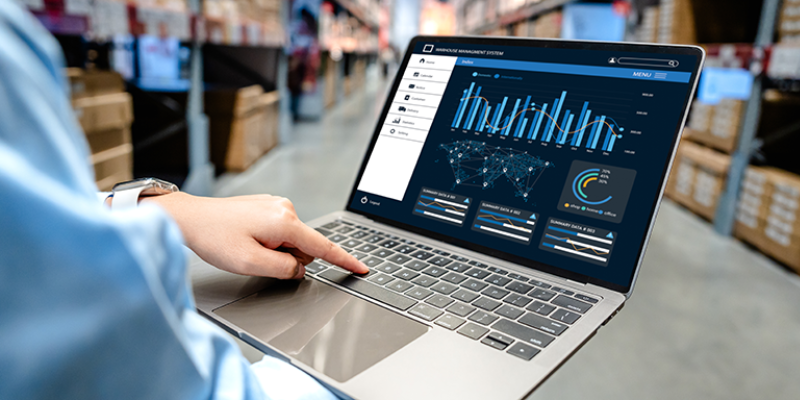
In today’s logistics environment, visibility isn’t just beneficial – it’s essential. But leading companies aren’t stopping there. They’re taking visibility a step further by harnessing real-time data to revolutionize freight management. By doing so, these companies gain predictive insights, optimize their operations, and achieve greater efficiency than ever before.
Key Takeaways:
- Visibility is no longer enough – today’s supply chains demand real-time insights to stay ahead of disruptions and drive performance.
- Real-time data matters because it enables instant, informed decisions that prevent disruptions and drive supply chain efficiency.
- Leverage real-time data by integrating advanced tools and analytics to make proactive, agile decisions across your supply chain.
- Real world-examples.
Why Real-Time Data Matters?
Real-time data goes beyond simply knowing where your shipment is – it provides actionable insights precisely when they matter most. This instantaneous access to information empowers logistics managers to make informed decisions quickly, preventing costly delays and disruptions before they occur.
Transformative Benefits of Real-Time Data
1. Proactive Decision-Making
Real-time data allows logistics professionals to move from reactive problem-solving to proactive decision-making. By analyzing live data streams, they can anticipate delays, reroute shipments, and swiftly adjust plans, keeping operations running smoothly and efficiently.
2. Enhanced Operational Efficiency
Immediate data availability means faster responses and optimized operational performance. By continuously monitoring real-time shipment statuses, inventory levels, and carrier performance, logistics teams can optimize route efficiency, reduce transportation costs, and significantly lower inventory carrying expenses.
3. Improved Customer Experience
Today’s customers demand real-time shipment information and precise delivery windows. Real-time freight data allows businesses to meet these expectations by providing accurate, timely updates and improving overall service reliability. This transparency fosters greater trust and customer loyalty.
4. Superior Risk Management
Real-time data visibility drastically improves risk management capabilities. It alerts logistics teams immediately when potential disruptions arise, allowing for rapid implementation of contingency plans. This capability significantly minimizes the financial and operational impacts of unforeseen disruptions.
5. Strategic Inventory Management
With live insights into freight movement, companies can better align inventory levels with demand patterns, improving inventory accuracy, reducing waste, and streamlining warehouse operations. Real-time data enables just-in-time inventory management, improving overall supply chain responsiveness.
How to Leverage Real-Time Data Effectively?
1. Implement Advanced Visibility Solutions
Invest in integrated Transportation Management Systems (TMS) and that provide comprehensive visibility across your logistics operations.
2. Integrate Predictive Analytics
Combine real-time data with predictive analytics tools. Predictive insights enable teams to identify trends, predict disruptions, and make proactive adjustments to minimize potential impacts.
3. Cultivate Agile Decision-Making Teams
Empower your logistics teams to utilize real-time data effectively. Training and enabling your workforce to swiftly interpret and act on real-time insights fosters agility and responsiveness throughout your supply chain.
Real-Life Example
Consider the case of a global retailer leveraging real-time data to handle unexpected port congestion. By instantly identifying the issue through live updates, the retailer was able to quickly reroute shipments to alternative ports and carriers. This rapid response prevented significant delays, reduced additional costs, and ensured timely product delivery to customers.
Final Thoughts
Real-time data isn’t merely an enhancement to visibility – it’s a transformative tool that propels logistics operations toward higher efficiency, improved customer satisfaction, and greater resilience. Companies that successfully harness real-time insights gain a distinct competitive advantage.
At nVision Global, we provide advanced logistics solutions designed to turn real-time freight data into actionable strategies. Ready to elevate your freight management capabilities? Connect with nVision Global today.
The post Going Beyond Visibility: How Real-Time Data Transforms Freight Management appeared first on nVision Global | Worldwide Supply Chain Solutions, Specializing in Global Freight Audit & Payment, Loss & Damage Claims, Supply Chain Services & Technology.
]]>The post 5 Common E-Invoicing Mistakes in Freight Audit & Payment (and How to Avoid Them?) appeared first on nVision Global | Worldwide Supply Chain Solutions, Specializing in Global Freight Audit & Payment, Loss & Damage Claims, Supply Chain Services & Technology.
]]>
As global regulations push businesses toward electronic invoicing (e-invoicing), many companies are still navigating the complexities of compliance, validation, and integration within their freight audit and payment processes. While e-invoicing offers improved efficiency, reduced fraud, and better financial oversight, mistakes in invoice validation, tax reporting, and format compliance can lead to costly delays, penalties, and operational inefficiencies.
Most Common E-Invoicing Issues
To help businesses optimize their freight invoice processing, here are five of the most common e-invoicing mistakes and how to avoid them.
1. Failing to Validate Invoice Data Before Submission
One of the biggest errors businesses make in freight e-invoicing is failing to validate invoice data before submission. Without proper validation, invoices may contain errors, missing data, or mismatched charges, leading to rejections by government tax portals or payment delays from clients.
How to Avoid This Mistake:
- Implement automated invoice validation tools that check for missing fields, incorrect freight charges, and format errors.
Cross-check invoices against freight contracts, rate agreements, and shipment documentation before submission. - Ensure all invoices comply with regulatory requirements and include necessary tax details, such as VAT or GST information.
- A validated invoice ensures timely processing and payment, reducing the risk of disputes and rejections.
2. Not Integrating E-Invoicing with Freight Audit Workflows
Many companies process e-invoices separately from their freight audit workflows, creating gaps in validation and compliance. This often results in invoices being approved and paid before verifying whether rates, surcharges, and accessorial fees align with contract terms.
How to Avoid This Mistake:
- Integrate e-invoicing with freight audit systems to ensure all invoices undergo compliance and accuracy checks before payment.
- Use automated invoice matching to compare invoices against purchase orders, bills of lading, and freight contracts.
- Ensure that your freight audit provider can support real-time data exchange with eInvoicing platforms.
By aligning freight audit and payment workflows with eInvoicing, businesses can prevent overpayments, detect duplicate charges, and maintain cost transparency.
3. Overlooking Country-Specific Tax Reporting Requirements
Different countries have unique e-invoicing and tax reporting regulations, which can create compliance challenges for global freight operations. Some countries require real-time VAT reporting, while others mandate government clearance before invoices can be processed.
How to Avoid This Mistake:
- Stay up to date on e-invoicing mandates in each country where your business operates.
- Ensure invoices include all required tax information, such as VAT registration numbers, SAF-T compliance codes, and Peppol identifiers.
- Work with an eInvoicing-compliant freight audit provider that can support cross-border invoicing regulations.
- Non-compliance with tax reporting laws can lead to delayed payments, financial penalties, and government audits, making global compliance a critical factor in freight e-invoicing.
4. Using Non-Compliant Invoice Formats for Cross-Border Transactions
A common issue in international freight auditing is failing to use the correct eInvoice format for cross-border transactions. Many countries do not accept PDFs or manually created invoices, instead requiring structured formats like XML, EDI, or Peppol BIS 3.0.
How to Avoid This Mistake:
- Determine which e-invoicing format is required for each country and integrate the correct standards.
- Adopt automated e-invoicing solutions that generate machine-readable invoices in compliant formats.
- Ensure seamless connectivity with government tax portals, Peppol networks, and eInvoicing platforms.
Using non-compliant invoice formats can result in invoice rejections, payment delays, and additional processing costs for corrections and resubmissions.
5. Relying on Outdated Manual Invoice Processing Methods
Despite the rise of automation and digital transformation, some businesses still rely on manual invoice processing, which increases the risk of errors, lost invoices, and inefficiencies. Manual processes lack transparency, slow down approvals, and make it difficult to comply with modern eInvoicing regulations.
How to Avoid This Mistake:
- Implement electronic data interchange (EDI) or API-based integrations to automate invoice processing.
- Use artificial intelligence (AI) and machine learning to improve invoice accuracy and detect anomalies.
- Transition from paper-based invoices and PDF attachments to structured eInvoices that integrate with freight audit systems.
Modernizing invoice processing ensures that freight audit and payment workflows are more efficient, compliant, and scalable for global operations.
How nVision Global Helps Businesses Avoid These E-Invoicing Mistakes?
Freight invoice processing is evolving, and businesses must adapt to e-invoicing regulations, compliance requirements, and automation-driven audit workflows.
At nVision Global, we help companies:
- Validate freight invoices for accuracy before submission.
- Seamlessly integrate e-invoicing with freight audit workflows.
- Ensure compliance with country-specific tax and VAT regulations.
- Generate e-invoices in structured formats for cross-border transactions.
- Automate invoice processing to eliminate manual errors.
Unlike many providers in the industry, nVision Global offers a truly global presence with multiple operational locations and multilingual customer service teams to support companies across North America, Europe, Asia-Pacific, and Latin America. With the ability to navigate complex regional eInvoicing requirements, nVision Global ensures that businesses receive real-time support, compliance expertise, and a seamless freight audit experience – wherever they operate.
To explore how nVision Global can support your business in freight audit and e-invoicing compliance, connect with our team today.
The post 5 Common E-Invoicing Mistakes in Freight Audit & Payment (and How to Avoid Them?) appeared first on nVision Global | Worldwide Supply Chain Solutions, Specializing in Global Freight Audit & Payment, Loss & Damage Claims, Supply Chain Services & Technology.
]]>The post Complete Visibility vs. Simple Reporting: Why Surface-Level Insights Aren’t Enough for Freight Management appeared first on nVision Global | Worldwide Supply Chain Solutions, Specializing in Global Freight Audit & Payment, Loss & Damage Claims, Supply Chain Services & Technology.
]]>
Freight management has become increasingly complex as supply chains stretch across borders, modes of transport diversify, and data volumes grow exponentially. Many companies rely on simple reporting tools to keep track of their logistics operations, but surface-level insights are no longer sufficient for effective decision-making.
Complete visibility, on the other hand, provides a more dynamic and granular view of every aspect of freight operations, transforming raw data into actionable intelligence. The difference between the two isn’t just a matter of scale but a question of value.
Limitations of simple reporting
Simple reporting typically focuses on presenting static data summaries for shipment statuses, freight costs, delivery timelines, and key performance indicators (KPIs). While these snapshots offer a general overview, they frequently lack context, depth, and the ability to provide actionable insights. For instance, a report might show a spike in freight costs for a specific month but fail to explain why those costs increased.
This lack of context leaves logistics managers operating in the dark, forced to rely on assumptions or time-consuming manual investigations to uncover the root causes. Additionally, simple reporting tools are often siloed, with limited integration across systems. The result is fragmented insights that don’t capture the full operational picture.
What complete visibility looks like
Complete visibility goes beyond static dashboards and KPI charts. It integrates data from multiple sources — carrier systems, transportation management systems (TMS), freight audit tools, and warehouse management systems (WMS) — to create a dynamic, real-time view of your logistics operations.
Complete visibility doesn’t just show a shipment is delayed but why it’s delayed, whether the cause is weather disruptions, customs bottlenecks, or carrier underperformance. More importantly, it provides predictive insights, alerting logistics managers to potential disruptions before they become costly problems.
This level of insight requires advanced analytics capabilities, including anomaly detection, predictive modeling, and exception management workflows. Companies leveraging a visibility solution like nVision Global’s can pinpoint recurring issues, such as carriers that consistently miss delivery windows or routes with frequent congestion, and address them proactively.

Surface-level data vs. actionable insights
The main difference between simple reporting and complete visibility comes down to the quality of the insights. Reporting answers what happened. Visibility answers why it happened, where it happened, and what to do next.
For example, simple reporting shows higher fuel surcharge fees on specific routes, while complete visibility reveals which carriers are applying inconsistent fuel rates, identifies routes with disproportionately high fuel costs, and suggests optimized routes or carrier switches to mitigate future expenses.
This transition from observation to actionable intelligence enables logistics managers to make more informed decisions in real time rather than reacting to issues after they’ve already caused financial damage.
Integration and automation
Achieving complete visibility relies heavily on integrating systems and automating workflows. Freight management platforms must connect seamlessly with TMS, WMS, and financial systems to pull in data from every stage of the shipment lifecycle. Without this integration, visibility tools are limited to isolated datasets, reducing their ability to deliver valuable insights.
Automation can further enhance visibility by streamlining tasks like anomaly detection, exception management, and invoice validation. Automated exception management can flag discrepancies in freight invoices in real time, allowing businesses to address issues immediately instead of discovering them during month-end audits.

Complete visibility is the standard for modern freight management
Complete visibility is no longer a “nice-to-have” feature. It’s a necessity for companies operating in today’s fast-paced, high-stakes supply chain environment. With rising fuel costs, ongoing geopolitical disruptions, and ever-evolving regulatory requirements, the margin for error in freight management has never been smaller.
Businesses relying solely on static reporting risk falling behind their competitors. Complete visibility offers a holistic view of freight operations, connecting the dots between different datasets, identifying root causes, and empowering teams to make smarter, faster decisions. It isn’t just about data. It’s about turning data into intelligence and intelligence into action.
The post Complete Visibility vs. Simple Reporting: Why Surface-Level Insights Aren’t Enough for Freight Management appeared first on nVision Global | Worldwide Supply Chain Solutions, Specializing in Global Freight Audit & Payment, Loss & Damage Claims, Supply Chain Services & Technology.
]]>