The post How AI Is Reshaping Logistics Operations in 2026: A CFO’s Perspective on Cost, Control, and Intelligence appeared first on nVision Global | Worldwide Supply Chain Solutions, Specializing in Global Freight Audit & Payment, Loss & Damage Claims, Supply Chain Services & Technology.
]]>
How AI Is Transforming Logistics Cost Control for CFOs in 2026
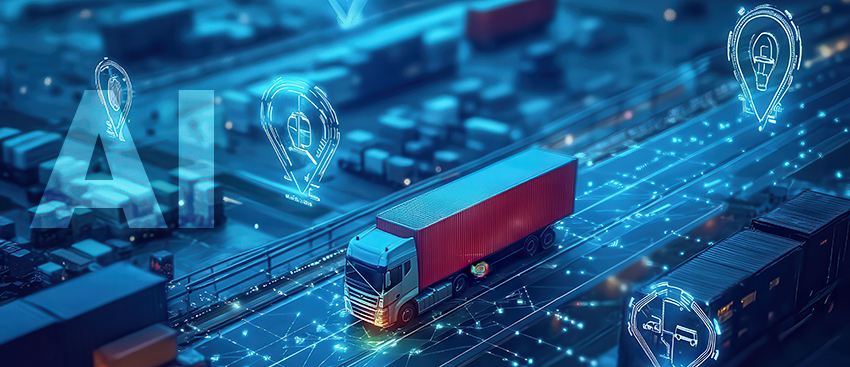
For CFOs, logistics has become one of the most complex and volatile cost centers in the enterprise. Transportation spend fluctuates rapidly, pricing lacks transparency, and freight invoice inaccuracy continues to drain margins. As organizations move into 2026, artificial intelligence is redefining how financial leaders regain control over logistics, not just operationally, but strategically. AI in logistics is no longer about automation for efficiency’s sake; it has evolved into a powerful tool for cost governance, predictive financial insight, and margin protection.
From Reactive Spend Management to Predictive Cost Control
Historically, logistics costs were analyzed only after freight had moved and invoices were paid, leaving finance teams in a reactive position. Variances were explained after the fact, and future exposure often remained hidden. Modern AI-powered logistics platforms change this dynamic by continuously analyzing real-time and historical transportation data. These systems forecast cost volatility across lanes and modes, anticipate capacity constraints that drive premium pricing, and identify service disruptions that create downstream financial impact. This shift enables CFOs and supply chain leaders to move from post-audit analysis toward proactive, forward-looking cost control.
AI Use Cases That Directly Impact Financial Performance
AI is delivering practical, measurable impact directly to the P&L. Dynamic route optimization now incorporates fuel prices, service commitments, transportation provider performance, and network constraints in real time, resulting in lower total landed costs, improved asset utilization, and stronger operating margins. Predictive analytics further enhance spend visibility by surfacing patterns that traditional reporting often misses, such as early indicators of cost escalation, underperforming transportation providers or lanes, and structural inefficiencies hidden within volume. For finance leaders, this means fewer surprises at quarter-end and greater confidence in transportation forecasts.
Beyond insight, AI systems are increasingly capable of executing routine logistics decisions autonomously within defined financial guardrails. Transportation provider selection, tendering, and routing decisions can be made automatically while respecting budget thresholds, contract terms, and service requirements. These guardrails preserve cost discipline, reduce manual intervention, and lower administrative overhead without sacrificing financial control.
Freight Audit as a Preventive Financial Control
Freight audit and payment has evolved from a back-office accounting task into a proactive financial control designed to prevent cost leakage before payment occurs. Modern AI-driven audit platforms identify systemic billing risks, contract compliance gaps, and behavioral patterns from transportation providers that can erode negotiated savings if left unchecked. This is where nVision Global delivers measurable value. By combining advanced AI-driven document intelligence with experienced audit professionals, nVision Global helps organizations ensure invoices are accurate, compliant, and aligned with contracted terms before they are approved for payment, eliminating overpayments at the source.
Turning Logistics Data Into Enterprise-Wide Financial Insight
As logistics data becomes cleaner and more reliable, it evolves into a strategic enterprise asset. CFOs are using validated transportation and invoice data to strengthen transportation provider negotiations, improve budgeting and forecasting accuracy, inform procurement and sourcing strategies, and align finance and supply chain teams around shared cost objectives. When logistics data is trustworthy, it supports smarter decision-making across the organization rather than remaining confined to transportation operations.
Why Governance and Experience Still Matter
While technology is critical, experience remains equally important. AI is only as effective as the data quality, governance, and oversight behind it. Without discipline, automated decisions can introduce financial risk instead of reducing it. nVision Global balances advanced AI capabilities with deep logistics and financial expertise to ensure decisions are transparent, auditable, and continuously improved against measurable outcomes. This combination of automation and human insight is what transforms AI from a digital tool into a dependable financial control system.
The CFO Takeaway: AI as Financial Infrastructure
In 2026, AI is no longer an emerging logistics capability, it is financial infrastructure. Organizations gaining a true advantage are those embedding AI across their logistics and financial ecosystems, not treating it as a point solution or standalone tool. When AI is integrated end to end, across data ingestion, audit controls, analytics, and decision execution, it becomes a continuous system of financial governance rather than a reactive layer applied after costs are incurred.
nVision Global is purpose-built around this philosophy, embedding AI throughout its ecosystem to deliver prevention first cost control, real-time financial insight, and disciplined decision making across transportation spend. This approach allows CFOs to move beyond visibility alone and into sustained margin protection, improved forecasting confidence, and measurable cost discipline.
For CFOs who are serious about saving money, gaining deeper insight, and turning logistics data into a strategic financial asset, the path forward is clear. AI-powered logistics intelligence must be embedded, governed, and actionable. That journey starts with engaging nVision Global today.
The post How AI Is Reshaping Logistics Operations in 2026: A CFO’s Perspective on Cost, Control, and Intelligence appeared first on nVision Global | Worldwide Supply Chain Solutions, Specializing in Global Freight Audit & Payment, Loss & Damage Claims, Supply Chain Services & Technology.
]]>The post Beyond the Buzz: Why Stability Beats Start-Up Hype in Freight Audit & Supply Chain Technology appeared first on nVision Global | Worldwide Supply Chain Solutions, Specializing in Global Freight Audit & Payment, Loss & Damage Claims, Supply Chain Services & Technology.
]]>
In today’s logistics landscape, headlines are dominated by the next “disruptor.” Venture capital continues to pour billions into supply chain and freight-tech startups, promising to revolutionize everything from audit automation to rate management. But amid the noise, enterprise shippers are asking a critical question: How stable are these new players when the funding dries up?
The FreightTech Gold Rush and Its Fallout
In the last five years, venture capital investment in logistics technology has surged to record levels. According to Pitchbook and CB Insights, more than $30 billion has been invested in supply chain startups since 2020, fueling rapid growth but not necessarily long-term value. The result? Dozens of highly funded companies that scaled faster than they stabilized.
- Convoy, once valued at nearly $4 billion, shut down in 2023 after burning through investor capital.
- Transfix and Flexport faced layoffs, restructurings, and valuation drops as investor pressure collided with operational reality.
- Dozens more quietly merged, pivoted, or vanished, leaving customers scrambling to secure their data and continuity.
For shippers entrusting millions or even billions in freight spend to these firms, the stakes couldn’t be higher. When funding cycles dictate operational decisions, customer priorities often take a back seat to investor returns.
Short-Term Capital vs. Long-Term Partnership
Venture capital is designed for rapid growth, not necessarily for resilience. Investors expect aggressive scaling and quick exits, often within 3–5 years. That timeline doesn’t align with the multiyear contracts, complex integrations, and continuous optimization that enterprise logistics requires.
When logistics technology companies rely on funding rounds instead of proven revenue models, the risks are real:
- Service disruptions when cost-cutting follows failed funding rounds.
- Data security threats if ownership changes hands in acquisitions.
- Loss of expertise as layoffs target experienced teams to meet investor mandates.
Choosing a partner in freight audit and payment isn’t just about marketing and telling you what you want to hear, it’s about continuity, accountability, and the assurance that your provider will still be here next year.
The nVision Global Difference: Stability. Continuity. Experience.
Founded in 1992, nVision Global has spent over 30 years delivering freight audit & payment, transportation management, and claims solutions to the world’s leading shippers. Unlike venture-funded newcomers, nVision Global has been privately held under a single ownership structure since inception, thus allowing the company to grow sustainably, reinvest in innovation, and prioritize client success above investor expectations.
Today, nVision Global operates on a truly global scale, with strategically located offices across North America, EMEA, LATAM, and APAC, built for business continuity and time-zone coverage. Our platforms unify freight audit, TMS, claims, and analytics into a single ecosystem that delivers end-to-end visibility, measurable cost savings, and data-driven control. But our foundation has never changed:
nVision Global’s mission has always been to help businesses optimize their supply chain operations, enhance visibility, and reduce the cost per shipment. That commitment is sustained by three decades of profitability, continuous reinvestment, and a customer-centric approach that has outlasted every industry cycle since 1992.
While others chase the next funding round, nVision Global continues to invest in long-term partnerships, global support infrastructure, and secure technology that adapts with, not against the industry’s evolution. Because in logistics, stability isn’t a headline. It’s a responsibility.
The next time a FreightTech startup promises “disruption,” ask:
Who really owns them? What happens when investor priorities shift? And where will your freight data be when they do?
For global shippers, choosing a freight audit and supply chain technology partner shouldn’t be a gamble on venture capital. It should be a decision grounded in proven performance, global reliability, and enduring trust.
That’s the nVision Global way. One Partner. One Vision. One Global Standard.
The post Beyond the Buzz: Why Stability Beats Start-Up Hype in Freight Audit & Supply Chain Technology appeared first on nVision Global | Worldwide Supply Chain Solutions, Specializing in Global Freight Audit & Payment, Loss & Damage Claims, Supply Chain Services & Technology.
]]>The post From Reactive to Predictive: How AI Is Reshaping Modern Supply Chains appeared first on nVision Global | Worldwide Supply Chain Solutions, Specializing in Global Freight Audit & Payment, Loss & Damage Claims, Supply Chain Services & Technology.
]]>
For decades, supply chains have operated in a largely reactive mode. A delay happened? You solved it. A transportation provider error surfaced? You corrected it. A cost discrepancy appeared? You chased it down.
But the pace, complexity, and volatility of today’s logistics environment have changed the game. Manual processes alone, from freight auditing to exception management to forecasting, can’t keep up.
Artificial intelligence is now stepping in to transform supply chains from “look-back” systems into proactive, predictive, and intelligently adaptive networks. Emerging research from leading academic and supply-chain institutions underscores a clear message: AI is no longer an enhancement, it’s becoming the backbone of modern logistics intelligence.
The Old Model: Fragmented Data and Reactive Decisions
Traditional freight and logistics operations have long suffered from three major challenges:
1. Siloed data – Information lives in separate systems: freight invoices, TMS data, transportation provider performance files, warehouse logs, shipment updates, creating blind spots that slow decision-making.
2. Manual auditing & exception handling – Teams spend hours reviewing freight bills, validating rates, and resolving disputes. It’s time-consuming, error-prone, and nearly impossible to scale.
3. Response after the fact – Delays, disruptions, and cost overruns often aren’t identified until they’ve already impacted operations. In short, the traditional freight ecosystem is built around reacting, not predicting.
The New Model: AI + Data + Human Expertise
AI-driven logistic solutions introduce an entirely different framework, one where systems learn, anticipate, and recommend the best course of action. Here’s what the research highlights:
1. Predictive insights replace guesswork – AI analyzes historical patterns, real-time data, and external signals to forecast disruptions, demand shifts, and exceptions before they impact the network. Instead of asking “What went wrong?”, supply chain teams can start asking “What’s about to happen and what should we do about it?”
2. Automated document intelligence – Companies like nVision Global’s nSure AI Data Capture can now parse freight invoices, bills of lading, shipment documents, and transportation provider contracts with exceptionally high accuracy. This means:
- Fewer manual touches
- Faster dispute resolution
- Greater audit depth
- Fewer missed charges or overcharges
This is the foundation of a more reliable and scalable freight-audit operation.
3. Human + AI collaboration is the real differentiator – One of the biggest findings across the industry is that AI performs best when paired with human expertise, not as a replacement. AI surfaces patterns, anomalies, and recommendations. Humans apply judgment, context, and domain knowledge. Together, they outperform either one alone.
Why AI Matters Specifically for Freight Audit & Logistics Operations
The impact is especially strong in freight audit and broader cost-management workflows:
✔ Better cost control – AI assists in catching discrepancies, duplicate charges, misclassifications, and rating errors earlier, reducing cost leakage significantly.
✔ Enhanced working capital management – Faster validation → faster approvals → healthier cash flow.
✔ Improved visibility across global networks – With normalized, structured data, companies see their freight spend clearly, by transportation provider, lane, mode, region, or time period.
✔ Ability to scale without adding headcount – AI handles repetitive tasks, freeing teams to focus on vendor strategy, performance improvement, and customer-focused value.
✔ More strategic decision-making – When data is clean, consistent, and intelligently organized, logistics teams make smarter choices around routing, capacity, transportation provider mix, and budget planning.
But the Research Is Clear: AI Only Works When the Data Works
The biggest constraint to AI delivering full value isn’t the technology, it’s the data underneath it. For AI to excel, organizations need:
1. Clean, consistent, high-quality inputs – Poorly structured or inconsistent data limits the accuracy of predictive models and leads to false positives.
2. Unified data systems – When freight invoices, shipment data, transportation provider contracts, and TMS records flow into a shared ecosystem, AI can help create real intelligence.
3. Clear workflows for human oversight – Teams should know when to trust AI recommendations and when to step in.
4. A willingness to rethink outdated processes – AI is most effective when organizations streamline, standardize, and modernize their operational playbooks.
What This Means for the Future of Freight Management
AI in logistics isn’t just an efficiency booster; it’s reshaping how companies operate:
- Networks become more resilient
- Costs become more predictable
- Exceptions get resolved before they escalate
- Freight audit becomes a strategic function instead of an administrative burden
This shift opens the door for logistics teams to move from firefighting mode to high-value coordination and planning.
Where nVision Fits In This Evolving Landscape
Companies don’t just need AI, they need AI that’s grounded in freight knowledge, decades of global logistics experience, and proven audit processes.
That’s exactly where nVision’s strengths align with the future of the industry:
- AI-enabled freight audit to improve accuracy and cost recovery
- Global visibility that normalizes data across transportation providers, modes, and regions
- Human expertise guiding and validating the automation
- Faster cycle times and stronger financial controls
- Scalable processes that support growth without adding operational strain
When AI and logistics expertise work together, organizations unlock the real value: smarter decisions, lower costs, and more resilient supply chains.
Final Thoughts
AI isn’t replacing the logistics professional. It’s empowering them, giving them clearer data, stronger predictions, and the ability to see what’s coming before it hits. Supply chains that embrace intelligent, data-driven systems today will be the ones leading the industry tomorrow.
The post From Reactive to Predictive: How AI Is Reshaping Modern Supply Chains appeared first on nVision Global | Worldwide Supply Chain Solutions, Specializing in Global Freight Audit & Payment, Loss & Damage Claims, Supply Chain Services & Technology.
]]>The post Optimizing Global Supply Chain Operations: An Interview with Luther Brown, CEO of nVision Global appeared first on nVision Global | Worldwide Supply Chain Solutions, Specializing in Global Freight Audit & Payment, Loss & Damage Claims, Supply Chain Services & Technology.
]]>
Empowering shippers with clarity, control, and measurable savings in a complex world of logistics
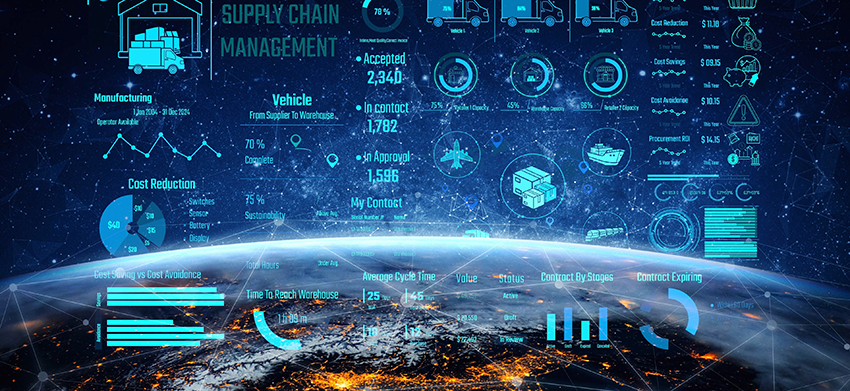
In today’s global economy, supply chain and logistics networks are under unprecedented pressure: rising costs, capacity constraints, regulatory uncertainty, and the constant need for agility and visibility. For companies managing shipments across multiple continents and modes, piecemeal systems and legacy processes are no longer adequate. That’s where a partner like nVision Global comes in, combining deep logistics domain expertise with advanced technology to deliver greater control, transparency, and cost savings.
We sat down with Luther Brown, Founder & Chief Executive Officer of nVision Global, to explore how the company is helping shippers transform their freight and logistics operations, the role of data and automation, and how organizations can stay ahead in a volatile market.
Luther, you’ve led nVision Global for many years. What is your overarching mission in today’s climate of global disruption?
“Our mission is simple but ambitious: to bring clarity and control to every link of the logistics network and deliver measurable savings for our customers. As supply chains become increasingly complex, companies need more than basic audit services or standalone technology. They need a partner that can bring both deep logistics experience and innovative technology to bear. At nVision Global, we live at that intersection.”
Under Brown’s leadership, nVision Global has grown into a global freight audit & payment (FBAP) specialist, also offering transportation management, analytics, and claims services. The company processes billions of dollars in freight spend annually, across thousands of transportation providers and 190+ countries.
Can you describe how nVision Global’s global footprint and operations give shippers an edge?
“One of the things we hear often is that the hidden cost or complexity of freight isn’t just in the shipment itself, it’s in how it’s billed, how it’s paid, how it is tracked, and how it interacts with multiple transportation providers, suppliers, and geographies. With processing centers and dedicated teams across more than a dozen countries in the Americas, Europe, the Middle East and Asia, we bring truly global coverage with regional understanding. That means language, regulatory regimes, local transportation provider practices and tax issues are all handled.”
This global reach and deep logistics-specialist staffing is a key differentiator. For example, the company’s audit process goes beyond simple checks: every invoice is processed through three separate freight-audit and rating engines, matched against negotiated contracts, validated for duplicates, surcharges, and classification accuracy.
Brown adds: “For our customers, the result is hundreds of millions of dollars in savings opportunities annually.” (nVision Global materials cite this level of savings year-over-year).
How does technology enable nVision Global to deliver this value, and how should shippers think differently about their freight spend?
“Logistics technology today is often fragmented, separate systems for TMS, audit, payment, claims, and analytics. At nVision Global, we believe you need a unified platform: one where shipment information, invoice data, rate data, transportation provider performance, real-time visibility, and analytics all converge. That’s how you turn freight from a cost center into a strategic asset.”
nVision Global offers its “Impact TMS” platform as a centralized system to plan and manage global shipments… combining data from shippers, suppliers, and transportation providers into one environment. Via this platform, shippers can book, rate, track, tender (or re-tender), analyse, and pay across all modes and geographies.
“One of our customers used our platform to overcome capacity constraints and supplier delays by leveraging real-time order and rate data, centralised online freight auctions, and logistics control. That network redesign and process optimisation saved the company over $2 million in the first year, mainly through avoided expedited freight costs.”
C2Q, your new Contract-to-Quote product seems to be making waves. Can you explain what it is, and why it matters?
“Certainly. The logistics market is changing rapidly. Static contracted rates are no longer enough. Shippers need flexibility to compare those contracted rates with dynamic market quotes so they can decide whether to send a load to a contracted carrier or to go to market via spot quotes or even reverse auctions. That’s where our new C2Q product comes in. It stands for Contract-to-Quote: enter the shipment details, rate against your negotiated pricing, send to non-contract transportation providers for live spot quotes or reverse auctions, and then compare them all in one place. So you can choose the best option in real time… based on current conditions rather than relying on aged static pricing.”
This kind of tool resonates in today’s volatile freight market, where spot market rates, capacity, and required flexibility are constantly shifting. By using analytics, market data, and automation, shippers gain visibility into live pricing alternatives and can make smarter decisions.
Per Luther Brown, “C2Q supports current market conditions with real-time quotes and bids that are all market-driven. It gives our customers the flexibility to choose the best option based on real-time conditions rather than static pricing.”
Many in the industry talk about automation, AI, and machine learning. How do you approach these technologies, and how do you balance automation with the human expertise required?
“We absolutely believe in automation and AI… they are essential. For example, our newly released, proprietary nSure AI Data Capture & Extraction engine uses advanced data capture and machine-learning models to extract thousands of invoice data points with more than 99% accuracy. But automation alone isn’t enough, especially in global logistics where non-standard invoices, handwritten documents, regional tax variants, and local transportation provider practices abound.”
nVision Global emphasises what it calls “automation + human oversight,” recognising that global freight audit involves local nuances of language, tax, contract terms, regulatory compliance, and transportation provider relationships.
“Automation makes things faster and scalable. Human logistics experts make it accurate and strategic. The strongest providers blend both seamlessly.”
Let’s talk about service. Many technology vendors offer software, but you emphasise that nVision Global delivers service as well. Why is that distinction important?
“Transportation is a service. You cannot treat it simply like buying a product. That’s why our philosophy is ‘built for service, not just software.’ We embed in the operational realities of our customers’ businesses their transportation providers, suppliers, vendor network, customs, claims issues, and regulatory burdens. Our solutions are designed specifically for the transportation environment, with teams who understand the day-to-day realities behind each shipment.”
This focus on service is especially evident in nVision Global’s Global Loss & Damage Claims services. For example, over the past two years, the claims team, with more than ten years of average experience per person, achieved an 87 % recovery rate and recovered more than $7 million in reimbursements.
“It’s not enough to process invoices and pay transportation providers. If something goes wrong, a loss, damage, delay… You need an experienced team that will pursue transportation provider liability, track performance, manage disputes, and recover value. That’s service.”
Finally, what would you say are the three core imperatives every shipper should embrace today to optimise freight and logistics spend?
“If I had to pick three, I’d say:
- Collect & normalise your data: Without clean, detailed shipment, invoice and rate data you cannot see what’s really happening. We encourage shippers to capture rich data across all modes, geographies and partners.
- Build visibility and real-time intelligence: It’s no longer good enough to close the books after the fact. You need dashboards, analytics, alerting, transportation provider scorecards and exception resolution in real time so you can react to what’s happening, not just retrospectively.
- Leverage dynamic pricing and continuous improvement: The market is not static. Use tools that let you compare contracted pricing vs spot vs reverse-auction in real time. Combine audit savings with process optimisation and transportation provider accountability, and you convert freight from a cost to a strategic lever.”
“At nVision Global, we believe the smartest companies will move beyond ‘least cost routing’ and instead embrace what I call ‘right cost and right service at the right moment.’ The companies that win tomorrow will not be those who are simply locked in the lowest rate but those who adapt their freight spend as market conditions change, hold transportation providers accountable, and optimise their network with clarity and agility.”
Closing thoughts
In an era when supply chain disruption, inflationary pressure, capacity volatility and regulatory complexity are the new normal, shippers cannot afford to rely on outdated systems, fragmented processes or purely manual auditing routines. nVision Global’s blend of global reach, deep logistics domain expertise, advanced technology and a service-centric mindset offers a strong value proposition.
For logistics professionals looking to gain control of freight spend, elevate visibility, ensure contract compliance, and turn data into action, the path is clear: a unified, data-driven, and service-embedded approach. As Luther Brown succinctly puts it: “When you can see the full picture, across shipments, transportation providers, vendors, contracts, you begin to manage your supply chain instead of simply reacting to it.”
About nVision Global
nVision Global is a leading provider of global freight invoice audit & payment, transportation management, business intelligence, and claims services. With operations spanning multiple continents and servicing some of the world’s largest shippers, nVision Global helps companies turn logistics cost and complexity into clarity, control, and competitive advantage.
The post Optimizing Global Supply Chain Operations: An Interview with Luther Brown, CEO of nVision Global appeared first on nVision Global | Worldwide Supply Chain Solutions, Specializing in Global Freight Audit & Payment, Loss & Damage Claims, Supply Chain Services & Technology.
]]>The post Data-Driven Retail Planning: Overcoming the New Supply Chain Challenge appeared first on nVision Global | Worldwide Supply Chain Solutions, Specializing in Global Freight Audit & Payment, Loss & Damage Claims, Supply Chain Services & Technology.
]]>
Across retail supply chains, data has never been more abundant… or more underutilized. Retailers have invested heavily in omnichannel infrastructure, automation, and global sourcing networks. Yet one critical link often remains fragmented: the planning layer that connects supply, logistics, and demand.
At nVision Global, we see this gap not as a technology issue, but as a visibility issue and one that’s quickly becoming the retail sector’s defining challenge.
Planning: The Hidden Weak Spot in Modern Retail
Even as retailers embrace AI and automation, many still plan inventory and logistics using spreadsheets, legacy tools, and disconnected systems. This means teams spend more time reconciling data than acting on it. The result?
- Forecasts that lag behind real-world conditions
- Stockouts and overstocks that erode margins
- Shipping inefficiencies that drive up transportation costs
Research from McKinsey has shown that retail planners can spend up to two-thirds of their time cleaning and compiling data, leaving little capacity for the high-value work of forecasting and decision-making.
For a sector that depends on precision timing from production to last-mile delivery, these inefficiencies add up fast.
The New Reality: Agility Is the Advantage
The retail supply chain has become a living system sensitive to consumer trends, geopolitical shifts, and environmental disruptions.
Success today depends not on having more data, but on using it faster and more collaboratively.
The most adaptive retailers are moving toward:
- Unified visibility across planning, procurement, logistics, and finance
- Predictive analytics to anticipate demand spikes and disruptions
- Scenario modeling that allows teams to simulate the impact of carrier delays, supplier bottlenecks, or tariff changes before they happen
This isn’t about reacting better, it’s about planning smarter.
From Spreadsheets to Supply Intelligence
At nVision Global, we’ve watched how disjointed planning tools ripple downstream through logistics operations. When financial forecasts, warehouse capacity, and transportation data live in separate systems, the outcome is predictable: reactive decision-making and unnecessary cost. Our approach, built around freight audit, transportation management, and analytics integration, helps retailers close that gap.
By unifying logistics data with cost and transportation provider performance insights, retailers can:
- Align purchasing and replenishment decisions with real-time freight data
- Identify when transportation inefficiencies are driving inventory imbalances
- Turn raw shipment and rate data into actionable planning intelligence
In short, it’s about transforming logistics from a cost center into a planning advantage.
Connected Planning, Connected Outcomes
The next era of retail success will belong to organizations that plan, move, and measure as one. This requires more than digitization; it requires connected intelligence: a shared view of truth across merchandising, logistics, and finance.
By leveraging transportation data as part of their retail planning process, businesses can:
- Forecast shipping costs with greater accuracy
- Align fulfillment strategies with demand variability
- Reduce markdown risk by matching inbound inventory to actual sales patterns
Visibility drives agility. And agility is now the currency of growth.
The nVision Global Perspective
Retailers don’t just need better forecasts; they need better foresight. That means connecting the dots between what’s sold, what’s shipped, and what’s planned.
At nVision Global, we believe data-driven planning starts with logistics intelligence. When every invoice, shipment, and transportation provider performance metric feeds into one transparent ecosystem, retailers gain not just accuracy but adaptability.
In a world where the next disruption is always one season away, the smartest retail move isn’t predicting the future. It’s being ready for it.
The post Data-Driven Retail Planning: Overcoming the New Supply Chain Challenge appeared first on nVision Global | Worldwide Supply Chain Solutions, Specializing in Global Freight Audit & Payment, Loss & Damage Claims, Supply Chain Services & Technology.
]]>The post Driving AI in Transportation Management: Turning Data Into Direction appeared first on nVision Global | Worldwide Supply Chain Solutions, Specializing in Global Freight Audit & Payment, Loss & Damage Claims, Supply Chain Services & Technology.
]]>
Artificial intelligence is no longer a futuristic concept in logistics; it’s the new foundation for decision making. Across the transportation management landscape, AI is redefining how organizations plan, move, and measure their freight. It’s enabling smarter routes, faster billing, cleaner data, and more sustainable operations.
But amid all the buzz, one truth stands out: AI is only as powerful as the systems it supports and the data it learns from.
AI Is Reshaping the Transportation Value Chain
According to Driving AI in Transportation Management, leading logistics organizations are embedding AI throughout their operations, not as a plug-in, but as a strategic layer across the entire transportation value chain.
Real-world use cases include:
- Dynamic pricing and forecasting allowing companies to respond instantly to market volatility.
- Intelligent route optimization, using predictive algorithms to reduce mileage, emissions, and delays.
- Computer-vision yard management, where cameras and sensors feed data that improves dock scheduling and utilization.
- Automated invoice matching and exception management, using AI to flag overcharges or missing documentation in seconds instead of hours.
These are not incremental improvements. They represent a shift toward self-learning logistics, where systems evolve based on every new shipment, lane, and transportation provider interaction.
TMS: The Enabler of Scalable AI
The report rightly highlights the central role of Transportation Management Systems (TMS) in making AI scalable.
Without a unified TMS, AI has nowhere to anchor, no consistent, normalized data from which to learn.
This is where nVision Global’s expertise directly aligns. Our TMS doesn’t just capture shipments; it captures the story behind them, the costs, exceptions, transportation provider performance, and outcomes. When this data is structured and centralized, AI can:
- Predict optimal transportation providers and lanes.
- Simulate the financial impact of service-level choices.
- Recommend corrective actions before disruptions escalate.
AI, in essence, becomes the “thinking layer” atop a solid data foundation.
From Insight to Action: The New Competitive Edge
The logistics industry has always been data-rich but insight-poor. AI changes that balance. When paired with advanced analytics, AI helps transform passive data into proactive intelligence, not just showing what happened, but why it happened and what to do next.
Leading companies are using AI to:
- Detect early warning signs of service failures.
- Anticipate transportation provider capacity constraints.
- Evaluate trade-lane risk under evolving tariff structures.
- Optimize sustainability initiatives by reducing empty miles and idle time.
The result is a more agile, transparent, and predictive supply chain, one that reacts to the next disruption before it hits.
Where nVision Global Fits In
At nVision, we view AI not as a buzzword, but as an evolution of what we’ve done for decades: transform logistics data into decision-ready insight.
Our platform already incorporates automation and analytics that pave the way for AI-driven optimization:
- Freight Audit & Payment data fuels AI models that detect anomalies and forecast cost deviations.
- TMS and Rate Procurement tools provide structured datasets for machine learning around transportation provider selection and routing.
- Claims and Exceptions Management processes are increasingly automated, allowing AI to predict resolution timelines and recovery potential.
- Global Freight Analytics delivers the visibility AI needs to continuously refine outcomes across geographies and modes.
By bringing data, systems, and human expertise together, nVision Global helps enterprises move from manual management to machine-augmented strategy, a crucial step in the evolution of modern transportation management.
The Road Ahead
AI won’t replace logistics professionals; it will empower them. The most successful organizations will be those that pair intelligent technology with experienced human oversight, ensuring that every AI recommendation aligns with operational reality.
As logistics networks become more complex and global pressures intensify, AI’s role will only grow. But to truly drive value, companies must start with a clear, connected foundation, one that enables AI to see the full picture, not just isolated pieces.
That’s where integrated systems like nVision’s come in:
AI provides the intelligence. Data provides the truth. Together, they drive the future of transportation.
The post Driving AI in Transportation Management: Turning Data Into Direction appeared first on nVision Global | Worldwide Supply Chain Solutions, Specializing in Global Freight Audit & Payment, Loss & Damage Claims, Supply Chain Services & Technology.
]]>The post Breaking the Bottleneck: Why Fragmentation and Data Disconnect Remain the Supply Chain’s Greatest Weakness appeared first on nVision Global | Worldwide Supply Chain Solutions, Specializing in Global Freight Audit & Payment, Loss & Damage Claims, Supply Chain Services & Technology.
]]>
It’s no secret that supply chains have evolved into sprawling, tech-driven ecosystems. But despite record investment in logistics technology and analytics, a fundamental issue still plagues the industry: fragmentation.
A recent feature in Inbound Logistics asked global experts what single supply chain issue deserves more urgent attention. Their answers pointed again and again to one common thread: disconnected systems, poor data visibility, and siloed decision-making.
The Cost of Disconnection
Supply chains today span continents, partners, and platforms, yet they rarely speak the same data language. As Adeptia’s Chief Innovation Officer Deepak Singh noted, “60% of business data still arrives in formats incompatible with our systems — PDFs, scanned documents, and files that don’t connect.”
This fragmentation doesn’t just slow operations, it introduces risk. When finance, logistics, and compliance teams can’t see the same data in real time, errors multiply, from missed transportation provider credits to costly re-billing and compliance penalties. Gartner reports that 63% of supply chains remain “fragile”, unable to adapt quickly when disruptions strike.
The result? Delays, added costs, and damaged relationships across the global network.
Visibility Is More Than Tracking
Several industry leaders echoed a growing consensus: visibility isn’t just about tracking freight… It’s about integrating data across every layer of the supply chain. Andre Luecht from Zebra Technologies pointed out that as expectations rise, companies must be able to “monitor and respond to changes in real time.” That requires a foundation of connected systems, reliable data, and intelligent analytics.
Without those, real-time response remains an illusion.
The Real Urgency: Data Integration
Even with AI and automation advancing rapidly, many organizations are still held back by poor data quality and fragmented systems. In a recent JBF/Pando study, 83% of logistics leaders said that data quality is the biggest barrier to AI adoption. That’s because every algorithm, every dashboard, every forecasting tool is only as strong as the data feeding it.
To build true agility, companies must focus less on adding tools and more on connecting them.
Where nVision Global Helps
At nVision Global, we see fragmentation daily, and we help fix it. Our Freight Audit & Payment, Transportation Management, and Claims Management solutions work together to unify the financial, operational, and service sides of your logistics operations.
By normalizing global freight data into a single analytics platform, our customers gain the clarity to act faster, model risk scenarios, and pinpoint inefficiencies before they become costly disruptions. When global shippers can integrate transportation provider data, invoices, and performance analytics into one connected ecosystem, decisions stop being reactive and start being strategic.
The Takeaway
The industry conversation is clear: the supply chain’s biggest weakness isn’t a lack of technology, it’s a lack of connection.
As Andre Luecht put it, real-time response begins with integration. Until the industry speaks a common data language, every new tool and platform will only add to the noise. For global enterprises, the path forward lies not in more systems, but in smarter unification, where every shipment, invoice, and data point flows through one connected view of truth.
Because in today’s volatile world, visibility isn’t just an advantage. It’s the difference between resilience and fragility.
The post Breaking the Bottleneck: Why Fragmentation and Data Disconnect Remain the Supply Chain’s Greatest Weakness appeared first on nVision Global | Worldwide Supply Chain Solutions, Specializing in Global Freight Audit & Payment, Loss & Damage Claims, Supply Chain Services & Technology.
]]>The post Resilient by Design: Why Location Matters in Logistics Technology appeared first on nVision Global | Worldwide Supply Chain Solutions, Specializing in Global Freight Audit & Payment, Loss & Damage Claims, Supply Chain Services & Technology.
]]>
In today’s volatile global landscape, where natural disasters and regional instability can disrupt entire supply chains overnight, operational resilience is not optional… It’s a business imperative. At nVision Global, resilience begins with geography.
A Foundation Built on Stability
A cornerstone of our business continuity strategy is the intentional placement of our operational centers in regions with low geological and environmental risk. Each location was selected for its long-term stability, access to infrastructure, and skilled workforce, ensuring that our clients’ data, operations, and services remain protected and uninterrupted.
Our primary operational centers include:
-
McDonough, Georgia (USA) – Our corporate headquarters and North American operations hub, positioned well inland from coastal weather risks.
-
Maastricht, Netherlands – Centrally located in Europe’s logistics corridor with minimal seismic activity and strong infrastructure connectivity.
-
Cluj, Romania – A rapidly growing European technology hub with a low risk of natural disasters and a high concentration of IT talent.
-
Ningo, China and San José, Costa Rica – Supporting APAC and Latin American customers with diversified time-zone coverage and secure, inland positioning.
-
Noida, Kolkata, and Mumbai, India – Strategically selected metropolitan regions with stable infrastructure and redundant connectivity across multiple power and telecom grids.
This geographic diversity forms the backbone of our global business continuity and disaster recovery plan, enabling uninterrupted freight audit and payment processing, claims management, and transportation management system (TMS) operations.
Why Location Is a Competitive Advantage
Many logistics technology providers concentrate their operations in high-risk regions, such as coastal zones prone to typhoons or areas with frequent seismic activity. nVision Global’s deliberate avoidance of these regions ensures consistent service delivery and system uptime, even in unpredictable global conditions.
By spreading operations across multiple continents and stable geographies, we create built-in redundancy that protects against single-point failures. Our approach isn’t reactionary; it’s part of a long-standing risk-management philosophy that anticipates disruption before it happens.
Operational Resilience for a Connected World
Our clients depend on us to maintain precision and performance across every shipment, invoice, and claim, regardless of what’s happening elsewhere in the world. That’s why our infrastructure isn’t just global; it’s strategically resilient.
From data redundancy and multi-region support centers to proactive continuity planning, nVision Global provides the stability today’s logistics leaders demand. When it comes to ensuring uptime and reliability, location isn’t just a detail… It’s a differentiator.
The post Resilient by Design: Why Location Matters in Logistics Technology appeared first on nVision Global | Worldwide Supply Chain Solutions, Specializing in Global Freight Audit & Payment, Loss & Damage Claims, Supply Chain Services & Technology.
]]>The post From Buzzword to Business Value: AI That Moves Freight appeared first on nVision Global | Worldwide Supply Chain Solutions, Specializing in Global Freight Audit & Payment, Loss & Damage Claims, Supply Chain Services & Technology.
]]>
In logistics, the term “AI” is often used loosely, but for global shippers, it’s not about saying the word; it’s about proving the value. Here’s how real AI turns transportation data into savings, control, and smarter decision-making on a global scale.
The Problem with “AI” as a Marketing Term
Everywhere you look in supply chain marketing, AI is the headline. But in many cases, what’s labeled “AI” is really just:
- Simple automation: rules that execute repetitive tasks.
- Reporting dashboards: useful for visibility, but not predictive.
- Rebranded legacy tools: systems doing the same thing under a new name.
Shippers don’t need buzzwords. They need results in the form of lower costs, fewer errors, and smarter decisions in real time.
What Real AI Delivers in Logistics
At nVision Global, we’ve built AI that doesn’t just describe what happened, it changes what happens next.
1. Freight Audit & Payment Accuracy
- Detects duplicate billing, incorrect charges, and out-of-tolerance invoices.
- Automates up to 99% of audits with penny-level precision.
- Routes true exceptions to humans with context for faster resolution.
2. Dynamic Pricing & Bidding
- Real-time quotes alongside contracted rates.
- AI-powered reverse auctions for competitive pricing.
- Confidence scoring to select the right provider, mode, or lane.
3. Cost Attribution at Any Level
- Assigns spend down to the SKU, order, customer, or region.
- Gives Finance real visibility into true margins, not just averages.
- Eliminates the guesswork of where expedited or hidden costs go.
4. Predictive Insights & Exception Prevention
- Forecasts risk of delay based on weather, port congestion, or carrier history.
- Flags when a shipment is likely to miss SLAs, before it does.
- Recommends alternatives to minimize disruption and cost.
Real AI, Real Outcomes
Unlike marketing buzz, true AI can be measured in the outcomes it delivers. For example:
- Global Lighting Company: Gained real-time control of expedited freight and projected tens of millions in savings in year one.
- Gas & Oil Leader: Deployed a global e-bidding platform in months, empowering thousands of users and eliminating reliance on outdated systems.
- Global Consumer Goods Company: Saved $34M in just 24 months through AI-driven freight audit and payment transformation.
Why AI + Human Expertise Wins
Even the best AI doesn’t replace human insight. The real advantage comes when AI and people work together:
- AI handles scale, speed, and pattern recognition.
- Humans resolve disputes, interpret contracts, and manage nuance.
- Together, they deliver savings, compliance, and strategic advantage that no single approach can match.
How to Tell if AI Will Deliver Value
If you’re evaluating a logistics partner, ask yourself:
- Can they prove savings, not just promise them?
- Do they show how AI integrates with human expertise?
- Is their solution already operating globally at scale?
At nVision Global, the answer to all three is yes.
Conclusion:
Buzzwords don’t move freight. Results do. And with AI that’s already built, proven, and trusted worldwide, nVision Global turns technology into measurable business value for the world’s largest shippers.
The post From Buzzword to Business Value: AI That Moves Freight appeared first on nVision Global | Worldwide Supply Chain Solutions, Specializing in Global Freight Audit & Payment, Loss & Damage Claims, Supply Chain Services & Technology.
]]>The post Turning Complex Freight Invoices Into Straightforward Approvals With AI OCR appeared first on nVision Global | Worldwide Supply Chain Solutions, Specializing in Global Freight Audit & Payment, Loss & Damage Claims, Supply Chain Services & Technology.
]]>For years, finance and logistics teams have shouldered the burden: keying in data, double-checking fields, disputing discrepancies, and re-entering the same information across multiple systems. Not only is this inefficient, it’s error-prone and costly.
That’s where AI-powered OCR steps in.
Why Complex Invoices Challenge Traditional OCR
As nVision Global’s OCR experts explain, traditional OCR was never designed for the messy realities of freight documents:
-
Multi-page documents confuse template-based OCR, especially when charges differ by page or format.
-
Supporting attachments like signed proof of delivery can’t be recognized or tied back to the right invoice line item.
-
Layout variations between carriers or vendors often break rigid OCR templates, requiring endless re-configuration.
The result: invoices still end up routed for manual approval, slowing down payment cycles and creating disputes with providers.
How AI OCR Simplifies the Process
AI-powered OCR combines machine learning with contextual understanding to automate what once required manual review:
-
Automated Approvals with Proof of Delivery
If a delivery note has a signed proof of delivery, the system can recognize it, match it to the invoice, and auto-approve the bill. That means less back-and-forth, fewer disputes, and faster payments. -
Line-Item Accuracy Across Pages
AI models can process multi-page freight invoices with diverse charges: detention, fuel, accessorials, without losing context or breaking accuracy. -
Adaptive Learning Without Templates
Instead of relying on rigid formats, AI OCR learns vendor-specific layouts and adapts on the fly. Whether it’s a global carrier or a regional trucking company, the system interprets the invoice like a trained analyst would.
The Business Value
Automating invoice complexity isn’t just about reducing paperwork. It has a real, measurable impact:
-
Time Savings: Finance teams spend less time keying data or disputing minor mismatches.
-
Reduced Disputes: When invoices are automatically tied to valid proofs of delivery, trust with carriers and providers increases.
-
Faster Approvals: Payments move through faster, improving both cash flow and vendor relationships.
Why nVision Global Is Ahead
At nVision Global, we’ve built our AI-powered OCR into the core of our freight audit and payment solutions. That means invoices don’t just get digitized; they get validated, reconciled, and approved with intelligence.
Because our models are trained on billions of dollars in global freight spend, they’re uniquely equipped to handle the diversity of logistics documents worldwide. And as they continue to learn, accuracy only improves, ensuring our clients stay ahead of errors, disputes, and delays.
The Takeaway
Complex invoices don’t have to slow you down. With AI OCR, approvals can be automated, disputes reduced, and trust strengthened, all while freeing your team to focus on higher-value work.
At nVision Global, we’re proud to help logistics leaders turn invoice complexity into operational simplicity.
The post Turning Complex Freight Invoices Into Straightforward Approvals With AI OCR appeared first on nVision Global | Worldwide Supply Chain Solutions, Specializing in Global Freight Audit & Payment, Loss & Damage Claims, Supply Chain Services & Technology.
]]>